


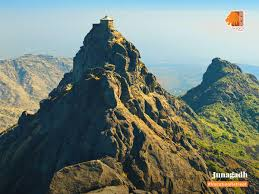
Girnar Ji, also known as Mount Girnar or Revatak Parvat, stands as one of the most sacred pilgrimage sites in Jainism. Located near Junagadh in Gujarat, India, this ancient mountain rises dramatically from the plains, reaching heights of over 3,600 feet. It is revered as the place where Lord Neminath (also called Arishtanemi), the 22nd Tirthankara, attained diksha (initiation into asceticism), kevalgyan (omniscience), and ultimately moksha (liberation). Jain scriptures describe Girnar as an eternal tirth, a siddha kshetra where countless monks and sages have achieved enlightenment across time cycles. In the current descending time cycle (Avsarpini), it holds immense significance, and traditions hold that in the next cycle, all 24 Tirthankaras will attain liberation here.
The Legend of Lord Neminath
The story of Neminath is central to Girnar’s sanctity. Born as a prince and cousin to Lord Krishna, Neminath was set to marry Princess Rajimati (or Rajul). On the wedding day, he heard the cries of animals bound for slaughter to feed the guests. Overwhelmed by compassion—a core Jain principle of ahimsa (non-violence)—he renounced worldly life. He left the palace, ascended Mount Girnar, took diksha, and after years of severe penance, attained kevalgyan and nirvana on its highest peak.
This act of profound renunciation symbolizes Jainism’s emphasis on detachment, self-control, and liberation from karma. Girnar is thus not just a mountain but a beacon of spiritual transformation, where devotees seek to emulate Neminath’s path.
Historical and Spiritual Significance
Girnar has been a Jain pilgrimage site since at least the 3rd century BCE, mentioned in ancient texts. It forms part of the Śvetāmbara Pancha Tirth (five principal shrines), alongside Palitana, Shikharji, Ashtapad, and Dilwara. Both Śvetāmbara and Digambara sects revere it, though temple styles differ.
Jain literature describes Girnar as the site where crores (billions) of munis have attained moksha. Saints like Acharya Kundkund and others meditated here. In caves like Chandra Gupha, sacred texts such as the Shat Khand Agam were composed. Emperors like Bharat Chakravartin (son of Lord Rishabhdev) are said to have visited in ancient times, organizing grand yatras.
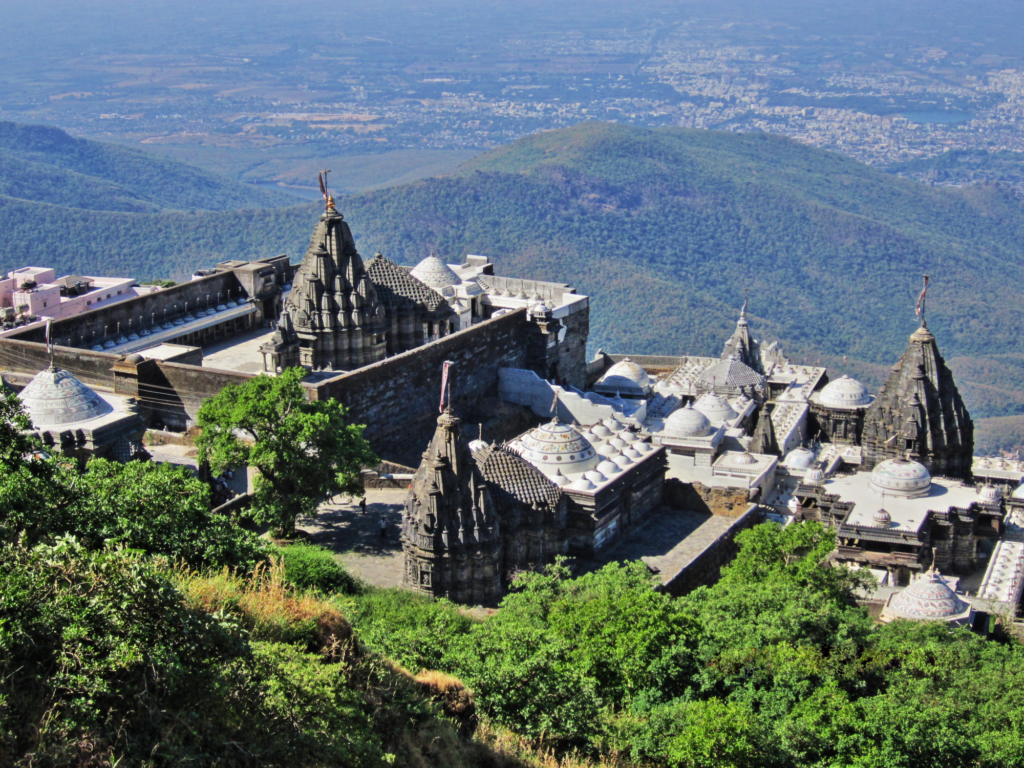
The mountain’s five peaks (tonks) are crowned with temples, blending exquisite marble carvings with natural beauty.

The Pilgrimage: A Journey of 10,000 Steps
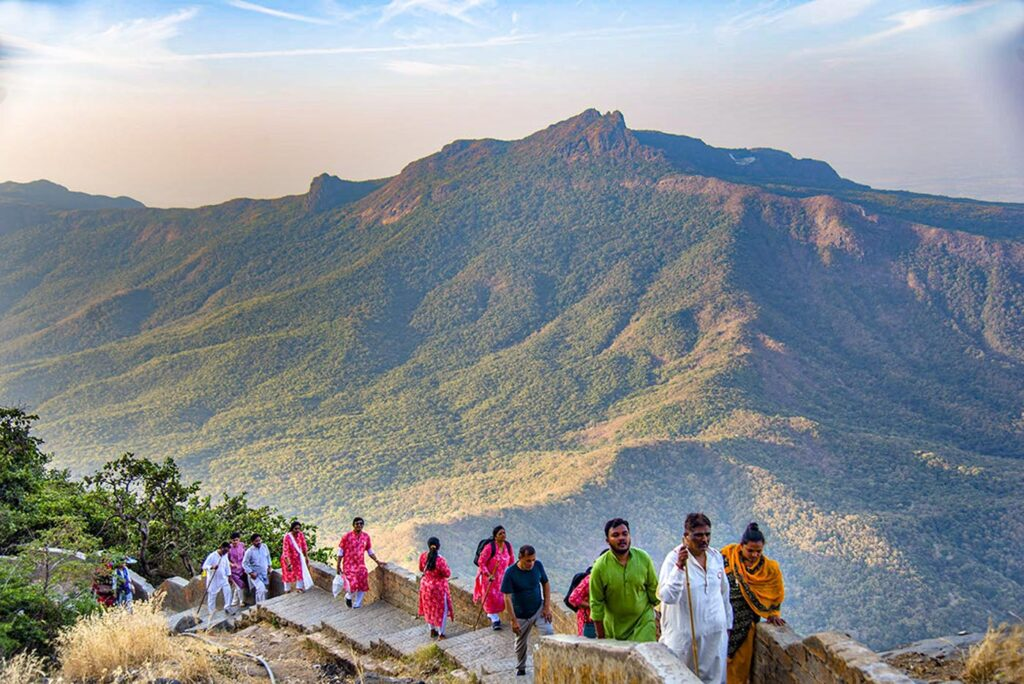
The yatra to Girnar is physically demanding and spiritually rewarding, involving climbing approximately 10,000 stone steps. Many start at dawn from the base near Bhavnath Mahadev Temple. The path winds through lush forests, passing smaller shrines.
- First Tonk (around 4,000-5,000 steps): The main cluster of Jain temples, including the grand Neminath Temple (built 1128-1159 CE by minister Sajjana under Solanki rulers). This marble masterpiece features intricate carvings, a black granite idol of Neminath with jeweled eyes, and surrounding shrines to other Tirthankaras like Mallinath and Parshvanath. Nearby: Ambika Temple (goddess protector) and footprints of saints.
- Higher tonks lead to peaks like Gorakhnath, Dattatreya (shared with Hindu traditions), and the ultimate summit where Neminath attained nirvana—marked by his footprints.
An alternate route descends via Sahasavan, where Neminath took diksha and kevalgyan, and Rajulmati’s cave, honoring his fiancée who also renounced and meditated here.
Pilgrims often carry minimal belongings, chanting “Namo Neminath” or performing ayambil (restricted fasting). The climb tests endurance, mirroring the ascetic path.
Architecture and Temples
Girnar’s temples showcase Māru-Gurjara style: ornate pillars, domes, and sculptures depicting Jain cosmology, celestial beings, and Tirthankara lives. Patrons like Vastupala-Tejapala (13th century) renovated many, adding mandapas and idols.
Key temples:
- Neminath Temple: Largest and oldest major shrine.
- Ambika Temple: Dedicated to the yakshi (protector deity).
- Digambara temples at the base and on the hill, with ancient idols.
- Samavasaran Temple: Commemorating divine sermons.
The site harmoniously coexists with Hindu shrines (e.g., Dattatreya Paduka, Gorakhnath), reflecting shared sanctity.
Modern Pilgrimage and Tips
Today, a ropeway assists up to Ambaji Temple (midway), but traditionalists prefer walking for full punya (merit). Best time: October-February (cooler for climbing). Festivals like Kartik Purnima draw massive crowds for parikrama (circumambulation).
Girnar Ji embodies Jain ideals: ahimsa, aparigraha (non-possession), and the quest for moksha. A yatra here is said to purify karma and inspire devotion. As scriptures proclaim, it is the “fifth hill of Shatrunjaya”—a destroyer of sins and granter of ultimate knowledge.
Jai Jinendra! May your journey to Girnar bring peace and enlightenment.


