


Nestled at the foothills of the majestic Brahmagiri Hills in Trimbak town, about 28 km from Nashik in Maharashtra, Trimbakeshwar Jyotirlinga Mandir stands as one of the most revered pilgrimage sites in India. It is home to one of the twelve sacred Jyotirlingas dedicated to Lord Shiva, but what makes it truly unique is its representation of the entire Hindu Trimurti — Brahma (the creator), Vishnu (the preserver), and Shiva (the destroyer) — in a single divine lingam.
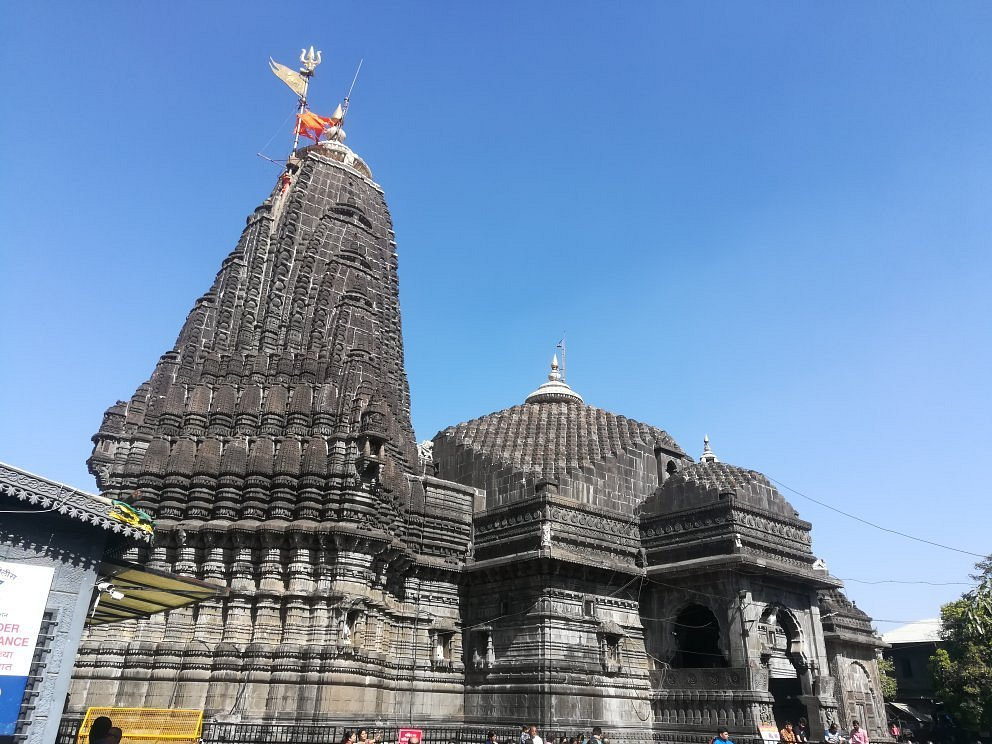
Here are some stunning views of the temple’s grand architecture and intricate black stone design:
Mythological Significance & Legend
According to ancient legends from the Shiva Purana, a dispute arose between Brahma and Vishnu about supremacy. To resolve it, Lord Shiva manifested as an infinite pillar of light (Jyotirlinga). Neither could find its end. In another popular story linked to the temple, Sage Gautama Rishi performed severe penance to atone for a sin. Pleased, Lord Shiva brought the sacred Ganga (Godavari) to Earth here and resided as the Trimbakeshwar Jyotirlinga.
This makes Trimbakeshwar not only a powerful Shiva shrine but also the origin point of the Godavari River, often called the “Ganga of the South.” Devotees believe a dip or ritual here cleanses sins and brings spiritual liberation.
The unique three-faced lingam (representing the Trimurti) emerges from a pit and is worshipped as Swayambhu (self-manifested). Due to continuous abhishekam (ritual bathing), the lingam has been slowly eroding over centuries, adding to its mystical aura.
Here’s a closer look at the sacred Trimbakeshwar Jyotirlinga inside the sanctum:

Architecture & Temple Complex
Built in the 18th century by Peshwa Balaji Baji Rao (Nanasaheb) in classic Nagara/Hemadpanthi style using black basalt stone, the temple features intricate carvings, four directional gateways symbolizing life’s stages, and an elevated shikhara (tower). The premises include the sacred Kusavarta Kund (or Kushavarta Tirtha), believed to be the exact source where the Godavari emerges.
The serene Kund is a must-visit spot for pilgrims:

And here’s the beautiful origin of the Godavari River flowing from the Brahmagiri Hills:

Important Rituals & Practices
Trimbakeshwar is renowned for special pujas that address karmic issues:
- Narayan Nagbali Puja — For ancestral curses and salvation
- Kalsarpa Shanti — To neutralize the Kalsarpa Dosha
- Tripindi Shraddha — For Pitru Dosh (ancestral debts)
- Daily Rudrabhishek and aartis
These rituals are performed by authorized local purohits (priests) near the Kund or temple premises.
Temple Timings & Darshan
- Opening Time: Around 5:30 AM (Kakad Aarti)
- Closing Time: Around 9:00 PM
- Darshan is usually quick in early mornings (15-20 minutes) but can take longer during peak hours or weekends.
- Special VIP darshan passes are available for a fee.
Best time to visit: October to March (pleasant weather); avoid heavy monsoon periods.
How to Reach Trimbakeshwar
- By Air — Nearest airport: Nashik (Ozar) ~40-50 km or Mumbai (~180 km)
- By Train — Nashik Road Railway Station (~28-30 km)
- By Road — Well-connected by buses/taxis from Nashik (40-60 minutes drive). Auto-rickshaws and shared jeeps are available.
Trimbakeshwar is more than just a temple — it’s a profound spiritual experience where mythology, devotion, and nature blend seamlessly. Whether you’re seeking blessings, performing rituals, or simply soaking in the divine energy, this Jyotirlinga leaves an everlasting impression of peace and transcendence.
Har Har Mahadev! 🙏
If you’re planning a visit, early mornings offer the most serene darshan amid the misty hills. Jai Trimbakeshwar!