

A Timeless Jain Pilgrimage
Nestled in the verdant hills of the Aravalli Range in Rajasthan, India, the Kesariyaji Rishabhdev Jain Temple stands as a beacon of spiritual harmony and architectural splendor. Also known as Rishabhdeo Temple, this sacred site draws devotees from across the globe, blending the profound philosophy of Jainism with the vibrant cultural tapestry of Mewar. If you’re seeking a journey that combines devotion, history, and natural beauty, Kesariyaji is an unmissable gem. In this blog, we’ll explore its origins, wonders, and why it continues to captivate souls even in 2025.
A Glimpse into Divine Origins: The Legend of Rishabhanatha
At the heart of Kesariyaji lies the worship of Lord Rishabhanatha, or Adinatha—the first Tirthankara (spiritual teacher) of Jainism. According to ancient Jain texts like the Ādi Purāṇa and Kalpa Sutra, Rishabhanatha was born in the mythical city of Ayodhya to King Nabhi and Queen Marudevi eons ago. Towering at an astonishing 1,500 meters and living for over 8.4 million purvas (immense cosmic time periods), he is revered as the founder of Jainism in our current time cycle, introducing humanity to essential arts, sciences, marriage, and ethical living.
The temple’s name, “Kesariyaji,” derives from the tradition of offering vast quantities of saffron (kesar) to the deity—a ritual that symbolizes purity and fulfillment of wishes. Legends whisper that the idol was discovered by a Bhil chieftain named Dhuleva (from whom the town derives its alternate name, Dhulev) beneath a mound where a divine cow, Kamadhenu, poured milk daily. This miraculous find transformed the site into a pilgrimage hub, guarded by local Bhils who revere the lord as “Kalaji Bavaji.”
What makes Kesariyaji truly unique is its syncretic appeal. While firmly a Śvētāmbara Jain temple—as affirmed by the Rajasthan High Court in 1966 and the Supreme Court of India more recently—it attracts Hindus, who view Rishabhanatha as an incarnation of Vishnu, and the indigenous Bhil community. This pluralism reflects Rajasthan’s rich interfaith legacy, where devotion transcends boundaries.
Architectural Marvel: A Symphony of Stone and Spirituality
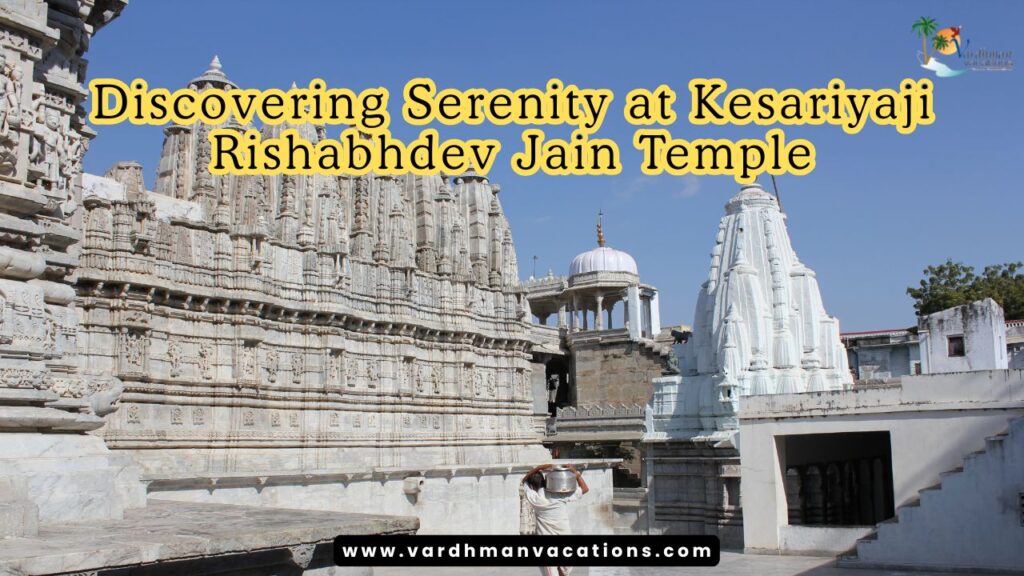
Step into Kesariyaji, and you’re enveloped by a masterpiece of medieval Indian architecture. Believed to date back to the 8th century, the main temple (mulnayak) boasts 52 intricately carved spires, symbolizing the 52 temples of Nandishwar Dweep in Jain cosmology. These domes, arranged around a towering central shikhar, create a celestial skyline that dances with the sunlight filtering through the Aravalli foliage.
The centerpiece is a mesmerizing 1.05-meter black stone idol of Rishabhanatha in the lotus (padmasana) position, seated on a simhasana (throne) flanked by two carved oxen—his emblematic symbol. Surrounding it are 23 attendant idols in ashtadhatu (eight-metal alloy), including 21 seated and two standing figures, evoking the lord’s divine court. The walls and doorways bear ornate carvings of floral motifs, celestial beings, and scenes from Rishabhanatha’s life, though time has lent them a patina of ancient mystery.
Adjoining shrines honor Marudevi Mata, the Tirthankara’s mother, depicted on a marble elephant in the moment of her enlightenment (kevalgyaan). A rangmandap (dance hall) with torans (garlands) and a Gita chowki for discourses adds layers of ritualistic charm. Unlike the opulent marble temples of nearby Palitana, Kesariyaji’s stone facade whispers of humility and endurance, making it a profound meditation on impermanence.
The temple complex also features smaller shrines to other Jain deities, a bhojan shala for simple vegetarian meals (around ₹70 per plate), and vibrant bazaars selling saffron replicas, handicrafts, and green marble souvenirs—Rishabhdeo is a global hub for this luminous stone, mining 90% of the world’s supply.
The Pulse of Devotion: Festivals and Rituals
Kesariyaji pulses with life during its festivals, transforming into a kaleidoscope of chants, colors, and communal joy. The annual Rath Yatra in the month of Chaitra (March-April) is the crown jewel: an 800-year-old wooden chariot (rath) parades the idol through Rishabhdeo’s streets, pulled by thousands of pilgrims. Accompanied by dhulev jawans (Bhil warriors) in martial splendor, the procession culminates in two days of feasting and folk dances, blending Jain austerity with tribal exuberance.
Akshaya Tritiya (April-May) commemorates Rishabhanatha’s breaking of a 400-day fast with sugarcane juice from his brother Bharata—devotees flock here for blessings of prosperity. Other highlights include Mahavir Jayanti and Paryushan, when the air hums with arati (lamp offerings) and saffron-scented prasad.
Daily rituals from 6:30 a.m. to 8:30 p.m. invite darshan (auspicious viewing), with special shringar (adornments) at dawn and dusk. Prostrating before the idol, many report a sense of wish-fulfillment, as per Jain lore—the saffron tilak on your forehead is said to carry the lord’s grace home.
Journey to the Sacred: How to Reach and Stay
Reaching Kesariyaji is an adventure in itself. Located 65 km southeast of Udaipur in Rishabhdeo town (Udaipur District, Rajasthan, PIN 313802), it’s easily accessible:
- By Air: Maharana Pratap Airport (UDR) in Udaipur is 85 km away—a scenic 1.5-hour drive through rolling hills.
- By Train: Udaipur City Railway Station (66 km) connects to major cities like Delhi, Mumbai, and Ahmedabad.
- By Road: NH48 links it directly; buses from Udaipur’s Lake City stop at Paderi Bus Stand, just 2 km from the temple.
The best time to visit? October to February, when the weather is mild (15-25°C) and festivals abound. Summers can scorch, but the monsoons paint the Aravallis in emerald hues.
Beyond the Temple Gates: Echoes of Pluralism and Peace
Kesariyaji isn’t just stone and scripture; it’s a living testament to India’s pluralistic soul. In a world quick to divide, this temple unites Digambara and Śvētāmbara Jains, Hindus, and Bhils in shared reverence. As I left with saffron dust on my palms and the bull emblem etched in my heart, I couldn’t help but reflect on Rishabhanatha’s teachings: non-violence (ahimsa), truth, and detachment.
Whether you’re a devout pilgrim, a history buff, or a nature lover, Kesariyaji offers solace amid chaos. Plan your visit soon—let the first Tirthankara guide you across the ford of life’s endless cycles.
For more details call 9811175768 or email at info@vardhmanvacations.com