
If you love exploring peaceful historical temples in South India, the Mannargudi Mallinatha Swamy Jain Temple (also called Mallinathaswamy Jain Temple or 1008 Shri Mallitheerthangarar Swamy Jain Temple) is a hidden gem you must visit. Located in the quiet town of Mannargudi in Tamil Nadu’s Tiruvarur district, this ancient Digambara Jain temple is dedicated to the 19th Tirthankara, Lord Mallinatha. Built during the powerful Chola dynasty in the 12th century, it is one of the most famous ancient Jain tirthas (pilgrimage sites) in Tamil Nadu.
In this vardhman vacations guide, you will learn everything about the Mannargudi Mallinatha Swamy Jain Temple – its rich history, beautiful architecture, sacred deities, grand festivals, how to reach it, and practical travel tips. Whether you are a history lover, Jain devotee, or curious traveler, this temple offers calm, spirituality, and a glimpse into Tamil Nadu’s ancient Jain heritage.
Who is Lord Mallinatha? Quick Introduction to Jainism
In Jainism, a Tirthankara is an enlightened soul who shows the path to liberation (moksha). Lord Mallinatha (or Mallinathaswamy / Māllīnātha) is the 19th Tirthankara. The temple’s main idol shows him seated peacefully in a semi-lotus posture (Padmasana). Many Tamil Jain traditions describe the idol with gentle, impressive features that inspire devotion.
Jainism, known as “Samanam” in ancient Tamil literature, has deep roots in Tamil Nadu dating back over 2,000 years. Kings, poets, and common people supported Jain monks who built schools and temples. The Mannargudi Mallinatha Swamy Jain Temple stands as a living proof of this rich cultural past.
History of Mannargudi Mallinatha Swamy Jain Temple
This temple was constructed in the 12th century during the reign of the Chola kings, who ruled large parts of South India. The town was earlier called Rajmannargudi or Rajamapuram. The area around Mannargudi, near the Pamani River and Haridranadi (Hariranadi) village, was known as a place of penance for Jain ascetics even as early as the 3rd century A.D. (sometimes referred to as Munigiri).
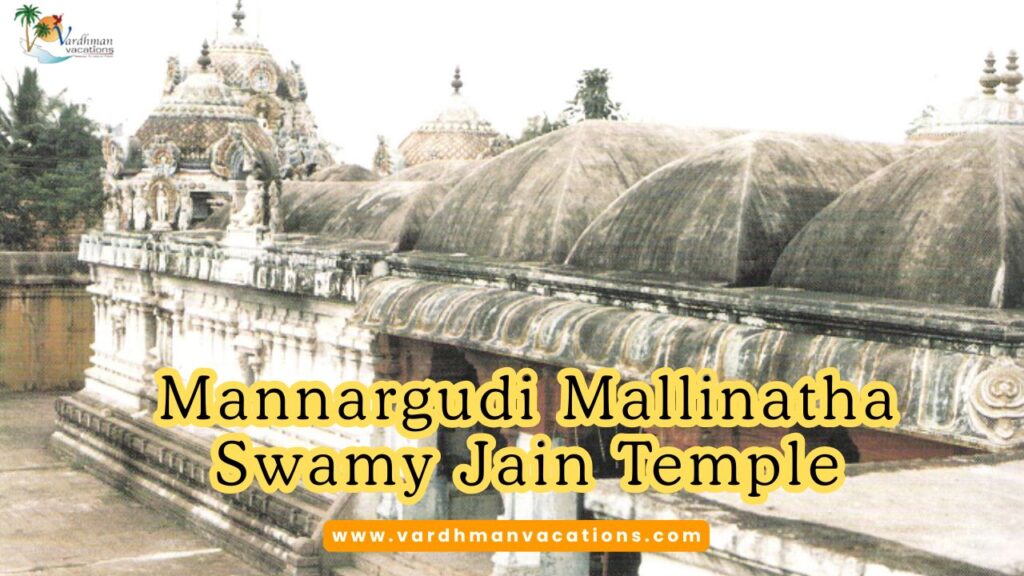
Over the centuries, the temple remained an important Jain pilgrimage center. The main structure is made entirely of bricks and painted beautifully. Because of the brick construction, very few ancient stone inscriptions survive, but a 20th-century Tamil inscription (around 1940) on a pillar records that one mandapam (hall) was built by Appachi Jain from Kumbakonam.
The current main idol was installed in 1986 (about 56 cm tall). An older Tirthankara image, believed to be the original, is preserved in the outer prakara (courtyard) under a tree. This shows how the temple has been lovingly maintained and renovated across generations.
Architecture: A Brick-Built Marvel
The Mannargudi Mallinatha Swamy Jain Temple faces east and welcomes visitors with a graceful 3-tier Rajagopuram (main tower). Beautiful stucco (plaster) figures of Tirthankaras decorate the tower. After entering, you see the Dwajasthambam (tall flagpost) and Balipeedam (sacrificial pedestal) under a special mandapam made of intricately carved bricks – shapes of flowers, leaves, and designs created by hand-grinding bricks!
The temple layout has seven stages – from the sanctum sanctorum to the mukha mandapa – symbolizing the seven stages in the soul’s journey toward liberation. Inside you will find:
- Sanctum sanctorum with stucco Dwarapalakas (door guardians)
- Artha mandapa and maha mandapa (in Maratha style)
- Two-tier vesara vimana (tower over the sanctum)
- Chariot mandapa and vahana mandapa
In the prakara (surrounding corridor), you can see sculptures of various Tirthankaras and Mahavira. The entire temple feels calm and artistic – simple yet elegant, just like Jain philosophy teaches.
The Sacred Deities You Will See
- Main Deity: Bhagawan Mallinathar – peaceful and divine idol in semi-Padmasana posture.
- Other Impressive Idols: Goddesses Saraswati Devi (knowledge), Padmavati Devi, Dharmadevi, and especially Jawalamalini (Jwalamalini) Amman – believed to be very powerful and miraculous. You will also find Kshetrapala, Sudarsanam, Brahmadeva, and Rishabadeva flanked by yakshas.
Devotees say these idols grant wishes and bring peace of mind.
Festivals and Celebrations – Don’t Miss These!
The temple comes alive during festivals. The biggest event is the 11-day annual Brahmotsavam (Thiruvizha or Bramorchavam) celebrated in summer. On the 11th day, the unique Kannadi Pallakku (mirror palanquin) procession happens – Sri Jawalamaini Amman is taken out in a beautiful palanquin decorated with mirrors. This is the only Jain temple in Tamil Nadu that celebrates this special event!
Other important occasions:
- Vaishakh Sukla Dasami – Brahma festival with huge crowds.
- Akshaya Tritiya and the 3rd day of Thai month – Street procession of Shri Adinathar Urchav Murthi.
- Monthly pujas: Vaikasi Saptami (flag hoisting), Fridays special for Jwalamalini, Pournami, Nandisvara Dveepa in Panguni, and more.
Daily pujas are performed, and the atmosphere is serene and devotional.
How to Reach Mannargudi Mallinatha Swamy Jain Temple
Reaching the temple is very easy:
- By Train: Mannargudi Railway Station is just 1–3 km away.
- By Road: Well-connected buses and taxis from Tiruvarur (28 km), Thanjavur (35–40 km), Kumbakonam (34 km), and Nidamangalam (12 km).
- Address: Jain Sannidhi Street, near Haridranadhi Theppakulam (west side of bypass road), Mannargudi, Tiruvarur District, Tamil Nadu – 614001.
Best Time to Visit: October to February (pleasant weather) or during the grand 11-day festival in summer. Temple is open daily; pujas happen regularly. No entry fee.
Stay: No formal guest house, but you can stay in the temple courtyard with basic facilities (water, electricity, vessels). Contact Mr.Rajiv Jain at +91 9811175768 for booking.
Travel Tips:
- Dress modestly and remove shoes inside.
- Maintain silence and follow Jain principles of non-violence.
- Carry water and light snacks.
- Combine your trip with the nearby famous Sri Rajagopala Swamy Vishnu Temple in Mannargudi.
Nearby Attractions
While in Mannargudi, visit:
- Sri Rajagopala Swamy Temple (Vaishnava shrine)
- Other Chola-era temples in Thanjavur and Kumbakonam
- Jain temples in nearby towns like Deepankudi or Thanjavur
Why You Should Visit the Mannargudi Mallinatha Swamy Jain Temple
This temple is not just a historic site – it is a place of inner peace. The impressive idols, unique festivals, and ancient brick architecture make it special. Whether you want to learn about Jainism, click beautiful photos, or simply sit in quiet prayer, the Mannargudi Mallinatha Swamy Jain Temple leaves you feeling refreshed and inspired.
Frequently Asked Questions (FAQs)
Q1: Is Mannargudi Mallinatha Swamy Jain Temple open to all?
Yes, everyone is welcome. Respect temple customs.
Q2: What is special about Kannadi Pallakku?
It is a unique mirror palanquin procession of Jwalamalini Amman – seen only here among Tamil Nadu Jain temples.
Q3: Is there any dress code?
Modest traditional clothing is preferred.
Q4: Are there hotels near the temple?
Basic stay is possible in the temple courtyard. Nearby towns like Tiruvarur and Thanjavur have good hotels.
Q5: When is the main festival?
11-day summer Brahmotsavam with Kannadi Pallakku on the last day.
Plan your visit to the Mannargudi Mallinatha Swamy Jain Temple soon and experience Tamil Nadu’s living Jain heritage. Share this guide with fellow travelers and help preserve these ancient treasures!
Safe travels and Jai Jinendra!