

If you’re searching for an offbeat Jain pilgrimage site that blends ancient rock-cut artistry, deep spiritual significance, and a rare depiction of Lord Mahavira’s mother, Trishla Giri Jain Tirth (also known as Trishlagiri Jain Atishay Kshetra or Trishala Mata Jain Mandir) in Gwalior, Madhya Pradesh, is a hidden treasure. Located on the western slopes of Gwalior Fort (Gopachal Parvat), this Digambar Jain site is part of the legendary Gopachal rock-cut Jain monuments and stands out as the only place in the world with a massive 12-foot murti of Mata Trishala (Trishala Devi) in a sleeping posture.
Often misspelled as “Trishla Girl Jain Tirth” due to phonetic pronunciation of “Giri” (meaning hill), this Atishay Kshetra attracts Jain devotees, history lovers, and heritage explorers. In this guide, we dive deep into its history, architecture, religious importance, how to visit, and practical tips to help you plan a meaningful trip.
What is Trishla Giri Jain Tirth? Quick Overview
- Location: South-West Group (Trishalagiri) of Gopachal rock-cut Jain monuments, near Urvai Gate, Gwalior Fort, Madhya Pradesh.
- Main Deity: Mata Trishala (mother of 24th Tirthankara Bhagwan Mahavira).
- Unique Feature: World’s only 12-ft rock-cut murti of Trishala Mata in supine (sleeping) position, with intricate Panch Kalyanak carvings nearby.
- Type: Digambar Jain Atishay Kshetra (miraculous pilgrimage site).
- Age: Oldest carvings in Gwalior’s Jain cluster — post-Gupta period (6th–8th century AD), with later medieval additions.
Unlike the more famous colossal Tirthankara statues in the SE Group of Gopachal Parvat, Trishla Giri offers an intimate, devotional experience focused on the maternal figure central to Jain cosmology.
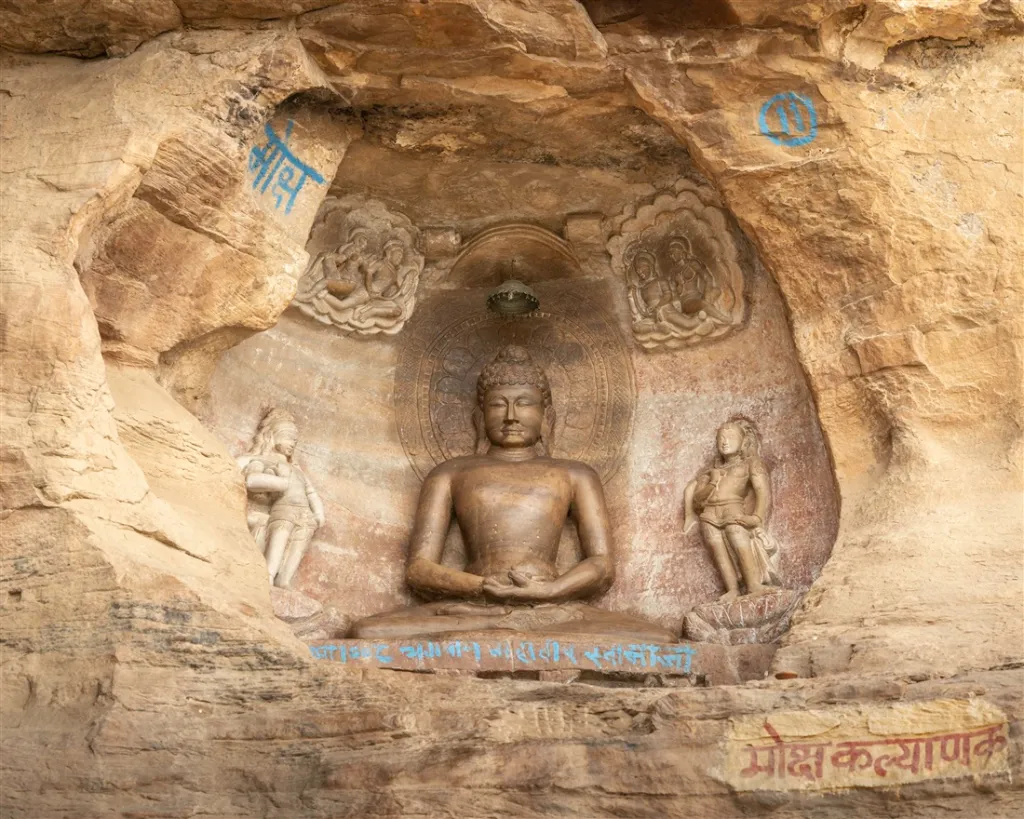
Historical Background: From Post-Gupta Era to Medieval Jain Glory
Gwalior (ancient Gopadri or Gopachal) was a major Jain center under the Tomar rulers and later dynasties. The rock-cut monuments around the fort represent one of the finest examples of Jain rock art in Central India.
The South-West Group (Trishalagiri) is the oldest cluster:
- Archaeologists date the earliest carvings to the 6th–8th centuries AD (post-Gupta period).
- British archaeologist Alexander Cunningham documented the sleeping female figure as “Trisala” (Trishala) in the 19th century.
- Many 14th–15th century additions occurred under Jain patronage during the Tomar and Mughal periods.
The site survived Mughal defacement attempts because of its relatively inconspicuous location on the western cliffs. Today, it forms part of the protected Gopachal Jain monuments under Shri Digambar Jain Atishay Kshetra Gopachal Parvat Sanrakshak Nyas.
Religious Significance: Mata Trishala is revered as the ideal mother who experienced 14 auspicious dreams (Shubh Swapna) foretelling the birth of a Tirthankara. The supine murti symbolizes her divine dreams and maternal devotion. The cave is believed to be boon-bestowing (Atishay), making it a special pilgrimage spot for blessings related to family, health, and spiritual progress.
What to See at Trishla Giri Jain Tirth: Architectural Marvels
The site features rock-cut caves and niches carved directly into the sandstone cliffs of Gwalior Fort:
- Mata Trishala Murti — The star attraction: ~12-ft (or 8-ft as per older records) rock-cut idol in stretched sleeping posture. Finely detailed Panch Kalyanak (five auspicious events in a Tirthankara’s life: Garbh, Janma, Diksha, Keval Gyan, and Moksha) are carved on the surrounding walls.
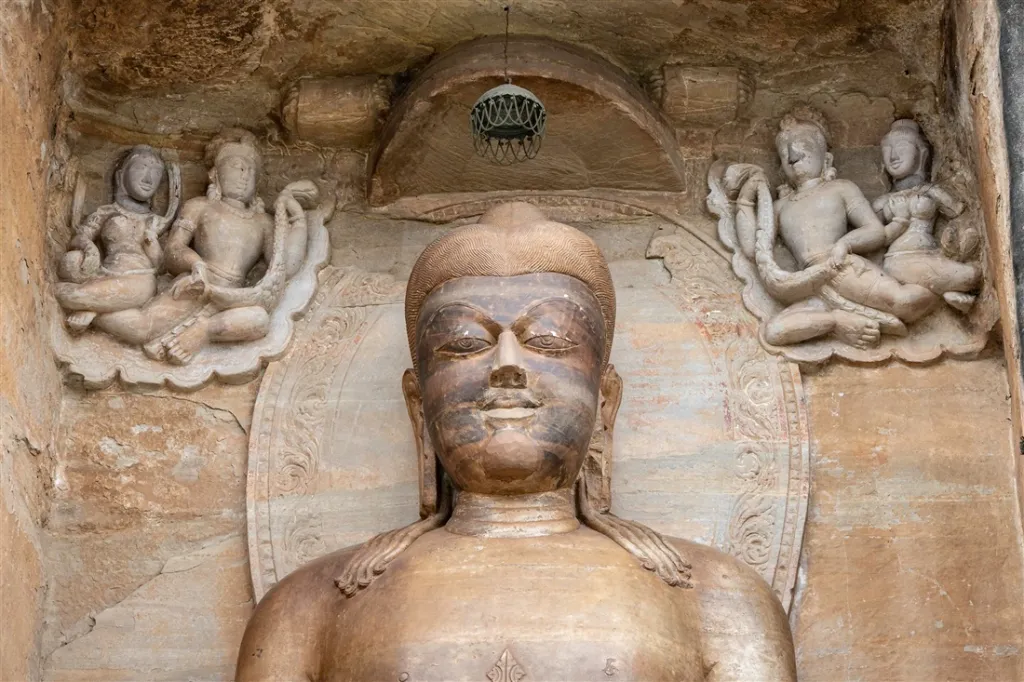
- Tirthankara Carvings — Multiple life-size and smaller idols of Jain Tirthankaras in Padmasana and Kayotsarga postures, with yaksha-yakshi attendants and intricate toranas.
- Cave Shrines — Small rock-cut chambers with 72 Tirthankara representations and symbolic Jain motifs.
- Ancient Inscriptions — Some in Prakrit and Sanskrit, offering historical clues.
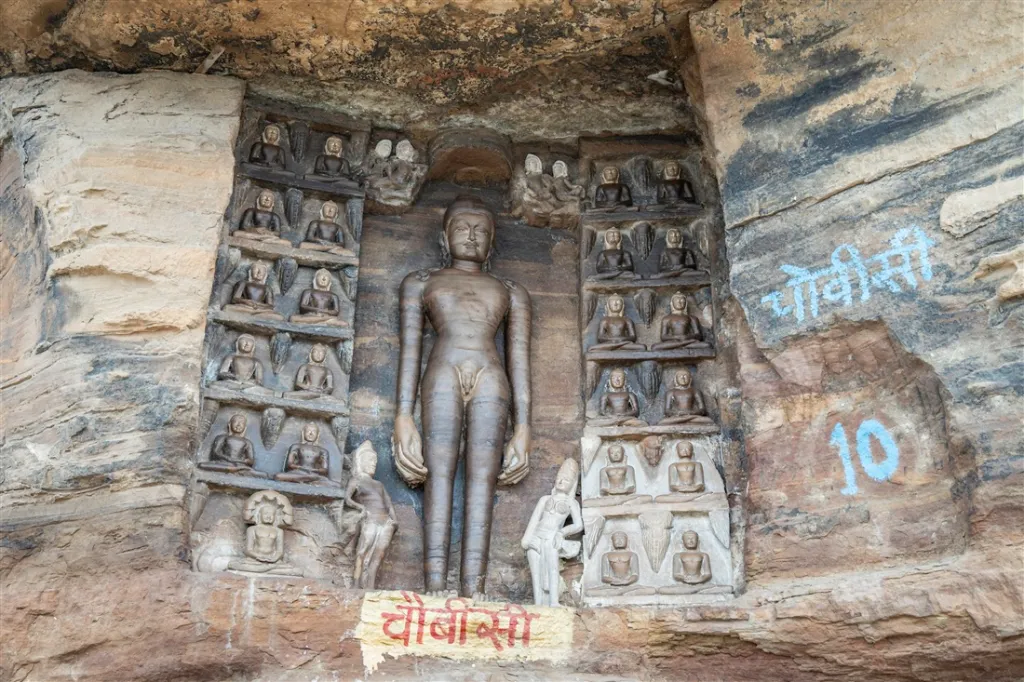
The artistry showcases exceptional medieval Jain craftsmanship: detailed halos, serpents (for Parshvanatha), and celestial beings. The SW Group’s older style contrasts with the bolder 15th-century colossal figures elsewhere in Gopachal.
How to Reach Trishla Giri Jain Tirth Gwalior (Updated 2026 Guide)
By Air: Gwalior Airport (GWL) is well-connected to Delhi, Mumbai, Bhopal, and Indore. Cab to fort area: 30–40 minutes.
By Train: Gwalior Junction (GWL) is a major railhead on Delhi–Mumbai and Delhi–Chennai routes.
By Road: Excellent connectivity via NH46. Delhi–Gwalior: ~350 km (5–6 hours).
Local Transport to Site:
- Reach Urvai Gate (western entrance of Gwalior Fort).
- Trishla Giri is the first Jain cluster you encounter just outside the fortifications on the way to Urvai Gate.
- Auto-rickshaw/taxi from city center: ₹150–300.
- Inside fort area: Walk or e-rickshaw.
Gwalior Fort Timings (includes access to nearby Jain sites): 8:00 AM – 6:00 PM daily.
Entry Fee: Fort ticket ₹40–75 (Indian)/₹300+ (foreigners). The open-air rock-cut Jain monuments at Trishla Giri are generally free or nominal; no separate ticket needed for darshan.
Best Time to Visit:
- October to March: Pleasant weather (15–25°C) — ideal for climbing and exploring caves.
- Avoid April–June (extreme heat) and July–September (monsoon makes rocks slippery).
Darshan Timings: Sunrise to sunset; early morning or late afternoon for fewer crowds and golden light photography.
Visitor Tips for a Spiritual & Safe Experience
- Wear modest clothing (covered shoulders/knees); remove shoes before approaching idols.
- Photography is allowed but respect the sanctity — no flash near carvings.
- Carry water and light snacks; limited facilities on-site.
- Combine with other Gopachal groups (SE, Urvai, etc.) for a full Jain heritage day.
- Hire a local guide (₹500–800) for historical context.
- Jain devotees: Perform simple puja or recite Navkar Mantra for enhanced experience.
- Accessibility: Moderate walking/climbing involved; not fully wheelchair-friendly.
Nearby Attractions:
- Gopachal Parvat colossal Tirthankara statues
- Gwalior Fort palaces & museums
- Sas Bahu Temples
- Jai Vilas Palace
- Teli ka Mandir
FAQs About Trishla Giri Jain Tirth
Q1: Is Trishla Giri the same as Gopachal Jain Caves?
Yes — it is the South-West (Trishalagiri) cluster of the larger Gopachal rock-cut Jain monuments.
Q2: Why is the Trishala Mata murti unique?
It is the only known large-scale rock-cut depiction of Mahavira’s mother in sleeping posture, symbolizing her 14 auspicious dreams.
Q3: Is it suitable for non-Jain visitors?
Absolutely! The site is a living heritage monument open to all who respect Jain traditions.
Q4: Are there accommodation options nearby?
Yes — hotels in Gwalior city (1–5 km away) or fort-area guesthouses. Many Jain dharamshalas offer budget stays.
Why Trishla Giri Jain Tirth Should Be on Your Bucket List
In an era of mass tourism, Trishla Giri Jain Tirth Gwalior offers rare serenity, profound Jain philosophy, and unmatched rock-cut artistry. It’s more than a temple — it’s a living link to the life of Bhagwan Mahavira and the timeless devotion of his mother, Trishala Mata.
Whether you’re a devout Jain seeking blessings, a history buff exploring medieval rock art, or a traveler looking for Gwalior’s hidden gems, this Atishay Kshetra delivers an unforgettable spiritual and cultural experience.
Plan your visit today and immerse yourself in the divine aura of Mata Trishala. Jai Jinendra! Book only with Jain Tours by Vardhman Vacations. +91- 9811175768