
Estd. 1990
-
 Gujarat Toursim
-
 IATO -
Indian Association of Tour Operators
IATO -
Indian Association of Tour Operators
 +91-9811175768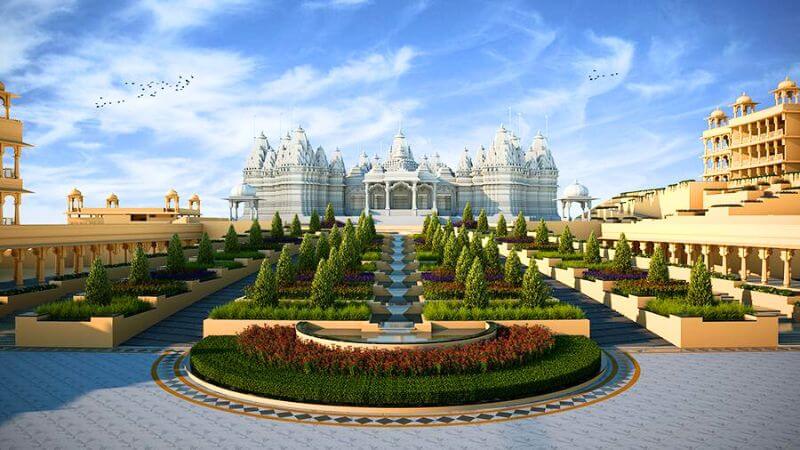
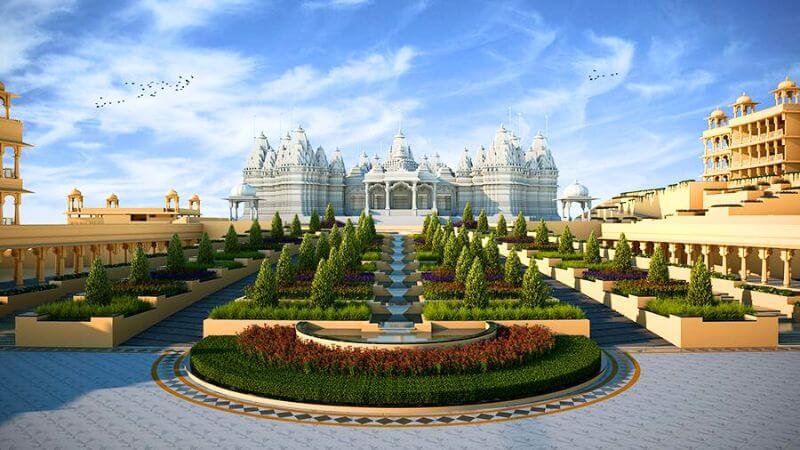

Shri Jirawala Parshwanath Jain Tirth
Duration
02 Nights / 03 Days
Places Covered
Abu Raod - Jirawala - Pavapuri - Bheru Tarak - Vijay Pataka - Bamanwada - Dilwara Temples
Shri Jirawala Parshwanath Jain Tirth Yatra
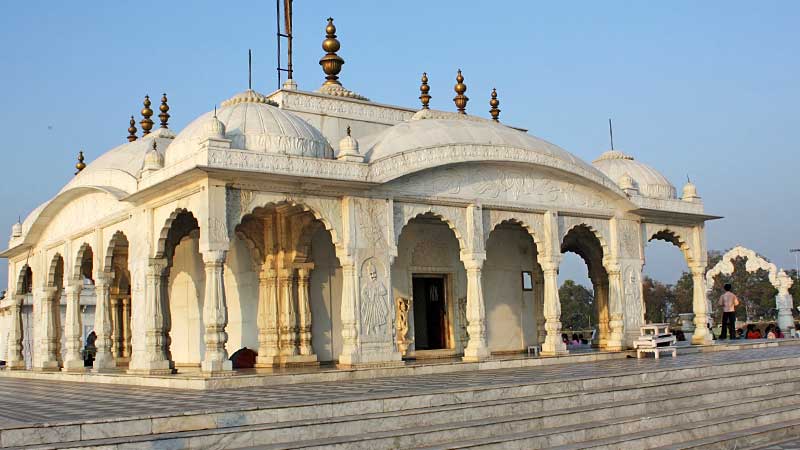
Shri Jirawala Parshwanath Jain Tirth is one of the most revered pilgrimage destinations for Jain devotees, located near Revdar in the Sirohi district of Rajasthan. Surrounded by the scenic Aravalli hills, this sacred temple is dedicated to Lord Parshwanath, the 23rd Tirthankara of Jainism, and attracts thousands of pilgrims every year seeking spiritual peace and blessings.
The temple holds immense religious importance in the Śvetāmbara Jain tradition and is counted among the 108 sacred Parshwanath idols worshipped across Jain temples in India. Devotees believe that visiting this tirth and offering prayers to the divine idol brings spiritual fulfillment, prosperity, and inner peace.
According to Jain traditions, the idol of Lord Parshwanath at Jirawala was discovered after a divine revelation received by a Jain devotee. The temple was later established by Jain Acharyas and gradually developed into an important pilgrimage centre. Over the centuries, the shrine has been renovated and expanded, preserving its sacred atmosphere and architectural beauty.
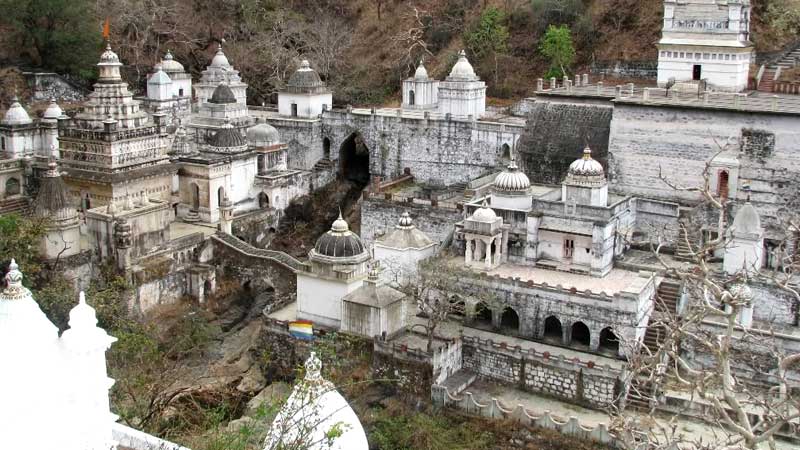
The temple complex features beautiful marble structures, intricately carved pillars, and several smaller shrines dedicated to Jain deities. The serene surroundings and spiritual ambience make it an ideal place for meditation and religious activities.
A Shri Jirawala Parshwanath Jain Tirth Yatra usually begins from Abu Road, the nearest railway station, and includes temple darshan, prayer rituals, and visits to nearby spiritual destinations such as Mount Abu and the famous Dilwara Jain Temples. This pilgrimage offers devotees a peaceful and enriching spiritual experience while exploring one of Rajasthan’s most significant Jain religious sites.
FAQ About Jirawala Parshwanath Jain Tirth
Q. Where is Shri Jirawala Parshwanath Jain Tirth located?
Shri Jirawala Parshwanath Jain Tirth is located near Reodar in the Sirohi district of Rajasthan, nestled in the serene Aravalli Hills. The nearest railway station is Abu Road, around 40 km away.
Q. What is the religious significance of Jirawala Tirth?
Jirawala is one of the most sacred Jain pilgrimage centers dedicated to Lord Parshwanath, the 23rd Tirthankara. The temple is famous for its divine energy, detailed marble carvings, and its role as a key site in Jain spiritual history.
Q. How can I reach Jirawala Tirth?
The easiest way to reach is via Abu Road Railway Station, which has good connectivity to major Indian cities. From there, Jirawala is just about an hour’s drive. The nearest airport is Udaipur (approx. 160 km).
Q. What kind of accommodation is available in Jirawala?
Pilgrims can stay at Jain Dharamshalas, which provide clean, simple, and peaceful lodging with basic amenities. For those seeking extra comfort, hotels and guesthouses are available in Abu Road and Mount Abu.
Q. What is the best time to visit Jirawala Tirth?
The best time to visit is between October and March, when the weather is pleasant for darshan and sightseeing. During festivals like Parshwanath Janma Kalyanak, the temple sees a grand celebration and special rituals.
Q. Can we include Mount Abu in this trip?
Yes, Mount Abu can be conveniently included in your itinerary. It is just about 50 km from Jirawala, allowing you to visit the famous Dilwara Jain Temples, Nakki Lake, and scenic viewpoints.
Q. Are meals available for Jain pilgrims?
Yes, pure vegetarian and Jain-friendly meals are served in Dharamshalas and local eateries. Satvik food without onion and garlic is easily available in and around the temple premises.
Q. Are photography and mobile phones allowed inside the temple?
Photography and mobile phone use are generally restricted inside the temple to maintain sanctity. Visitors are advised to follow temple rules and maintain silence during prayers.
Q. Is this tour suitable for elderly pilgrims?
Yes, the tour is well-suited for elderly pilgrims. The temple complex is easily accessible, and local assistance is available for darshan and rituals. Comfortable accommodations and transportation are arranged throughout the journey.
Q. Can I customize the itinerary or extend my stay?
Absolutely. The 2 Nights / 3 Days itinerary can be customized to include nearby Jain tirths like Bhandasar, Mandar, or Mount Abu, or extended for additional leisure days as per your preference.
Tour Itinerary
Day 1 Arrival at Abu Road – Transfer to Jirawala (Approx. 40 km / 1 hour)
Arrival at Abu Road railway station.
Our representative will meed and greet you and drive to Jeerawala Parshwanath Jain Tirth.
Upon arrival Check-in at Dharamshala.
Darshan of Shri Parshwanath Bhagwan.
It is believed that the temple was built around 300 CE following divine signs. The main temple is a magnificent structure that fills devotees with deep reverence and awe.
The temple’s walls, beams, and pillars are beautifully carved from marble, adorned with intricate sculptures and artistic detailing. Along with the white idol of Lord Parshvanath seated in Padmasana, the temple houses 108 idols of Lord Parshvanath, representing His 108 sacred names. According to Jain belief, the origin of the temple dates back nearly 2,800 years. Jirawala remained an important Jain centre between 506 CE and 1324 CE.
The white idol of Lord Parshvanath, the principal deity of the temple, was discovered in a cave during an excavation. It is said that a cow belonging to a Brahmin boy named Kadwa used to mysteriously pour its milk every day at a particular spot near a cave in Jirawala. When this unusual occurrence came to light, the Jain merchant Seth Dhanna Shah dreamt of an idol of Lord Parshvanath at the very place where the cow poured milk.
Following the dream, a search was conducted and an idol was found at that exact location. The idol was later ceremoniously installed in 894 CE by Acharya Deva Gupta Suri Ji, establishing the temple as a revered Jain pilgrimage site.
Visit nearby temples in the complex.
Evening
Aarti / Bhakti.
Dinner at Bhojanshala.
Overnight: Jirawala / Dharamshala
Day 2 Pavapuri, Bheru Tarak Vijay Pataka & Bamanwada
Morning after breakfast proceed for local pilgrimage:
Pavapuri Jain Tirth
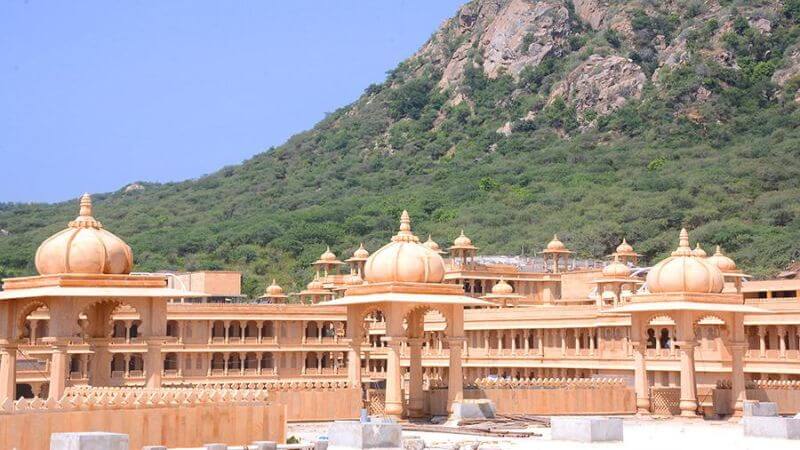
The Tirth derives its name from the Pavada agricultural well that once existed at this site. Initially, the vision was to build only a small temple along with a shelter for about 100 cows. Over time, however, the project expanded significantly, and today the campus spreads across more than 500 acres (2.0 km²) of land.
Shree Pavapuri Jain Temple, located in Sirohi district of Rajasthan, was constructed by the K.P. Sanghvi Trust. The construction began in 1998 and the temple complex was completed in 2001. Situated in north-western India, Rajasthan was historically known as a land of wars and brave warriors. This perception gradually changed with the arrival of Jain saints, who spread the message of peace, compassion, and non-violence (Ahimsa)—the fundamental principle that forms the cornerstone of Jain philosophy and ethics.
Shree Pavapuri has become a renowned Jain Tirth (temple complex) as well as a Jeev Raksha Kendra (animal welfare centre). The temple takes its name from the Pavada well and stands as a shining example of Jain art, architecture, culture, and devotion.
The vast and beautifully designed complex leaves visitors mesmerized and inspires them with the timeless spiritual values preserved through generations. The peaceful and blissful atmosphere experienced at Pavapuri is difficult to describe in words—it can only be felt deep within one’s soul. Surrounded by the serene landscape of the Aravalli mountain range, the calm and scenic campus appears like a shining pearl resting on the ocean bed.
Pavapuri Tirth Dham, also known as Pawapuri Jal Mandir, is a serene and spiritually significant Jain pilgrimage destination located about 45 km from Mount Abu near Sirohi, Rajasthan. The complex is dedicated to Lord Mahavira, the 24th and last Tirthankara of Jainism, and is known for its tranquil environment that attracts both devotees and visitors seeking spiritual peace.
The temple complex is divided into two main sections:
Sumati Jeevandaya Dham – also known as the Gaushala (cow shelter) dedicated to animal welfare.
Pavapuri Dham – the main temple complex and pilgrimage area for devotees.
Bheru Tarak Vijay Pataka
Vijaypataka Parshvanath derasar is uniquely adorned with sacred mantras embedded throughout the temple premises. Surrounding the 71-inch tall idol of Lord Parshvanath is an 18-foot long “Hreem” mantra, creating a powerful spiritual presence. In addition, about 41,000 “Om” mantras are intricately embedded across the entire derasar, enhancing the sanctity and devotional atmosphere of the temple.
Bamanwada Jain Temple
Bamanvadji is a prominent hill in Rajasthan that houses a large and ancient complex of Jain temples. This sacred site is dedicated to Bhagwan Mahavira and is an important pilgrimage destination for Shvetambara Jain devotees. The earliest known inscription found on this hill dates back to 1292 CE, although archaeological remains suggest that the site is much older. A major renovation and restoration of the temple complex was carried out in 1979.
This revered tirth is also known as Jiwit Swami, as it is believed that Lord Mahavira stayed at Bamanvadji during his lifetime. According to Jain tradition, it was at this very place that Bhagwan Mahavira endured the suffering (Upasarga) when nails were driven into his ears. The sacred footprints (charan paduka) of Bhagwan Mahavira are preserved here and are worshipped with great devotion by Jain devotees from around the world.
Historical records mention that King Samprati, a great patron of Jainism, had taken a vow to undertake a pilgrimage to five sacred tirths four times every year, and Bamanvada Tirth was one of them. The tirth was also renovated by Samant Shah in Vikram Samvat 821, and it is believed that the temple complex underwent several renovations over the centuries.
Return to Jeerawala.
Evening: Temple darshan / Chaitya Vandana.
Dinner.
Overnight: Jirawala / Mount Abu
Day 3 Jeerawala - Dilwara Temples Mount Abu & Departure
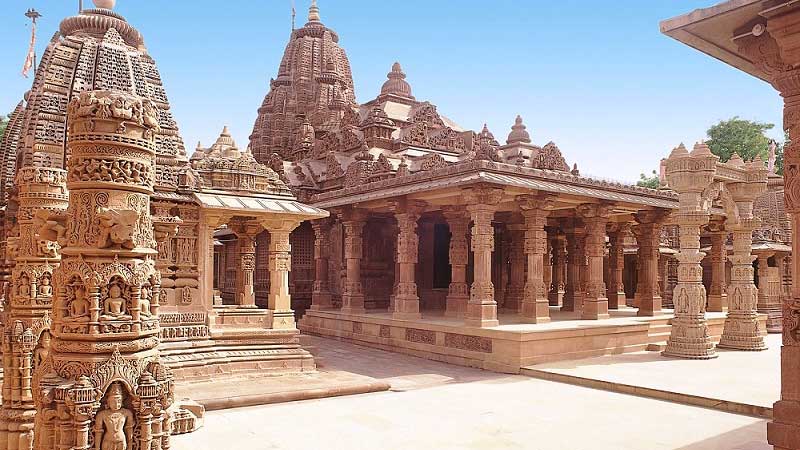
The Dilwara Jain Temples in Mount Abu, Rajasthan, are among the most famous Jain temple complexes in the world. Built between the 11th and 13th centuries, these temples are renowned for their extraordinary white marble carvings, intricate architecture, and remarkable craftsmanship. Situated amidst the scenic Aravalli Hills, the temples feature beautifully carved pillars, ornate domes, and delicate sculptures, making them an important Jain pilgrimage site as well as a major attraction for visitors and art lovers.
Nestled in the tranquil surroundings of Mount Abu, the Dilwara Temples represent the devotion, dedication, and artistic excellence of the Jain community. For centuries, these temples have held a sacred place in the hearts of Jain devotees across the world and are also admired by historians, architects, and travellers for their unparalleled marble craftsmanship. Although the exterior of the temples appears simple, the interiors reveal an astonishing display of detailed carvings, decorative ceilings, and beautifully sculpted pillars, showcasing some of the finest examples of Indian temple architecture.
These temples were constructed during a time when roads and modern transport did not exist in the region. Massive blocks of marble were brought from the Arasoori Hills near Ambaji and transported on elephants to Mount Abu, which lies at an elevation of over 1200 metres. The delicate and intricate carvings created under such challenging conditions demonstrate the exceptional skill and dedication of the artisans of that era.
The Dilwara Temple complex consists of five main temples, each dedicated to different Jain Tirthankaras:
Shri Adinath Temple (Vimal Vasahi)
Built in 1031 CE by Vimal Shah, a minister of the Solanki ruler of Gujarat, this is the oldest temple in the complex and is dedicated to Lord Adinath, the first Jain Tirthankara. The temple features a large open courtyard surrounded by beautifully carved corridors and cells containing finely sculpted images of Jain saints. The inner dome is exquisitely decorated with floral patterns, and the pillars display intricate carvings, including figures of women playing musical instruments. The temple also includes the Guda Mandapa, a hall housing the idol of Lord Adinath.
Shri Neminath Temple (Luna Vasahi)
Constructed in 1230 CE by the brothers Vastupal and Tejpal, this temple is dedicated to the 22nd Tirthankara, Lord Neminath. One of its main attractions is the Rang Mandap, which features 360 finely carved miniature idols of Jain Tirthankaras arranged in a circular pattern. While most idols in the temple are carved from white marble, the idol of Lord Neminath is made from black marble, creating a striking contrast.
Shri Parshvanath Temple (Khartar Vasahi)
Built between 1458 and 1459 CE by members of the Mandika clan, this temple is dedicated to Lord Parshvanath, the 23rd Jain Tirthankara. It is known for having the tallest shrine among the Dilwara temples and features four large mandapas. The beautifully carved pillars and elaborate marble decorations highlight the architectural brilliance of the temple.
Shri Rishabhdeo Temple (Pittalhar Temple)
This temple is known as the Pittalhar Temple because several of its idols are made of brass (pittal). It was constructed by Bhima Shah, a minister of a Gujarat ruler. Like other temples in the complex, it includes a Guda Mandapa and Navchowki, both decorated with fine carvings.
Shri Mahavir Swami Temple
Built in 1582 CE, this temple is dedicated to Lord Mahavir, the 24th Tirthankara of Jainism. Although smaller in size compared to the other temples, it is known for its elegant design and the beautifully painted porch walls created by artisans from Sirohi in 1764.
Today, the temple complex is carefully managed and maintained by Shri Kalyanji Paramanandji Pedhi, Sirohi.
The Dilwara Temples are widely regarded as one of the finest examples of Jain temple architecture, and some experts even consider the artistry of its marble carvings to be superior to that of the Taj Mahal. The lush green hills surrounding the temples add to the peaceful and spiritual atmosphere of this sacred site.
The temples are open to tourists from 12:00 PM to 5:00 PM, and photography inside the temple complex is not permitted. Visitors and pilgrims from around the world come here to admire the beauty of the temples and experience the serene spiritual environment they offer.
Later in the evening we will transfer you to the Railway station.
END OF OUR SERVICES
Make Your Trip Now
Vardhman's Pure Veg Kitchen




MOST POPULAR PACKAGES


$ 250
6 Nights / 7 Days
Golden Triangle Vacation Tour
India’s golden triangle is a tourist circuit which includes: Delhi, Agra (including the Taj Mahal), and Jaipur. These trips usually 7 days and do the trip as a circuit starting and ending in Delhi.
View Package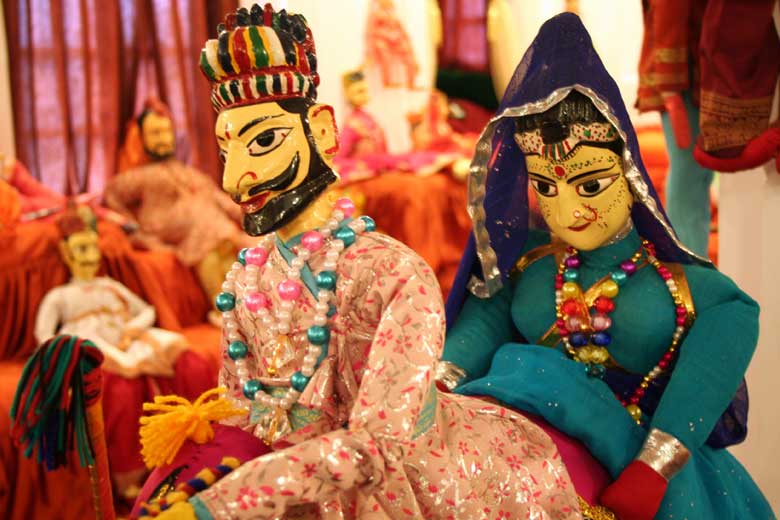
$ 700
16 Nights / 17 Days
Rajasthan colorful Tour
Coloruful Rajasthan Tour is one of the most popular circuit of India. This tour package accommodates you to endure Rajasthan in all its different colors.
View Package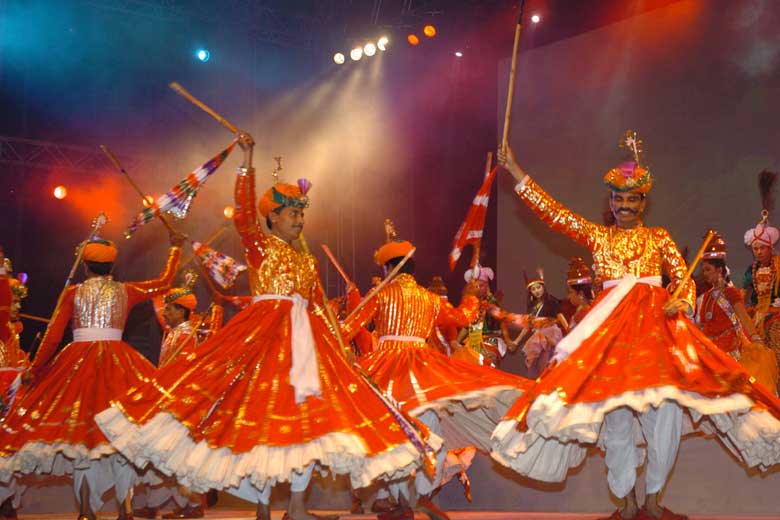
$ 565
10 Nights / 11 Days
Rajasthan Cultural Tour
The Rajasthan state represents an unusual diversity in all its forms - people, culture, customs, costumes, cuisine, dialects and music and haveli's.
View Package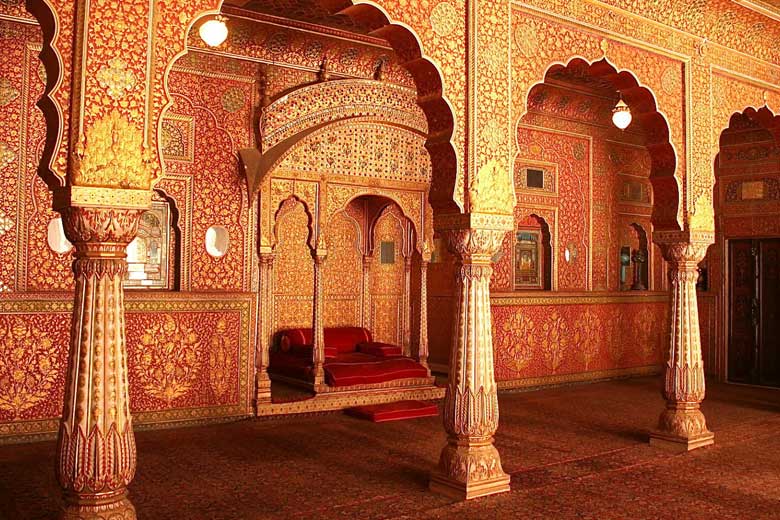
$ 640
12 Nights / 13 Days
Rajasthan Fort & Palace Tour
Rajasthan is famous all over the world for its stunning forts and palaces that have been gloriously standing since decades in this princely state.
View Package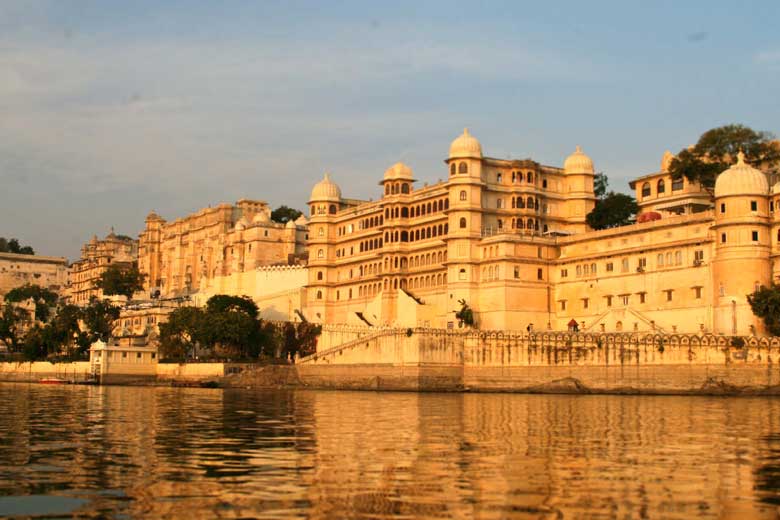
$ 645
11 Nights / 12 Days
Rajasthan Heritage Tour
Rajasthan known as the "land of kings"provides some marvelous marks from the history in the form of its forts, palaces, mansions and haveli's.
View Package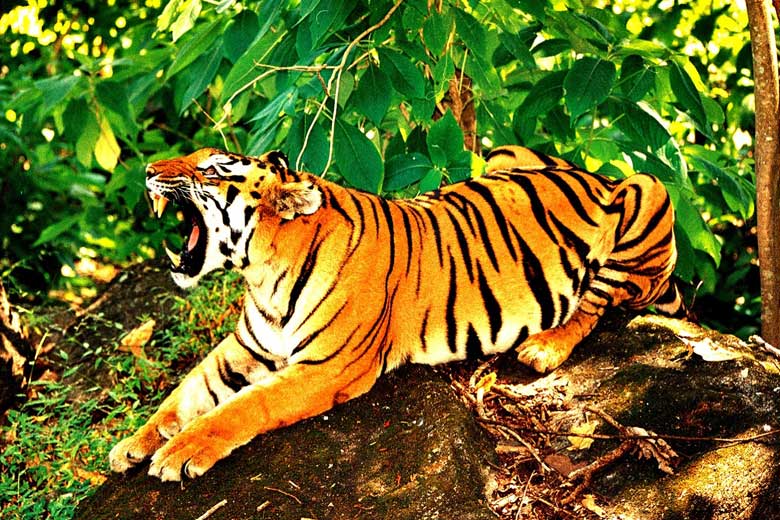
$ 280
06 Nights / 07 Days
Rajasthan Wildlife Tour
The name Rajasthan has a habit of invoking the images of sun-bathed sand dunes of the Thar Desert, the rustic turban and mustache of Rajasthani men and women’s ghagra.
View PackageFind related packages
