

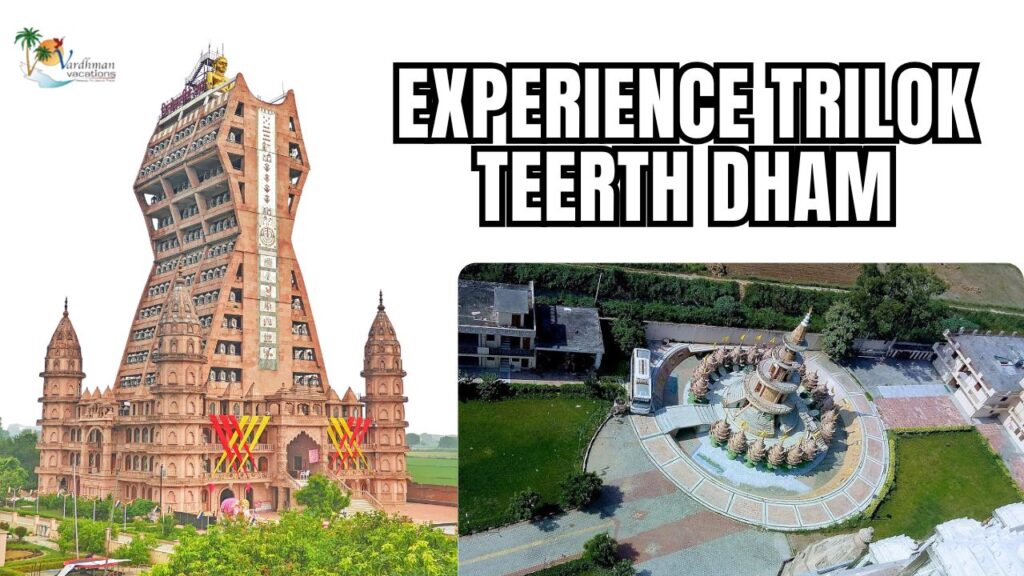
Discovering Trilok Teerth Dham: A Majestic Jain Pilgrimage Site in Uttar Pradesh
Nestled in the quiet village of Bada Gaon in Baghpat district, Uttar Pradesh—just about 35 kilometers from the bustling streets of New Delhi—lies Trilok Teerth Dham, a breathtaking testament to Jain devotion and architectural ingenuity. As a self-proclaimed history and spirituality enthusiast, my recent visit to this Atishay Kshetra (miraculous site) left me in awe of its grandeur and the profound sense of peace it evokes. If you’re seeking a blend of ancient mysticism, modern facilities, and the serene vibes of Jain cosmology, this hidden gem is calling your name. Let me take you on a virtual tour through its towering spires and sacred halls.
The Legend Behind the Discovery
The story of Trilok Teerth Dham begins in 1922, when Jain saint Anant Kirti Maharaj had a divine premonition. He prophesied that a sacred idol lay buried within a nearby hill. True to his vision, excavations unearthed a pristine white marble idol of Lord Parshvanatha, the 23rd Tirthankara of Jainism, from a well within the site. This miraculous find marked the area as an Atishay Kshetra, drawing devotees far and wide who believe the idol—and even the well’s water—possesses healing properties.
Fast forward to 1998, when the vision for the grand Trilok Teerth Dham took shape under the guidance of revered Jain Aacharya Shri Vidyabhushan Sanmati Sagar Ji Maharaj, inspired by his guru Acharya Shri Shanti Sagar Ji Maharaj. Construction culminated in 2015 with a historic Panchkalyanak ceremony, where 3,720 Jain idols were consecrated by Digamber saints. Millions of pilgrims from India and abroad— including from the USA, Dubai, and Germany—gathered to witness this five-fold auspicious event, transforming the site into a living embodiment of Jain religious doctrine.
Architectural Marvel: A Symbol of the Three Realms
What truly sets Trilok Teerth Dham apart is its awe-inspiring design. The main temple stands at an impressive 317 feet tall—100 feet below ground and 217 feet above—crafted in the shape of the sacred Jain emblem (Swastika). This structure isn’t just a building; it’s a vertical representation of the Jain concept of Trilok (three worlds): Urdhvalok (upper world of celestial beings), Madhyalok (middle world of humans and Tirthankaras), and Adholok (lower world of infernal beings).
Atop this colossal edifice sits a 31-foot ashtadhatu (eight-metal alloy) statue of Lord Rishabhanatha (Adinath), the first Tirthankara, seated in the meditative padmasana pose. Yet, the heart of the complex beats for Parshvanatha, with his ancient idol enshrined on the ground and upper floors. The architecture draws subtle influences from Sultanate and Mughal styles, evident in the symmetric four corner towers and intricate stone carvings.
Wander deeper, and you’ll encounter a labyrinth of sub-temples and exhibits that bring Jain cosmology to life:
- Samavasarana: A replica of the divine assembly hall where Tirthankaras preached.
- Nandishwar Dweep and Jambudweep: Miniature models depicting sacred islands from Jain scriptures.
- Trikaal Chaubisi: Statues of the 24 Tirthankaras across past, present, and future eras.
- Meru Temple and Lotus Temple: Ethereal spaces for contemplation and worship.
- Parshvanath Temple: The original sanctum housing the miraculous idol.
The complex spans over 50,000 square yards, with 16 stories offering a library, hospital, mess hall, goshala (cow shelter), and even an English-medium CBSE-affiliated school teaching 800 students ethical values alongside academics. For the spiritually inclined, there’s a dedicated meditation center and Aacharya Bimal Sagar Sadhna Bhavan with 35 rooms for retreats.
A Pilgrim’s Paradise: Facilities and Festivals
Trilok Teerth Dham isn’t just for the devout—it’s a well-equipped haven for all. The on-site Dharamshala boasts 29 A/C rooms, 94 deluxe rooms, and 96 standard ones, complete with modern amenities like elevators and extra mattresses. Meals are sattvic (pure vegetarian), emphasizing ahimsa (non-violence). Buses ferry students and visitors alike, making it family-friendly.
The real magic unfolds during festivals. Every February, the Mahamastakabhishek (grand head anointing) of Lord Adinath at Siddhshila draws massive crowds. Light and sound shows illuminate the temple in evenings, turning the night sky into a canvas of spiritual storytelling. Other highlights include Shanigrah Kasht Nivarak Vidhan rituals at the Muni Shree Suvaratnath Temple and celebrations for the Panchkalyanak.
Why Visit? Our Takeaway
In a world racing toward chaos, Trilok Teerth Dham feels like a pause button—a place where marble whispers ancient wisdom, and every step reinforces the Jain principles of compassion, truth, and restraint. Whether you’re a Jain pilgrim fulfilling a vow or a curious traveler chasing architectural wonders, this site promises solace and wonder. Pro tip: Arrive at dawn to catch the first rays kissing Adinath’s golden form—it’s pure transcendence.
If you’re planning a trip, head to Badagaon via Khekra (about 450 meters from the ancient Parshvanath Temple). Entry is free, but donations support the ongoing expansions. Have you been? Share your stories in the comments below—I’d love to hear!
Trilok Teerth Dham: Where the three worlds meet, and your soul finds its way home.