
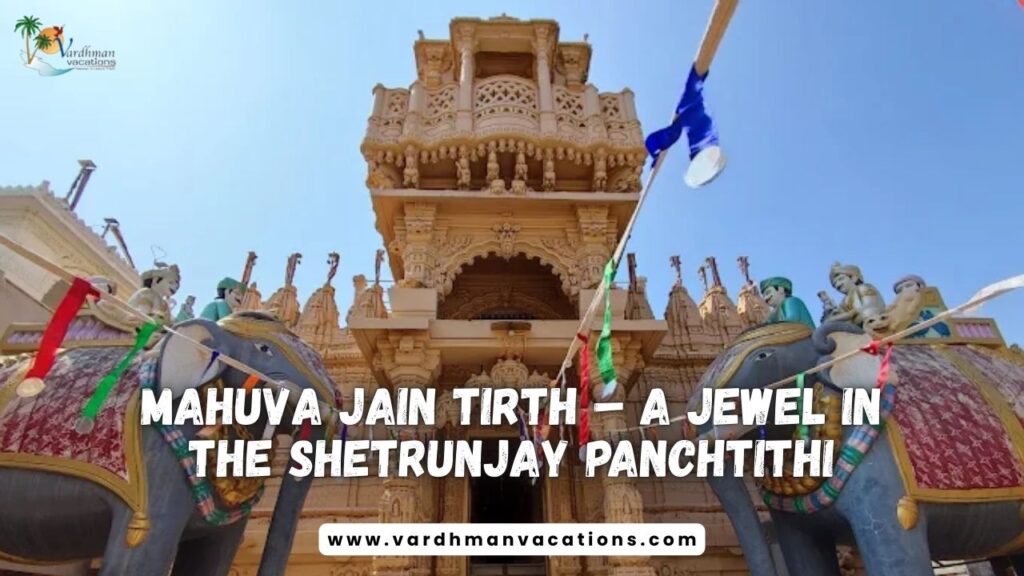
Nestled in the coastal town of Mahuva, Gujarat, where the Arabian Sea whispers ancient secrets to the shore, lies a sacred haven for the soul: Mahuva Jain Tirth, also revered as part of the Shetrunjay Panchtithi. For Jains, this isn’t just a temple—it’s a portal to spiritual renewal, a place where the clamor of modern life fades into the echo of timeless chants. As one of the five sacred tirths (pilgrimage sites) orbiting the majestic Shatrunjay Hill near Palitana, Mahuva Tirth invites pilgrims to step into a world of marble spires, intricate carvings, and profound peace. Join me on this virtual journey as we explore its history, architecture, and the ethereal aura that makes it a must-visit for every seeker.
The Sacred Roots: A Legacy of Enlightenment
Mahuva Tirth’s story is woven into the fabric of Jainism’s golden tapestry, dating back centuries. The site’s sanctity is amplified by its association with Acharya Vijay Nemi Suri Ji Maharaj, fondly called the “Shashan Samrat” (Emperor of the Jain Order). Born and attaining moksha (liberation) right here in the 14th century Vikram Samvat, his legacy infuses the air with reverence. Legends whisper that this is the birthplace and nirvana sthal (place of final emancipation) of this revered tithodharak—a reviver of sacred shrines—who breathed life back into forgotten temples.
At the heart of the tirth stands the mesmerizing idol of Lord Mahavir, the 24th Tirthankara, known as “Jivit Swami.” Carved in pristine white marble, this 91 cm seated figure in padmasana (lotus posture) gazes serenely, as if inviting you to shed your inner burdens. Mentioned in ancient texts from the 14th century, the idol symbolizes eternal life and vitality, drawing devotees who believe a darshan (sacred viewing) here revitalizes the spirit. Surrounding it are other revered murtis (idols), including the imposing figure of Adbhut Dada, alongside images of Tirthankaras like Adinath and Shantinath, each telling tales of conquest over karma.
As part of the Panchtithi—the five holy sites encircling Shatrunjay, the “Place of Victory Against Inner Enemies”—Mahuva Tirth forms a spiritual constellation. Shatrunjay itself, home to over 865 temples atop its twin hills, was sanctified by Lord Rishabhanatha (Adinath), the first Tirthankara, who delivered his inaugural sermon there. Pundarik Swami, Adinath’s grandson, is said to have attained nirvana on these slopes, earning it the name Pundarikgiri. Mahuva, just 75 km away, acts as a gentle prelude to this grand ascent, offering a more accessible embrace of divinity for those not ready for the 3,750-step climb.
Architectural Marvels: Where Stone Sings Devotion
Step through the grand gates of Mahuva Jain Tirth, and you’re enveloped by a sprawling complex that blends grandeur with intimacy. The main temple, the largest Jain shrine in Mahuva, rises like a white lotus from the earth, its domes and shikharas (spires) piercing the sky in elegant filigree. Intricate jali (lattice) work filters sunlight into golden patterns on the marble floors, creating a dance of light that feels almost divine.
Inside, the garbha griha (sanctum) houses the Jivit Swami idol under a canopy of silver and gold-embellished arches. Flanking halls brim with smaller shrines, each adorned with frescoes depicting Jain cosmology—from the endless cycles of samsara to the path of ahimsa (non-violence). The premises, spanning a vast building compound, include multiple sub-temples dedicated to various Tirthankaras, fostering a sense of communal worship. It’s not just architecture; it’s a symphony of devotion, where every pillar whispers mantras and every courtyard invites meditation.
What strikes visitors most is the palpable tranquility. “Great Place… Great atmosphere.. peace of mind,” raves one pilgrim in online reviews, echoing the sentiment of many who describe it as a “wonderful place” that soothes the restless heart. For families, the site’s accessibility—mere steps from the bus stand—makes it an ideal stop, blending spiritual depth with practical ease.
A Pilgrim’s Path: How to Reach and What to Expect
Reaching Mahuva Tirth is as seamless as its spiritual flow. The nearest railway station is Mahuva Junction, just 1.5 km away, with auto-rickshaws readily available for the short hop. Buses from major Gujarati cities like Bhavnagar (50 km) or Ahmedabad (200 km) drop you right at the doorstep, 100 meters from the bus stand. If driving, a smooth tar road leads directly to the site, welcoming cars and buses alike.
Once there, immerse yourself in rituals like aarti (devotional offering) at dawn or dusk, or the simple act of circumambulating the temple—parikrama—for karmic purification. Nearby, the Mahuva Tapagach Jain Dharamshala offers cozy AC and non-AC rooms exclusively for Jains, complete with sattvik meals in the bhojanalaya (communal dining hall). It’s a stone’s throw from the tirth, ensuring your focus remains on devotion rather than logistics.
The best time? Year-round, but the Fagan Sud Ponam (full moon in Phalgun, February-March) draws lakhs for the grand parikrama around Shatrunjay, with Mahuva as a vibrant base camp. Avoid the monsoon closure (June-September), when the hills rest.
Why Mahuva Tirth Calls to the Modern Soul
In our fast-spun world, places like Mahuva Jain Tirth remind us of the anchors of faith—ahimsa, aparigraha (non-possession), and anekantavada (many-sided reality). It’s more than a pilgrimage; it’s a reset button for the weary. Whether you’re a devout Jain tracing ancestral footsteps or a curious traveler seeking solace, this tirth promises transformation. As the sun dips into the sea beyond Mahuva’s shores, standing before Jivit Swami, you can’t help but feel alive—truly, eternally so.
Jay Jinendra! May the blessings of the Tirthankaras guide your path. Have you visited Mahuva Tirth? Share your stories in the comments below—I’d love to hear how it touched your journey.
This blog is inspired by timeless Jain lore and pilgrim tales. For the latest travel updates, consult local travel agent like the Vardhman Vacations (098111-75768).