

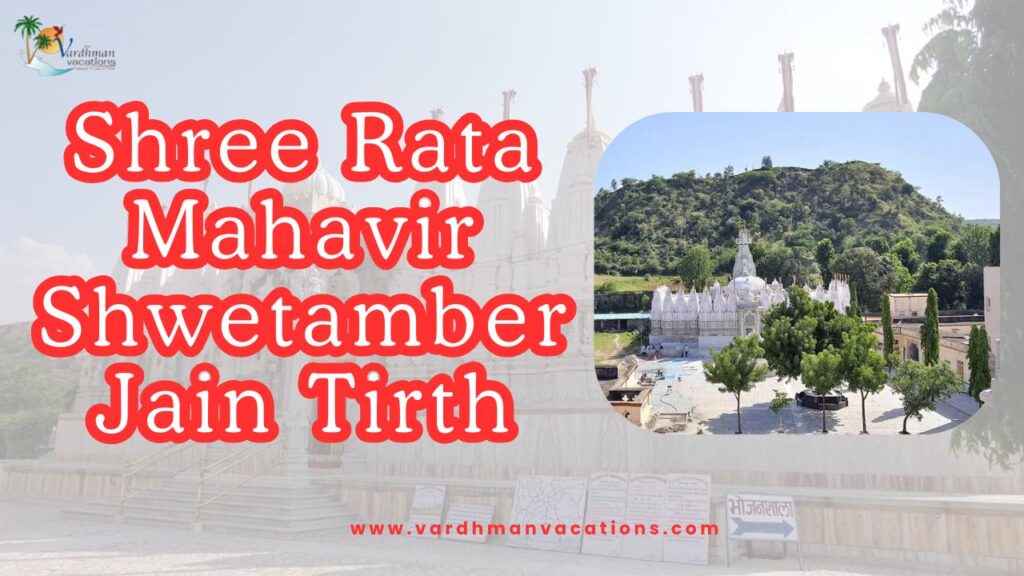
Nestled amid the serene landscapes of Rajasthan, Shree Rata Mahavir Shwetamber Jain Tirth (also widely known as Shri Hathundi Rata Mahavir Teerth or Hathundi Teerth) stands as a cherished Svetambara Jain pilgrimage site. This ancient temple, dedicated to Lord Mahavira—the 24th Tirthankara of Jainism—draws devotees seeking spiritual solace, architectural beauty, and a connection to centuries-old Jain heritage.
Location and How to Reach
The tirth is located in Bijapur village (also referred to in connection with Hathundi/Hatundi), Pali district, Rajasthan, India. The postal address is often listed as Bijapur, District Pali, PIN 306707.
- Nearest railway station: Jawai Bandh Railway Station (~20 km away). Other nearby options include Falna (~28 km) and Bali.
- Accessibility: Bijapur bus stand is about 3 km from the temple. Regular buses and taxis connect from major nearby cities and towns like Falna, Ranakpur (~40 km away), and Sirohi. The temple lies in a region surrounded by green hills, offering a peaceful, pollution-free environment ideal for contemplation and prayer.
Historical Significance
The temple’s origins trace back to remarkable antiquity. According to Jain historical records:
- The site was originally built around 313 A.D. (370 Vikram Samvat) and initially dedicated to Lord Parshvanath (the 23rd Tirthankara).
- In 1278 (1335 Vikram Samvat), the principal idol of Lord Mahavira was installed, shifting the primary focus to Bhagwan Mahavir Swami.
- The moolnayak (principal deity) idol of Lord Mahavira is unique: crafted from a mixture of bricks, sand, and calcium (resembling lime mortar), it has a distinctive reddish hue—hence the name “Rata Mahavir” (“Rata” meaning red in local dialects).
- This reddish idol became the identifying feature of the tirth, transforming it into a prominent Svetambara Jain center over the centuries.
The temple is managed under the trust known as Shree Hathundi Rata Mahavir Swami Teerth Pedhi, which maintains its traditions and facilities for pilgrims.
The Temple and Its Features
The temple complex exudes simplicity blended with profound sanctity. Key highlights include:
- The main garbhagriha housing the reddish Rata Mahavir idol of Lord Mahavira in a meditative posture.
- Surrounding shrines dedicated to other Tirthankaras, reflecting the inclusive Jain reverence for all enlightened beings.
- The serene setting between green hills creates a calm, spiritually uplifting atmosphere—perfect for meditation, aarti, bhajans, and religious discourses.
- Though not as massively grand as some urban Jain temples, its ancient aura and natural surroundings make it a favorite for those seeking quiet devotion.
Devotees often describe the location as a “cool, clean, non-polluting” Jain environment that fosters inner peace.
Spiritual Importance and Festivals
As a Svetambara Jain tirth, it emphasizes non-violence, truth, and ascetic ideals taught by Lord Mahavira. Pilgrims visit to offer prayers, perform rituals, and seek blessings for spiritual progress. The temple complex hosts regular Jain observances, with special fervor during major festivals like Mahavir Jayanti.
The site’s historical continuity—from its Parshvanath origins to its current Mahavira-centric identity—symbolizes the enduring Jain tradition of reverence across Tirthankaras.
Why Visit Shree Rata Mahavir Tirth?
In a world of haste, this tirth offers timeless tranquility. Whether you’re a Jain devotee tracing sacred footsteps, an architecture enthusiast admiring ancient craftsmanship, or a traveler exploring Rajasthan’s spiritual gems, Rata Mahavir provides a rare blend of history, faith, and natural beauty.
If planning a visit, combine it with nearby Jain heritage sites like Ranakpur for a fulfilling pilgrimage circuit. May the blessings of Rata Mahavir bring peace and enlightenment to all who seek its divine presence.