

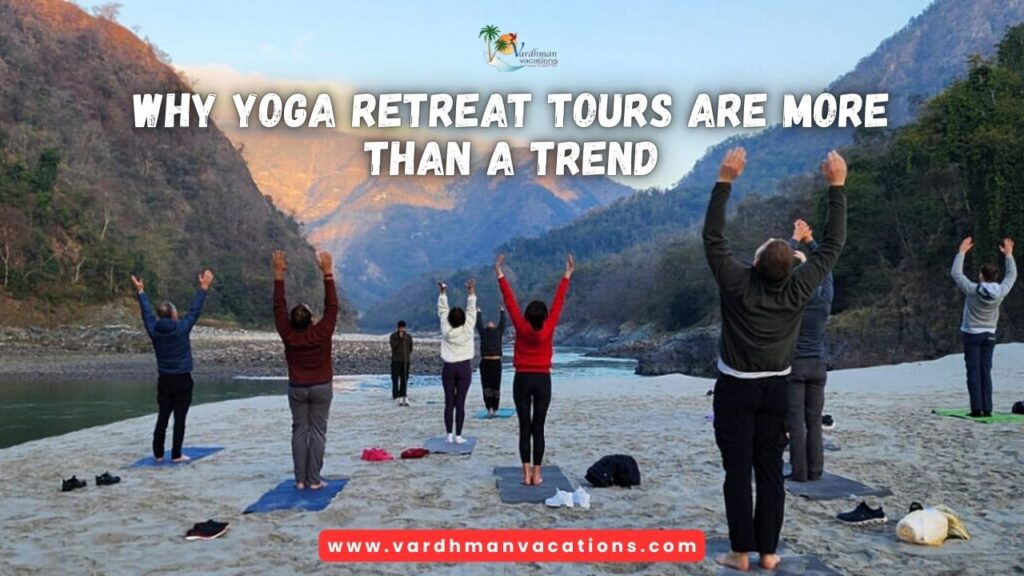
– They’re a Life-Changing Reset
(And Why You Probably Need One in 2026)
In an era where burnout is practically a badge of honor and doom-scrolling is our default downtime, yoga retreat tours have exploded from niche wellness escapes into essential mental-health interventions. But beyond the Instagram-worthy sun salutations and green smoothies lies a deeper question: Why are millions of people now willing to fly across the world, unplug for a week, and twist themselves into pretzels with strangers?
Here’s the unfiltered truth — backed by science, traveler stories, and the quiet revelations that only happen when your phone has no signal.
1. A Hard Reset for an Overstimulated Brain
Modern life keeps your nervous system in permanent “fight-or-flight.” Notifications, open-plan offices, and 24/7 news cycles spike cortisol levels daily. Studies (like those published in Frontiers in Immunology, 2022) show that just 7–10 days of structured yoga, pranayama, and meditation at a retreat can:
- Lower cortisol by up to 30%
- Increase GABA (the “chill” neurotransmitter) by 27%
- Dramatically improve heart-rate variability (a key marker of stress resilience)
Translation: A week at a retreat does what months of sporadic yoga classes and “trying to meditate on the subway” simply can’t.
2. Deep Practice Without Real-Life Interruptions
You know that beautiful home practice you abandon the moment your boss emails at 8:07 p.m.? A retreat removes every excuse. Daily schedules typically include:
- 2–3 guided yoga sessions (often sunrise + sunset)
- Workshops on alignment, philosophy, or specialty styles (Yin, Ashtanga, Kundalini)
- Extended silent meditation or pranayama circles
Without laundry, kids, or group chats, most people touch depth in their practice they’ve never experienced — think holding a steady Nadi Shodhana for 20 rounds while tears you didn’t know were there just… roll.
3. Community That Actually Heals
Loneliness is the silent epidemic of our time (U.S. Surgeon General declared it a public-health crisis in 2023). Retreats create instant, judgment-free tribes. You cry in Yoga Nidra next to a CEO from Singapore and a tattoo artist from Lisbon, then share cacao under the stars. These micro-communities often become lifelong support networks — WhatsApp groups that are still checking in years later.
4. Digital Detox Backed by Geography
The best retreats are deliberately remote — Bali rice terraces, Costa Rican jungle, Himalayan foothills, or the deserts of Joshua Tree. No Wi-Fi isn’t a marketing gimmick; it’s medicine. Research from the University of California (2024) found that four days without screens:
- Restores attention span
- Boosts creative problem-solving by 50%
- Improves sleep architecture (more deep + REM phases)
You come home able to read an actual book again.
5. Perspective Shifts Money Can’t Buy
Something mysterious happens on Day 4 or 5. The inner narrator that usually screams “not enough” gets quiet. Travelers repeatedly describe the same epiphanies:
- Realizing 90% of their stress is self-generated
- Discovering joy in simplicity (rice + dal suddenly tastes like heaven)
- Feeling their body as an ally instead of a complaint department
These aren’t fleeting vacation highs. A 2023 study in the Journal of Positive Psychology tracked retreat participants for 12 months and found sustained increases in life satisfaction, mindfulness, and self-compassion.
6. Physical Overhaul in Disguise
While the spiritual gains steal the headlines, the body gets a serious upgrade:
- Improved insulin sensitivity from daily movement + plant-heavy meals
- Better lymphatic drainage (all those twists literally wring you out)
- Reset circadian rhythms from waking with the sun
Many return 3–8 kg lighter without ever feeling deprived.
Who Actually Needs a Yoga Retreat in 2026?
- The burnt-out corporate warrior who hasn’t taken more than a long weekend in five years
- The new parent desperate to remember who they were before diapers
- The digital nomad whose “freedom” somehow feels like constant hustle
- Anyone who’s “fine” but quietly knows they’re one email away from a breakdown
How to Choose the Right One (Quick Cheat Sheet)
| Priority | Look For | Red Flags |
|---|---|---|
| Authentic practice | Small groups (12–20), experienced facilitators | 80-person “yoga party” resorts |
| True detox | Remote location, Wi-Fi-free zones | “Poolside yoga + bottomless mimosas” |
| Depth vs. vacation | Silence days, philosophy talks | Insta-models doing acrobatics at sunrise |
| Post-retreat integration | Take-home practices, follow-up calls | Zero support once you leave |
Final Thought: It’s Not a Luxury — It’s Maintenance
Think of a yoga retreat like servicing a high-performance car you’ve been red-lining for years. You wouldn’t skip oil changes and expect the engine to magically keep running. Your nervous system deserves the same respect.
In 2026, the world isn’t getting calmer. But you can. One intentional week — surrounded by mountains, strangers who become soul friends, and the sound of your own breath finally louder than your thoughts — might just be the wisest investment you’ll ever make.
Namaste (and see you on the mat — somewhere far away from your inbox).
Ready to book? Start with trusted platforms like BookYogaRetreats.com, or go deep with classics: Anahata (Goa), Purple Valley (Goa), Sivananda Ashram (Kerala), or newer gems like The Yoga Forest (Guatemala) and Zion Yoga Retreat (Utah). You can call us at 9811175768 or visit our website vardhmanvacations.com
Your future, less-frazzled self is already thanking you.