

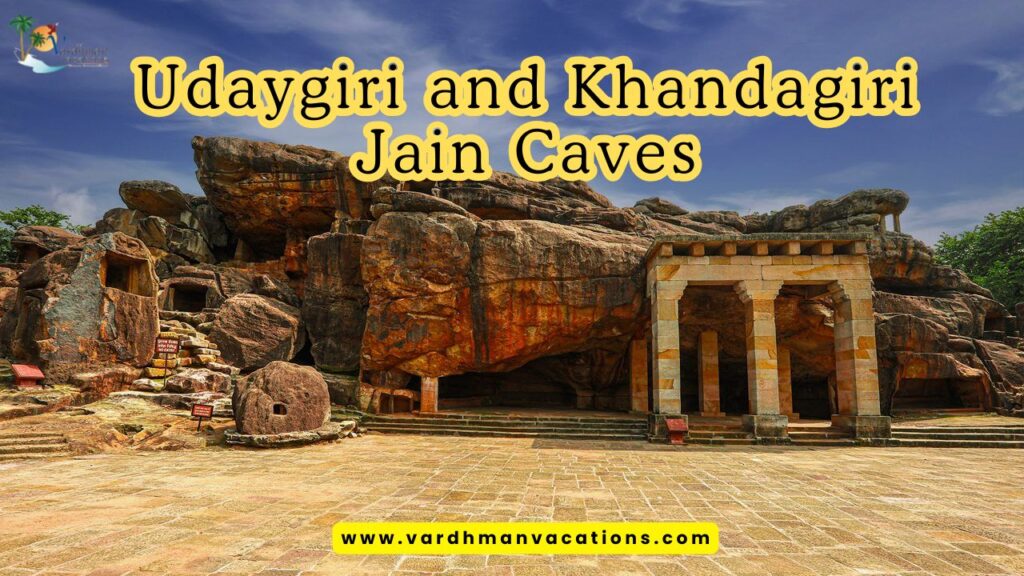
Complete 2026 Guide to Odisha’s Ancient Rock-Cut Jain Heritage
Looking for one of India’s most fascinating ancient Jain rock-cut sites? The Udaygiri and Khandagiri Jain Caves near Bhubaneswar, Odisha, are a must-visit for history lovers, Jain devotees, and curious travelers. Carved into two twin sandstone hills over 2,200 years ago, these 33 caves (18 in Udaygiri and 15 in Khandagiri) offer breathtaking carvings, priceless inscriptions, and a peaceful glimpse into ancient Jain monastic life.
In this guide by Vardhman Vacations, you’ll discover the full history, famous caves, intricate architecture, Kharavela’s legendary inscription, how to reach the site, best time to visit, and practical travel tips. Whether you’re planning a day trip from Bhubaneswar or exploring Odisha’s rich heritage, the Udaygiri Khandagiri Caves deliver an unforgettable experience of spirituality, art, and ancient engineering.
Quick Facts About Udaygiri and Khandagiri Caves
- Location: 3–6 km south of Bhubaneswar, Odisha (Khandagiri area).
- Age: Primarily 2nd–1st century BCE (Kharavela era).
- Total Caves: 18 in Udaygiri (“Sunrise Hill”) + 15 in Khandagiri.
- Built For: Jain ascetics (monks) seeking meditation and moksha.
- Significance: One of the oldest Jain rock-cut complexes in India; protected by Archaeological Survey of India (ASI) as an Adarsh Smarak Monument.
- Entry Fee (2026): ₹25 for Indians, ₹250 for foreigners; video camera ₹25 extra.
- Timings: 8:00 AM – 5:00 PM (open all days).
History: King Kharavela and the Birth of a Jain Pilgrimage Site
The caves were mostly excavated during the reign of King Kharavela (Mahameghavahana dynasty, 2nd–1st century BCE), the powerful ruler of ancient Kalinga (present-day Odisha). Kharavela, a devout Jain, ordered these rock-cut shelters (lena or leṇa in inscriptions) for Jain monks to live, meditate, and practice non-violence, austerity, and spiritual discipline.
The hills were known as Kumari Parvata in ancient times. While some sources mention up to 117 caves originally (based on the Hathigumpha inscription), today 33 remain. The site remained important through the centuries – the Somavamshi dynasty renovated parts in the 11th century and added beautiful Jain Tirthankara sculptures on Khandagiri.
These caves are not just shelters – they are living proof of Odisha’s early Jain heritage and Kharavela’s cultural patronage. The only detailed record of Kharavela’s life comes from the famous Hathigumpha inscription here.
Architecture: Masterpiece of Ancient Rock-Cut Art
The caves blend natural rock formations with skilled human carving. Built in sandstone, they feature:
- Verandahs, pillars, cells with stone beds for monks.
- Ornate friezes showing royal processions, animals (elephants, tigers, snakes, parrots), musicians, dancers, and Jain symbols.
- Double-storeyed designs in many Udayagiri caves.
- Later medieval additions of 24 Tirthankara (Jain enlightened beings) figures.
The style is simple yet elegant – perfect for ascetic life while showcasing early Indian sculptural skill.
Must-See Caves in Udayagiri (18 Caves)
Udayagiri is the more elaborate hill. Highlights include:
- Rani Gumpha (Queen’s Cave – Cave 1): The largest and most beautiful double-storeyed monastery. Rich carvings of victory marches, wild animals, musicians, elephants, and royal scenes. Often called the “star attraction.”
- Hathi Gumpha (Elephant Cave – Cave 14): Famous for the 17-line Hathigumpha inscription in Brahmi script by Kharavela. It starts with the Jain Namokar Mantra and details his conquests, repairs to canals, and bringing back the sacred Agra-Jina statue. One of India’s most important historical inscriptions.
- Ganesha Gumpha (Cave 10): Elephant guardians at the entrance; carvings narrate the romantic story of King Udayana and Princess Vasavadatta.
- Vyaghra Gumpha (Tiger Cave): Entrance shaped like a tiger’s mouth – super photogenic!
- Mancapuri Gumpha: Inscriptions mentioning Kharavela’s chief queen and successor Kudepasiri.
- Other notable: Jaya Vijaya Gumpha, Sarpa Gumpha (Snake Cave), Bajaghara Gumpha.
Must-See Caves in Khandagiri (15 Caves)
Khandagiri caves are simpler but equally spiritual. Key ones:
- Ananta Gumpha (Cave 3): Beautiful carvings of women, elephants, athletes, and geese carrying flowers; Gaja-Lakshmi motif.
- Navamuni Gumpha, Barabhuji Gumpha, Lalatendu Keshari Gumpha: Feature sculptures of Jain Tirthankaras (including Rishabhanatha, Parshvanatha) and Sasanadevis added in the 11th century.
- A modern Digambar Jain temple sits atop the hill with panoramic views of Bhubaneswar.
The Hathigumpha Inscription: A Historical Treasure
This 17-line Brahmi inscription is the star of the site. It tells Kharavela’s biography – his military victories, public works, devotion to Jainism, and even his love for arts and drama. It faces Ashoka’s edicts at Dhauli, symbolizing a powerful response to earlier Mauryan influence. Scholars call it one of the most important ancient Indian records.
How to Reach Udaygiri and Khandagiri Caves
- From Bhubaneswar: Just 6–8 km (15–20 minutes by auto/cab).
- By Air: Biju Patnaik International Airport (6–7 km away).
- By Train: Bhubaneswar Railway Station (8 km).
- By Road: Well-connected buses, taxis, or Ola/Uber. Shared autos from Baramunda bus stand are cheap.
- Address: Khandagiri, Bhubaneswar, Odisha – 751030.
Best Time to Visit: October to February (pleasant 15–25°C). Avoid summer afternoons due to heat. Early morning is ideal to beat crowds and enjoy soft light for photos.
Travel Tips for a Perfect Visit
- Wear comfortable shoes – paths and steps are rocky and uneven.
- Carry water, cap, and sunscreen.
- Respect the site: No touching carvings, maintain silence in caves.
- Monkeys are common – keep belongings safe.
- Combine with a visit to nearby Bhubaneswar temples or Dhauli.
- Spend 2–3 hours; start with Udayagiri then cross to Khandagiri.
- Parking and basic facilities available at the base.
Nearby Attractions
- Dhauli Shanti Stupa and Ashoka Rock Edicts (6 miles away).
- Lingaraj Temple and other Bhubaneswar temples.
- Nandankanan Zoological Park.
- State Museum in Bhubaneswar.
Why Visit Udaygiri and Khandagiri Jain Caves?
These caves are more than just rocks – they are a window into ancient India’s Jain philosophy, royal power, and artistic brilliance. The peaceful hilltop setting, stunning carvings, and historic inscriptions make them a perfect blend of spirituality and history. Whether you’re tracing Jain roots, studying epigraphy, or simply seeking a scenic heritage walk, the Udaygiri Khandagiri Caves will leave you inspired.
Frequently Asked Questions (FAQs)
Q1: Are Udaygiri and Khandagiri Caves open in 2026?
Yes, open daily from 8 AM to 5 PM.
Q2: Is there an entry fee?
₹25 for Indian citizens, ₹250 for foreigners.
Q3: How many caves are there?
18 in Udaygiri + 15 in Khandagiri = 33 total.
Q4: What is special about Hathigumpha?
It contains Kharavela’s 17-line inscription – the only detailed record of his reign.
Q5: Can I visit both hills in one day?
Yes, easily in 2–3 hours. Start early!
Q6: Are the caves suitable for seniors or kids?
Moderate fitness needed due to steps; take it slow and wear good shoes.
Plan your trip to the Udaygiri and Khandagiri Jain Caves soon and step back into Odisha’s glorious Jain past. Share this guide with fellow travelers and help preserve this priceless heritage!
Safe travels and Jai Jitendra!