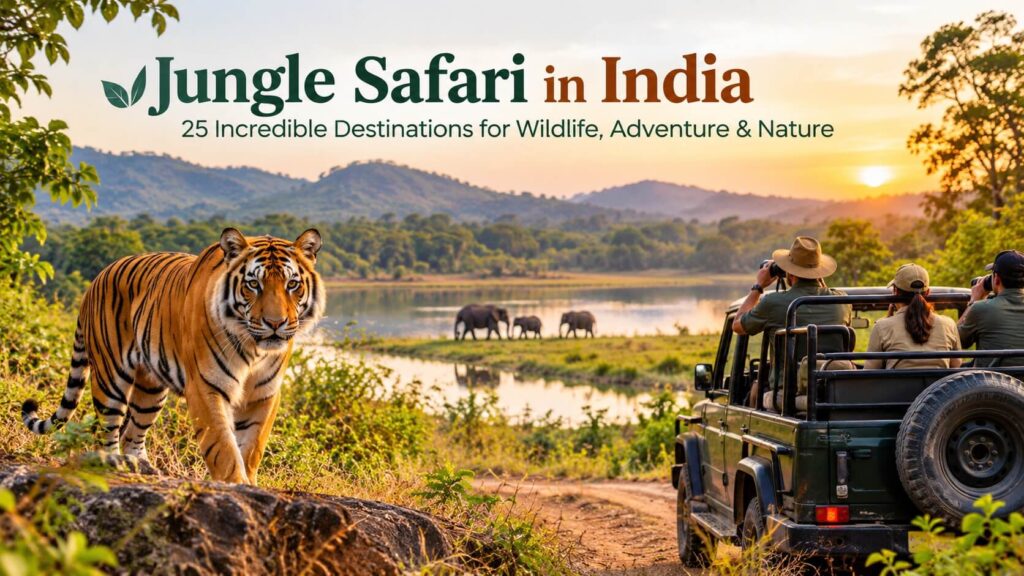


There is a specific kind of magic that settles over Central India as the morning mist lifts from the sal forests. It begins with the sharp alarm call of a langur, followed by the sudden flight of a herd of chital. Then comes silence—a heavy pause that signals the presence of the jungle’s true monarch: the Bengal tiger.
For wildlife enthusiasts, few journeys rival the famed Tiger Circuit of Madhya Pradesh—anchored by Bandhavgarh National Park and Kanha National Park. Though geographically close, each park offers a completely different safari experience—one intense and dramatic, the other expansive and poetic.
Bandhavgarh: The Land of the White Tiger
If your primary goal is tiger sightings, Bandhavgarh stands unmatched. Once the hunting reserve of the Maharajas of Rewa, this compact park is known for one of the highest tiger densities in India.
The Geography of Sightings
Dominated by steep ridges and forested valleys, Bandhavgarh revolves around the ancient Bandhavgarh Fort, believed to be over 2,000 years old.
Key Safari Zones:
- Tala Zone: The most iconic zone, combining rich biodiversity with historic landmarks like Shesh Shaiya.
- Magadhi Zone: Known for grasslands and increasingly consistent tiger sightings.
- Khitauli Zone: A more open landscape, ideal for spotting sloth bear and occasional elephants.
Safari Note (2026)
Regulations around mobile phone usage during safaris are becoming stricter in many reserves to enhance wildlife protection and visitor experience. While not universally banned, usage is often discouraged—so carrying a DSLR or binoculars is still your best bet.
Kanha: Kipling’s Living Masterpiece
If Bandhavgarh is intensity, Kanha is immersion. Spanning over 940 sq. km, Kanha National Park is one of Asia’s finest-managed reserves and the inspiration behind The Jungle Book.
The Biodiversity Powerhouse
Kanha is globally recognized for saving the barasingha (hard-ground swamp deer) from extinction.
- Landscape: Endless sal forests interspersed with vast meadows (“maidans”).
- Experience: Tracking wildlife here feels authentic—long drives, careful listening, and patient observation.
- Wildlife: Along with tigers, look for dhole, leopards, and over 300 bird species.
Key Zones:
- Kanha Zone: Famous for scenic meadows and barasingha herds.
- Mukki Zone: Slightly more rugged, excellent for predator sightings including leopards.
Bandhavgarh vs Kanha: Quick Comparison
| Feature | Bandhavgarh | Kanha |
|---|---|---|
| Best For | High tiger sighting probability | Scenic landscapes & biodiversity |
| Terrain | Rocky hills, dense forest | Meadows, sal forests |
| Top Wildlife | Tigers, leopards, sloth bears | Tigers, barasingha, dhole |
| Experience | Intense & fast-paced | Calm & immersive |
Best Time to Visit
Both parks remain open from mid-October to June.
- October – February: Cool weather, lush greenery, excellent for birding and comfortable safaris.
- March – June: Peak summer, higher chances of tiger sightings near water sources, but temperatures can exceed 40°C.
Essential Travel Tips for 2026
1. Advance Booking is Crucial
Core zone permits (especially Tala and Kanha zones) open ~120 days in advance and sell out quickly.
2. Expect Limited Connectivity
Many jungle lodges promote a digital detox experience—network coverage can be minimal.
3. Don’t Ignore Buffer Zones
Areas like Dhamokhar (Bandhavgarh) and Khatia (Kanha) can offer excellent sightings with fewer vehicles.
4. Pack Smartly
Layered clothing is essential—cold mornings, warm afternoons.
The Ethical Traveler
As we move further into 2026, the focus on sustainable tourism has never been higher. Support the local Gond and Baiga tribes by visiting their villages or buying their handcrafted art. Your visit provides the economic incentive to protect these forests from poaching and habitat loss.
Whether you find yourself staring into the amber eyes of a tiger in Bandhavgarh or watching a herd of Barasingha graze in the golden light of Kanha, these parks offer something rare in our modern world: a chance to feel small in the presence of something ancient and wild.
Ready to hear the roar for yourself? Pack your khakis, leave your phone at the lodge, and step into the wild.
Are you planning to visit during the peak winter months or the sightings-heavy summer season?