

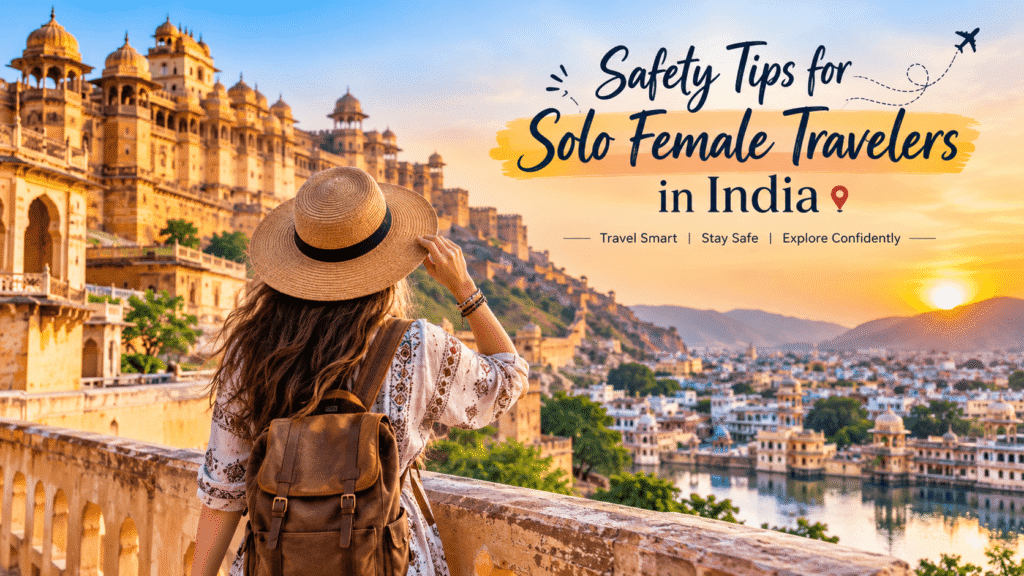
India is a fascinating country for solo travelers. From the colorful streets of Rajasthan and the peaceful backwaters of Kerala to the Himalayan mountains and ancient temples, India offers an incredible variety of experiences.
For women traveling alone, India can be both rewarding and challenging. Millions of women travel across India independently every year, but being prepared, staying alert, and understanding local customs can make the journey much more comfortable.
Whether you are planning your first solo trip to India or are an experienced female traveler, these practical safety tips will help you travel with greater confidence.
Is India Safe for Solo Female Travelers?
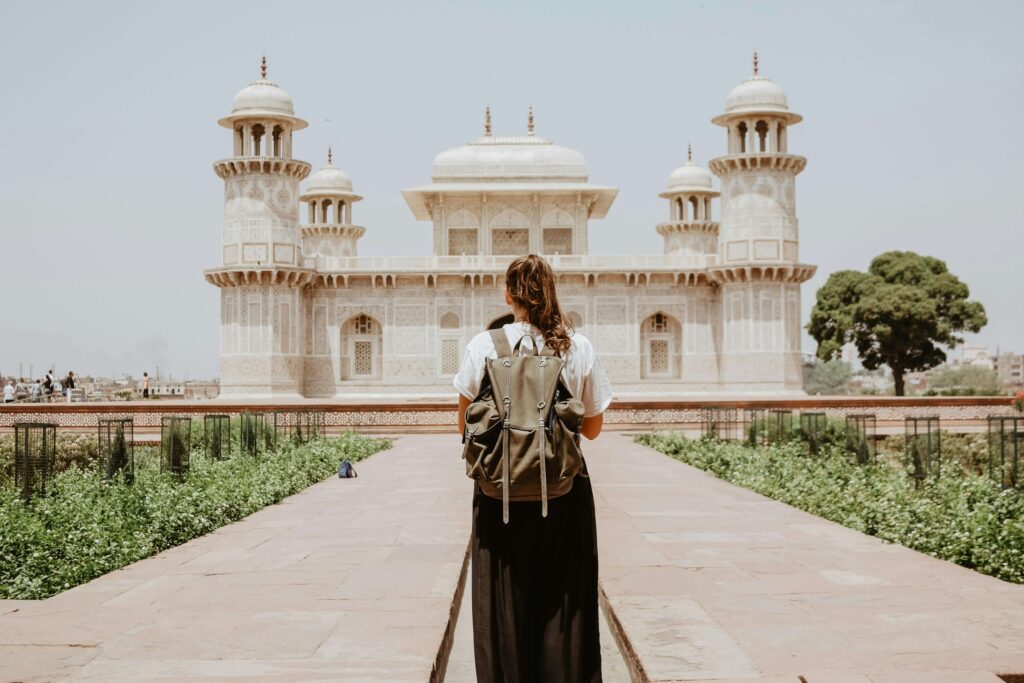
India can be safe for solo female travelers when basic precautions are followed. Safety can vary considerably between cities, rural areas, transport options, and times of day.
Major tourist destinations such as Delhi, Jaipur, Agra, Udaipur, Jodhpur, Kerala, Goa, and Rishikesh receive travelers from around the world. However, women should remain aware of their surroundings, particularly in crowded areas, isolated locations, and during late-night travel.
Safety Tips for Solo Female Travelers
The key is not to be fearful but to be prepared.
1. Research Your Destination Before You Travel
Before arriving in India, spend some time researching the destinations on your itinerary.
Learn about:
- Local customs and traditions
- Recommended neighborhoods and tourist areas
- Transportation options
- Common tourist scams
- Weather conditions
- Local emergency services
- Cultural expectations regarding clothing
- Safe accommodation options
India is extremely diverse, so safety advice that applies to Mumbai may not necessarily apply to a remote Himalayan village.
A little research before your trip can prevent many avoidable problems.
2. Choose Your Accommodation Carefully
Your hotel or guesthouse can have a major impact on your travel experience.
When traveling alone, choose accommodation with:
- Good recent reviews
- A 24-hour reception
- Secure entrances
- Good lighting around the property
- Reliable transportation assistance
- A convenient location
- Positive reviews from solo female travelers
Avoid choosing accommodation simply because it is the cheapest option.
If you arrive late at night, inform the hotel in advance and ask whether they can arrange a trusted airport or railway station transfer.
3. Keep Someone Informed About Your Travel Plans
Share your itinerary with someone you trust.
Give them information such as:
- Your flight details
- Hotel names
- Planned destinations
- Train or bus details
- Expected arrival times
- Contact information for your accommodation
You can also share your live location with a family member or friend when traveling between destinations.
You don’t need to constantly report your whereabouts, but having someone know your general plans provides an additional layer of security.
4. Be Careful With Transportation

Transportation is an important consideration for solo travelers in India.
Whenever possible, use reputable transportation services or transportation arranged through your hotel or tour operator.
For taxis and app-based rides:
- Check the vehicle registration number.
- Confirm the driver’s identity.
- Share your trip details with someone you trust.
- Avoid accepting unsolicited rides.
- Keep your phone accessible.
- Follow the route using GPS.
For trains, consider booking a suitable class and keeping your luggage secured.
If traveling overnight, choose your accommodation and transport carefully rather than taking unnecessary risks to save money.
5. Avoid Isolated Areas After Dark
One of the simplest safety rules is also one of the most useful: avoid isolated places at night.
You can enjoy India’s nightlife, restaurants, markets, and cultural events, but choose busy and well-known areas.
Avoid walking alone through:
- Empty streets
- Unfamiliar neighborhoods
- Isolated beaches
- Dark parks
- Remote roads
- Quiet railway station areas late at night
If you return to your hotel after dinner or an event, use a reliable taxi or ride service rather than walking long distances alone.
6. Dress Respectfully According to Local Customs
India has different cultural traditions across its regions.
In major cities and tourist destinations, clothing choices are generally diverse. However, when visiting temples, religious sites, villages, or conservative areas, modest clothing is usually appreciated.
Consider carrying:
- A lightweight scarf
- A shawl
- Loose-fitting trousers
- Long skirts or dresses
- Tops that cover the shoulders when appropriate
Following local dress customs isn’t just about respect—it can also help you avoid unwanted attention.
7. Keep Your Valuables Secure
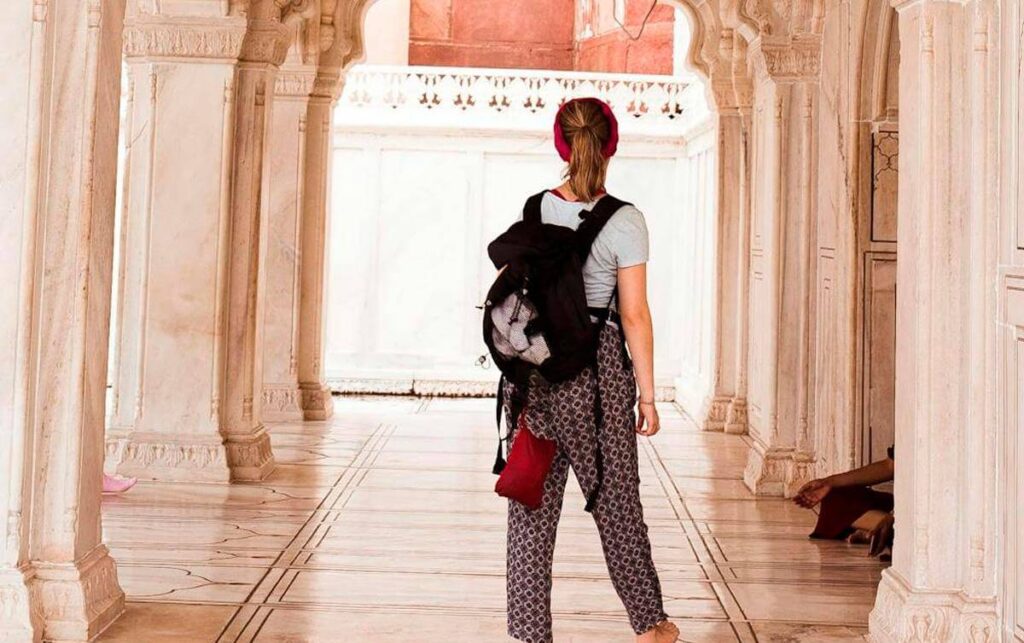
Pickpocketing can happen in crowded tourist areas, markets, public transport, and busy railway stations.
Avoid carrying large amounts of cash or displaying expensive jewelry, watches, or electronics.
Useful precautions include:
- Keep your passport securely stored.
- Carry only the cash you need.
- Use a crossbody bag with a secure closure.
- Keep your phone and wallet close.
- Make digital copies of important documents.
- Store emergency cash separately.
A hotel safe can also be useful for passports and valuables when you don’t need them during the day.
8. Be Cautious With Strangers Offering Help
Indian people are often friendly and curious toward international visitors. Many genuine interactions can become memorable parts of your trip.
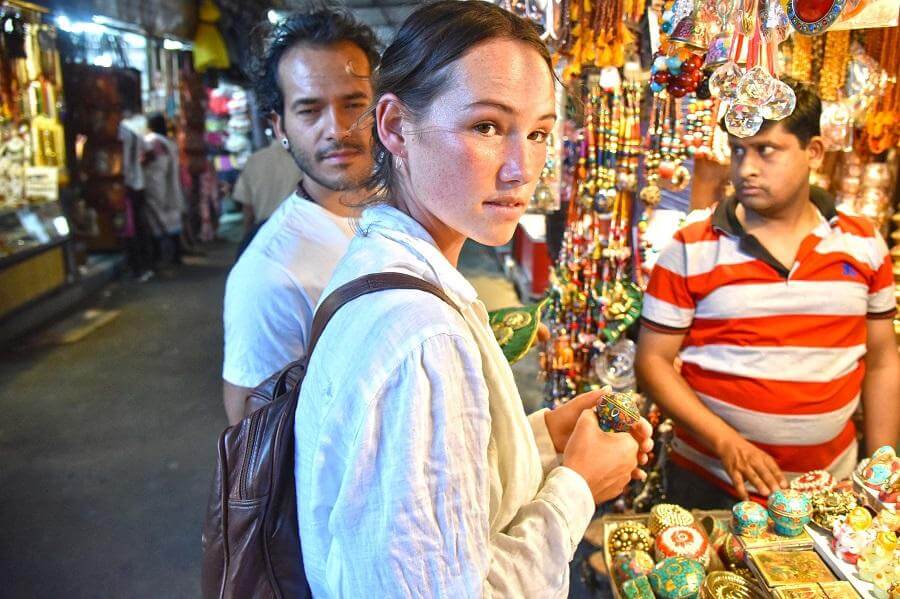
However, solo travelers should be cautious when strangers:
- Insist on taking you somewhere
- Offer unsolicited transportation
- Ask for money
- Claim that your hotel or attraction is closed
- Pressure you to buy something
- Offer unusually cheap tours
- Ask for personal information
If something doesn’t feel right, politely say no and walk away.
You don’t need to feel guilty about protecting your boundaries.
9. Watch Out for Common Tourist Scams
Like many popular tourist destinations around the world, India has some scams that travelers should know about.
Common examples can include:
“Your Hotel Is Closed”
Someone may tell you that your hotel is closed and offer to take you to another property.
Don’t accept this information at face value. Contact your hotel directly.
Overpriced Taxi Rides
Some drivers may quote unusually high prices, particularly at airports, railway stations, or tourist attractions.
Whenever possible, use prepaid, metered, app-based, or officially arranged transportation.
Unofficial Guides
Someone may approach you near a monument and offer a tour.
If you want a guide, use an official or reputable guide arranged through your hotel or tour operator.
Shopping Pressure
Some shops may use aggressive sales tactics with tourists.
If you aren’t interested, simply say no and leave.
10. Trust Your Instincts
Your instincts are an important safety tool.
If a situation feels uncomfortable, you don’t need to wait until something obviously dangerous happens.
You can:
- Leave the location
- Enter a busy shop or hotel
- Call your accommodation
- Contact someone you trust
- Take a taxi to a safer location
- Ask security personnel for assistance
Being polite is less important than being safe.
A confident “No, thank you” is perfectly acceptable.
11. Keep Your Phone Charged
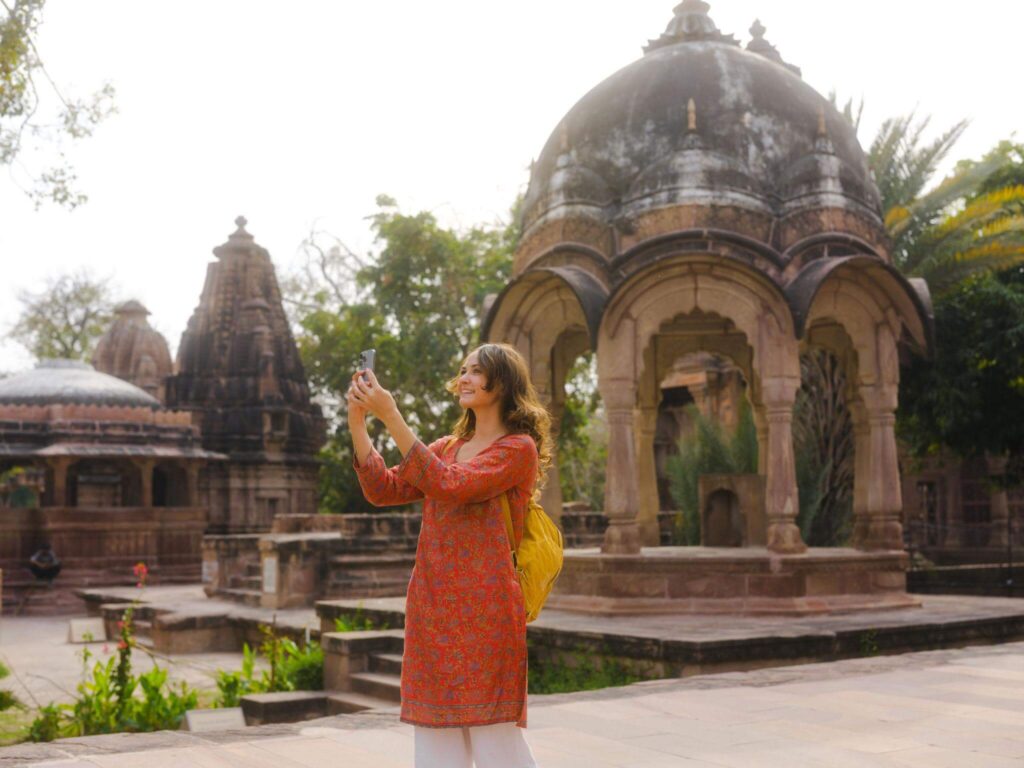
Your smartphone can be one of your most useful travel safety tools. Before leaving your hotel, make sure you have:
- A charged phone
- Mobile data
- Offline maps
- Your hotel address
- Important phone numbers
- Transportation apps
- Translation tools
Carry a power bank if you’re going on a full-day excursion. Save important information offline in case you temporarily lose internet access.
12. Don’t Share Too Much Personal Information
You don’t need to tell strangers everything about your trip.
Avoid openly sharing details such as:
- Your hotel room number
- Your complete itinerary
- Your travel dates
- Whether you are traveling alone
- Your financial information
If someone asks where you are staying, you can simply provide the name of a general area rather than your exact hotel or room number.
If you feel uncomfortable, it’s perfectly acceptable to give a vague answer.
13. Be Careful With Alcohol and Other Substances
If you choose to drink while traveling, know your limits.
As a solo traveler, it is especially important to remain aware of your surroundings.
Never leave your drink unattended, and avoid accepting drinks from strangers.
If you are unfamiliar with the area, arrange your transportation before drinking rather than trying to find a ride afterward.
14. Be Extra Careful Around Crowded Places
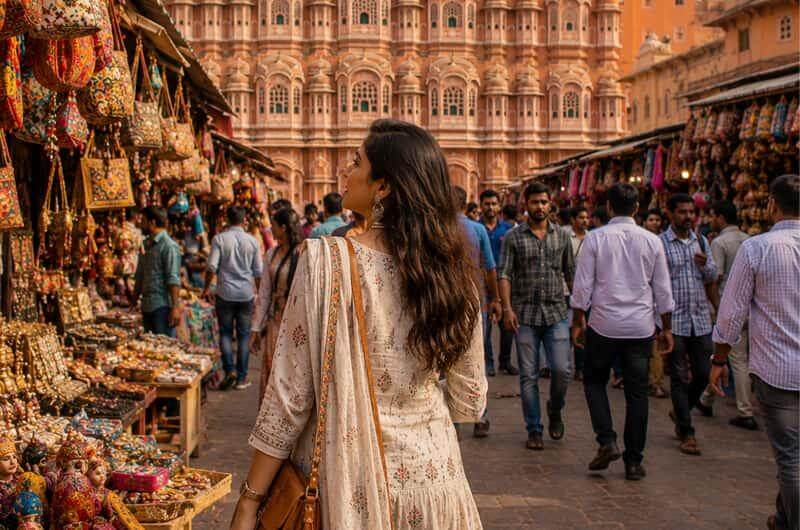
Crowded markets, festivals, railway stations, public transport, and popular monuments can become extremely busy.
Keep your belongings secure and remain aware of people around you.
Places such as:
- Markets
- Railway stations
- Metro stations
- Religious festivals
- Tourist monuments
- Public buses
can require extra attention because of crowds.
15. Keep Copies of Important Documents
Before your trip, make digital copies of:
- Passport
- Visa
- Travel insurance
- Flight tickets
- Hotel bookings
- Train tickets
- Emergency contacts
Store them securely online and keep an offline copy on your phone.
It’s also a good idea to keep a photocopy of your passport separate from the original.
16. Get Travel Insurance
Travel insurance is useful for international travelers visiting India.
Depending on your policy, it may provide assistance for situations such as:
- Medical emergencies
- Trip cancellation
- Lost baggage
- Travel delays
- Lost documents
- Emergency transportation
Read the policy carefully before purchasing it and make sure it covers the activities you plan to undertake.
17. Take Extra Precautions During Adventure Activities
India offers plenty of adventure experiences, including trekking, rafting, diving, wildlife safaris, and mountain trips.
Choose reputable operators and avoid taking unnecessary risks simply because someone offers a cheaper price.
Before booking:
- Check recent reviews.
- Ask about safety equipment.
- Verify whether guides are qualified.
- Understand what is included.
- Follow local instructions.
- Tell someone where you are going.
For trekking in remote areas, don’t head into unfamiliar terrain alone without appropriate preparation.
18. Be Careful When Taking Photos
India is incredibly photogenic, but always respect local customs.
Ask permission before photographing people, particularly in rural communities or religious settings.
Be especially careful around:
- Religious ceremonies
- Military installations
- Government buildings
- Border areas
- Sensitive infrastructure
When in doubt, ask before taking the photograph.
19. Know How to Say “No”
This is one of the most valuable skills for any solo traveler.
You don’t need a long explanation.
Simple phrases such as:
“No, thank you.”
“I’m not interested.”
“Please leave me alone.”
can be enough.
If someone continues bothering you, move toward a crowded public place and seek assistance.
20. Consider Joining Local Tours for Certain Experiences
Traveling solo doesn’t mean you have to do everything alone.
For experiences involving remote locations, wildlife, trekking, or complicated transportation, joining a small group tour can provide additional convenience and security.
For example, a guided Rajasthan tour can make it easier to visit several cities, while a professionally organized Kerala itinerary can simplify transportation between destinations.
This is particularly useful if it is your first visit to India.
21. Use Local Knowledge
Hotel staff, reputable tour operators, licensed guides, and experienced local professionals can provide useful advice about destinations.
Before heading somewhere unfamiliar, ask:
“Is this area safe to visit alone?”
“What is the best way to get there?”
“Is it okay to visit at this time?”
Local knowledge can help you avoid unnecessary problems.
22. Have a Simple Emergency Plan
Before beginning your journey, decide what you will do if something goes wrong.
Know:
- How to contact your accommodation
- How to contact your travel companion or family
- Where the nearest police station or hospital is
- How to access your travel insurance
- How to arrange transportation to a safe location
Save important information on your phone and keep a written backup.
For emergencies in India, travelers should know the nationally used 112 emergency response number and verify local procedures with their accommodation or official authorities.
Safest Travel Habits for Solo Women in India
Here is a quick checklist to remember:
| Safety Habit | What to Do |
|---|---|
| Accommodation | Choose well-reviewed hotels |
| Transportation | Use reliable and verified services |
| Night Travel | Avoid isolated areas |
| Documents | Keep copies of your passport and visa |
| Money | Carry limited cash |
| Phone | Keep it charged and connected |
| Clothing | Respect local customs |
| Personal Information | Don’t overshare |
| Strangers | Be friendly but cautious |
| Emergency | Keep important contacts accessible |
| Tours | Use reputable operators |
| Instincts | Leave uncomfortable situations |
Best Destinations in India for Solo Female Travelers
India has many destinations that can work well for independent female travelers, particularly when accommodation and transportation are planned in advance.
Kerala
Kerala is known for its backwaters, beaches, hill stations, Ayurveda, and beautiful landscapes. Destinations such as Kochi, Munnar, Alleppey, Varkala, and Kovalam are popular with international travelers.
Rajasthan
Rajasthan offers forts, palaces, colorful markets, heritage hotels, and fascinating cultural experiences. Jaipur, Udaipur, Jodhpur, and Jaisalmer are among the most popular destinations.
Goa
Goa is popular with international visitors for its beaches, cafés, markets, and relaxed atmosphere. Choose accommodation carefully and take additional precautions when exploring quieter areas at night.
Rishikesh
Rishikesh attracts travelers interested in yoga, wellness, spirituality, and adventure. Joining organized activities can be a good option for solo travelers.
Himachal Pradesh
Destinations such as Shimla, Manali, Dharamshala, and nearby mountain towns offer scenic experiences. For remote trekking routes, however, additional planning and experienced local guides may be necessary.
What Should Solo Female Travelers Avoid in India?
You don’t need to avoid India, but there are certain situations worth avoiding:
- Walking alone in isolated areas late at night
- Accepting rides from strangers
- Sharing your hotel room number
- Carrying large amounts of cash
- Displaying expensive valuables
- Ignoring local customs at religious sites
- Taking unlicensed tours
- Getting heavily intoxicated in unfamiliar surroundings
- Entering unfamiliar areas without researching them
- Ignoring your instincts when something feels wrong
Final Thoughts
India is a country of incredible diversity, and solo travel can be one of the best ways to experience it. You can explore historic forts in Rajasthan, watch the sunrise over the Ganges, cruise through Kerala’s backwaters, discover ancient temples, enjoy Himalayan landscapes, and meet people from many different cultures.
The goal isn’t to travel in fear. The goal is to travel smart.
Research your destinations, choose reliable accommodation and transportation, protect your belongings, respect local customs, stay connected, and trust your instincts.
With sensible planning and an open mind, solo female travelers can enjoy a memorable and enriching journey through India.
FAQs About Female Solo Travelers
Yes, many women travel independently across India. However, safety varies by destination, time, and situation. Research your destination, choose reliable accommodation and transportation, and stay aware of your surroundings.
Kerala, Rajasthan, Goa, Rishikesh, Himachal Pradesh, and major tourist cities are popular choices. Organized tours can be especially helpful for first-time visitors or trips involving remote areas.
It is better to avoid walking alone in unfamiliar or isolated areas at night. For late-night travel, use reliable transportation and ask your hotel to arrange a trusted transfer when possible.
Dress according to the local culture and destination. Modest clothing is recommended when visiting temples, religious sites, villages, and conservative areas. A scarf or shawl can be useful.
Public transportation can be used with appropriate precautions. Choose reputable services, keep your belongings secure, and consider safer or reserved options for overnight journeys.
Research common scams before traveling, use reputable hotels and tour operators, confirm transportation details, and avoid accepting unsolicited offers from strangers.
It is generally better not to share unnecessary personal information with strangers. You can simply say that you are meeting friends or traveling as part of a planned itinerary if you feel uncomfortable discussing your plans.
Move to a busy and well-lit location, contact your hotel or a trusted person, and seek assistance from local authorities or security personnel. Trust your instincts and leave uncomfortable situations early.
Yes. Travel insurance can provide useful protection for medical emergencies, trip cancellations, lost baggage, and other unexpected situations. Always check what your policy covers.
Keep your phone charged, use a reliable mobile connection, download offline maps, save your accommodation details, and consider carrying a power bank.
Use reputable taxi companies, app-based services, prepaid taxis, or transportation arranged by your hotel or tour operator. Check the vehicle and driver details before starting the journey.
Absolutely. Small-group and private tours can be excellent options for solo travelers, especially when visiting multiple destinations, wildlife areas, remote regions, or places with complicated transportation.
The most important tips are to research destinations, choose trusted accommodation, use reliable transportation, avoid isolated areas at night, protect valuables, respect local customs, stay connected, and trust your instincts.