
India is one of the world’s great wildlife destinations. From the grasslands of Rajasthan and the forests of Madhya Pradesh to the mangroves of the Sundarbans and the high mountains of Ladakh, the country supports an extraordinary variety of wildlife.
Among these species are animals that are not only symbols of India’s natural heritage but are also among the country’s most strongly protected wildlife. The Wildlife (Protection) Act, 1972, as amended, provides special protection to species listed under Schedule I, with restrictions on hunting, capture, possession, trade and other forms of exploitation except where legally authorised.
For travellers, seeing one of these animals in the wild can be an unforgettable experience. But wildlife tourism is about more than taking photographs. Responsible tourism can support protected areas, local communities and conservation initiatives.
Animals in India Protected Under Wildlife Laws
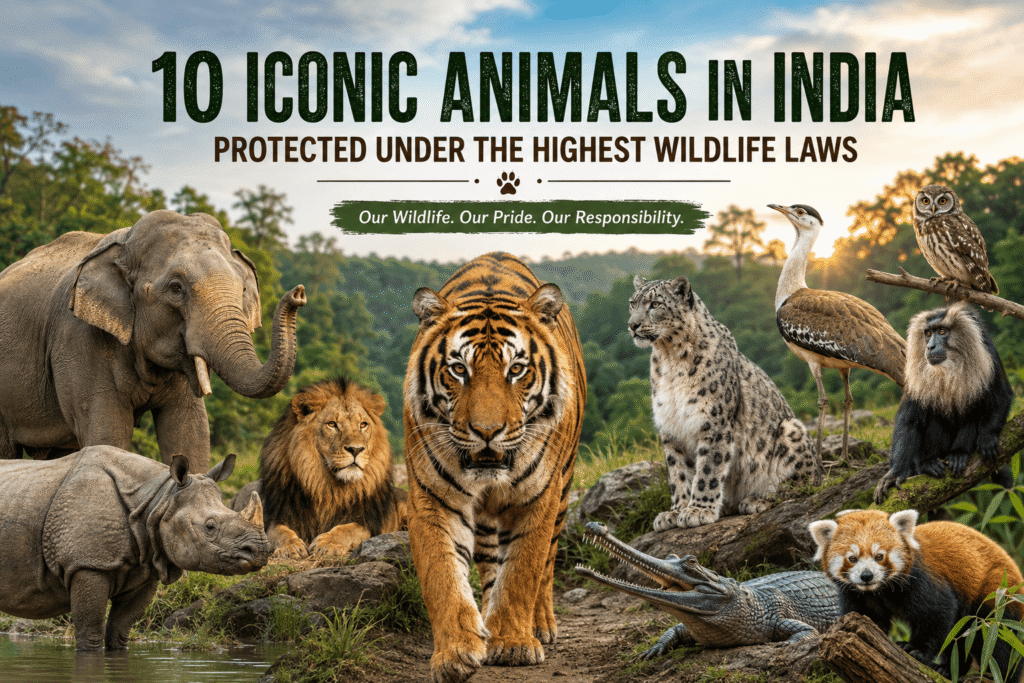
Here are 10 iconic animals of India protected under the highest level of legal protection, along with some of the best regions where wildlife enthusiasts may hope to encounter them.
1. Bengal Tiger – The Pride of India’s Jungles
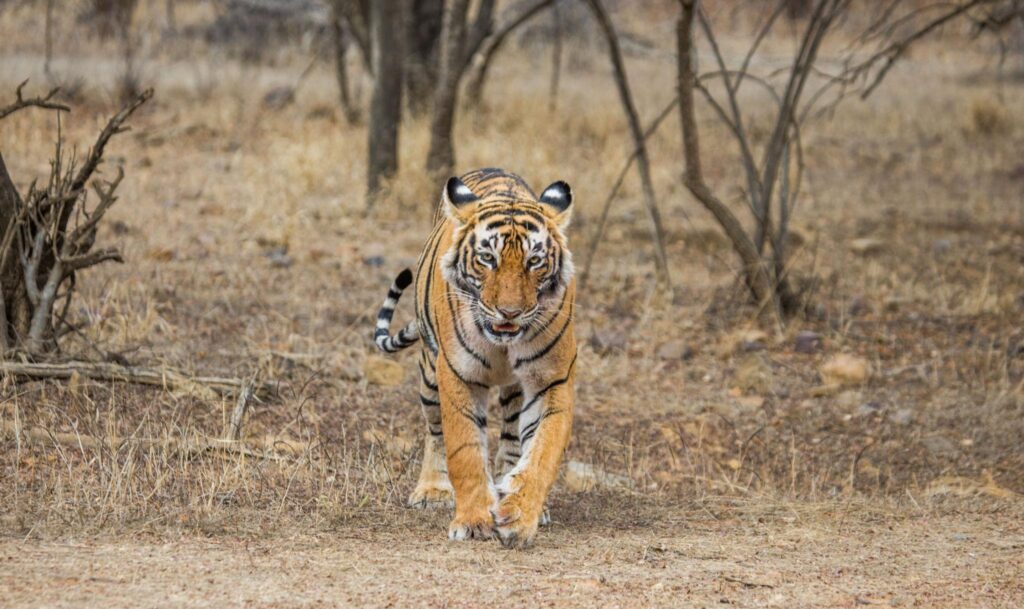
The Bengal tiger is perhaps the most recognisable symbol of Indian wildlife. India is home to the world’s largest wild tiger population, and the species occurs across several landscapes, from the Himalayan foothills and central Indian forests to the mangroves of the Sundarbans.
The tiger’s survival story is closely connected with Project Tiger, launched in 1973. The programme created a dedicated framework for protecting tiger habitats and populations. Today, India’s network of tiger reserves spans numerous states and landscapes.
Where can you see Bengal tigers?
Some of India’s most popular tiger destinations include:
- Ranthambore National Park, Rajasthan
- Jim Corbett National Park, Uttarakhand
- Kanha National Park, Madhya Pradesh
- Bandhavgarh National Park, Madhya Pradesh
- Pench Tiger Reserve, Madhya Pradesh and Maharashtra
- Tadoba-Andhari Tiger Reserve, Maharashtra
- Satpura Tiger Reserve, Madhya Pradesh
- Sundarbans Tiger Reserve, West Bengal
Ranthambore is particularly popular among international travellers because it combines wildlife viewing with the dramatic setting of an ancient fort and dry deciduous forests.
The National Tiger Conservation Authority currently lists 58 tiger reserves across 18 states, demonstrating the scale of India’s tiger conservation network.
Best experience: Jeep safari or, where permitted, a canter safari with an authorised naturalist.
2. Asiatic Lion – The Pride of Gir
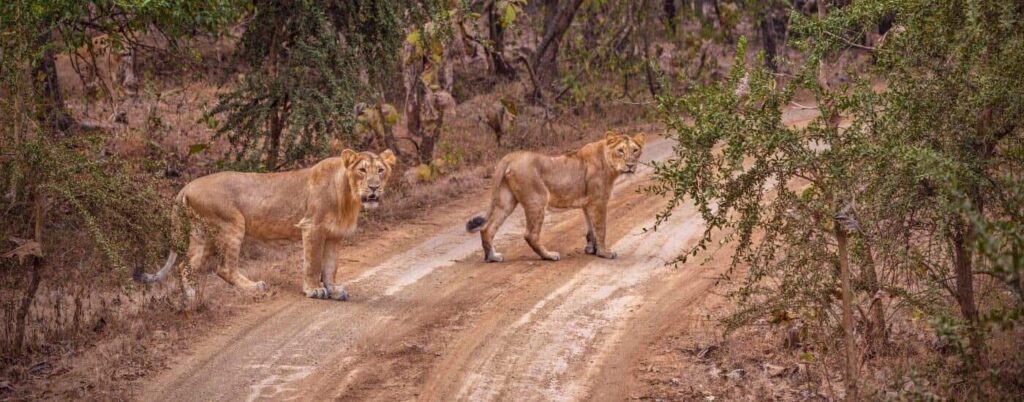
The Asiatic lion has a fascinating conservation story. Once found across a much larger part of Asia, the wild population is now associated with the Gir landscape of Gujarat.
For wildlife travellers, this makes Gujarat particularly special. A visit to the Gir region offers an opportunity to explore one of India’s most distinctive wildlife ecosystems while looking for the country’s only wild population of Asiatic lions.
Unlike the tiger, which can be encountered across numerous tiger reserves, the Asiatic lion has a much narrower geographical range. This makes conservation of its habitat especially important.
Where can you see Asiatic lions?
The primary destination is:
- Gir National Park and Wildlife Sanctuary, Gujarat
The wider Gir landscape also supports other wildlife, including leopards, chital, sambar, nilgai, crocodiles and numerous bird species.
Best experience: Guided jeep safari through Gir’s authorised safari zones.
3. Asian Elephant – India’s Gentle Giant
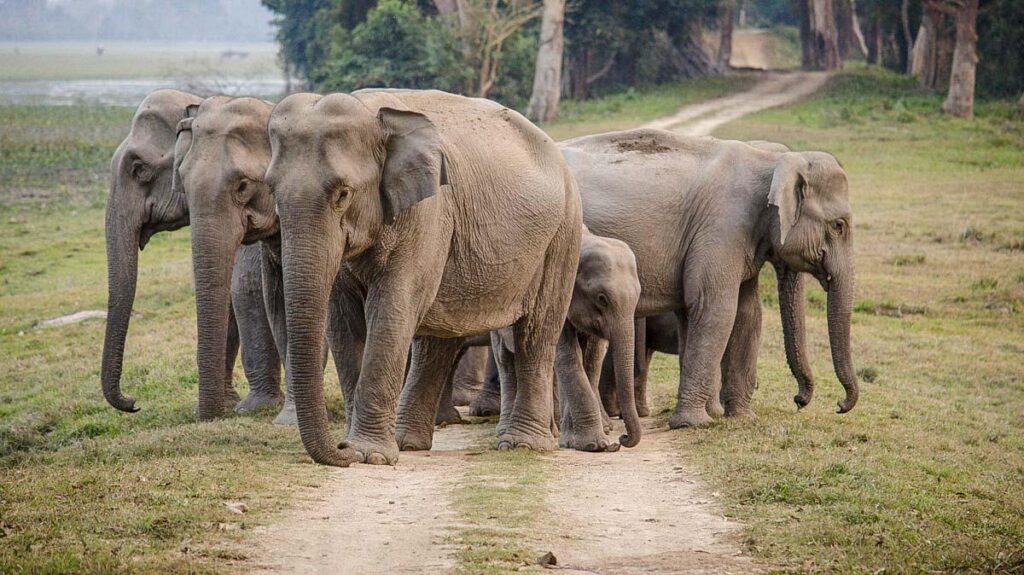
The Asian elephant is one of India’s most impressive mammals. These intelligent and highly social animals play an important role in forest ecosystems by influencing vegetation, dispersing seeds and creating pathways through forests.
Elephants can be found across several parts of India, particularly in the Himalayan foothills, northeastern India and the Western Ghats.
Seeing a herd moving through a forest is a memorable wildlife experience, but elephant tourism also requires caution. These are powerful wild animals, and visitors should maintain a safe distance and follow instructions from guides and forest officials.
Where can you see Asian elephants?
Some well-known regions include:
- Jim Corbett National Park, Uttarakhand
- Rajaji National Park, Uttarakhand
- Kaziranga National Park, Assam
- Manas National Park, Assam
- Bandipur National Park, Karnataka
- Nagarhole National Park, Karnataka
- Periyar Tiger Reserve, Kerala
- Wayanad Wildlife Sanctuary, Kerala
The forests of southern India, particularly the Nilgiri landscape, are among the country’s important elephant habitats.
Best experience: Wildlife safari, guided nature excursion or responsible elephant-landscape tourism.
4. Snow Leopard – The Ghost of the Himalayas
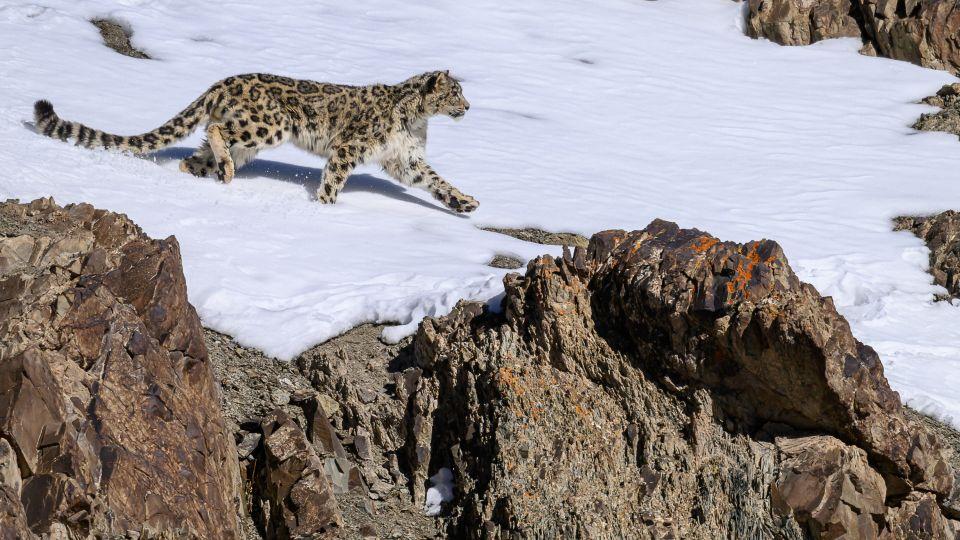
Few animals are as elusive as the snow leopard. Known as the “ghost of the Himalayas,” this high-altitude predator lives in some of India’s most remote and challenging landscapes.
Unlike conventional jungle safaris, searching for a snow leopard requires patience, specialist guides and an entirely different approach to wildlife tourism.
The species occurs across India’s trans-Himalayan and Himalayan regions, including Ladakh, Jammu and Kashmir, Himachal Pradesh, Uttarakhand, Sikkim and Arunachal Pradesh.
India’s first comprehensive Snow Leopard Population Assessment estimated 718 snow leopards across the country, with Ladakh accounting for the largest estimated share.
Where can you search for snow leopards?
- Hemis National Park, Ladakh
- Ulley Valley, Ladakh
- Spiti Valley, Himachal Pradesh
- Kibber region, Himachal Pradesh
- Uttarakhand’s high-altitude landscapes
- Sikkim
- Arunachal Pradesh
Winter is generally the preferred period for specialised snow leopard tracking in Ladakh because animals may descend to lower elevations in search of prey.
Best experience: Specialist snow leopard expedition accompanied by trained local guides and wildlife experts.
5. Indian One-Horned Rhinoceros – A Conservation Success Story
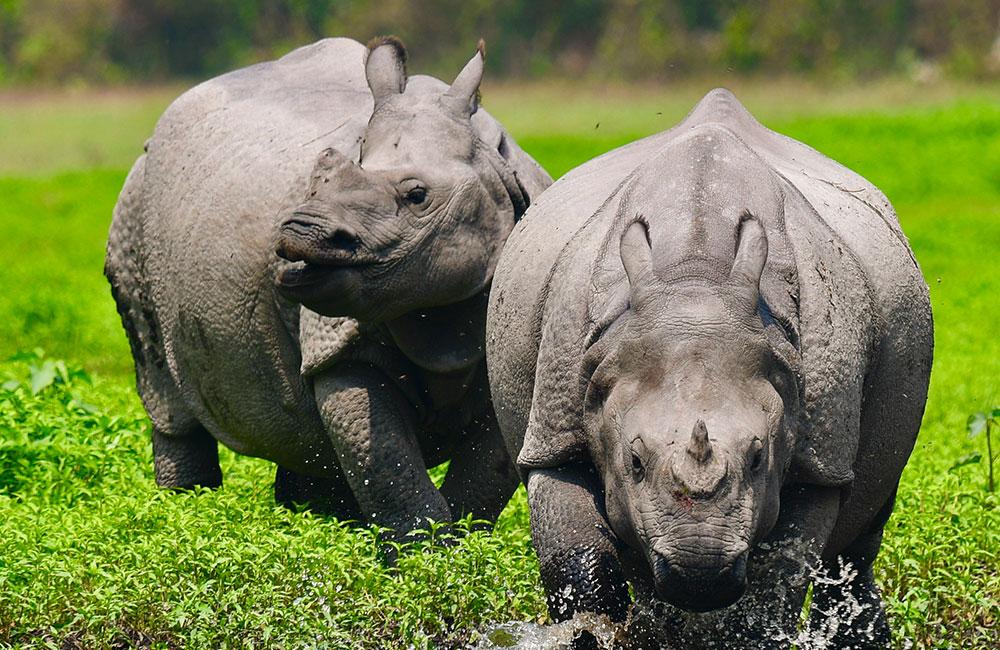
The Indian rhinoceros, commonly known as the greater one-horned rhinoceros, is one of Asia’s largest land mammals.
Its conservation story demonstrates what long-term habitat protection and wildlife management can achieve. The species once faced severe pressure from hunting and habitat loss, but protected populations have recovered significantly in parts of India.
The rhino is strongly associated with the floodplains and grasslands of northeastern India.
Where can you see Indian rhinoceros?
Important destinations include:
- Kaziranga National Park, Assam
- Pobitora Wildlife Sanctuary, Assam
- Manas National Park, Assam
- Jaldapara National Park, West Bengal
- Dudhwa National Park, Uttar Pradesh
Kaziranga National Park is one of the most famous places in the world for seeing the greater one-horned rhinoceros.
A safari across Kaziranga’s grasslands can also provide opportunities to see elephants, wild water buffalo, swamp deer, tigers and a spectacular variety of birds.
Best experience: Jeep or elephant grassland safari, where officially permitted.
6. Lion-Tailed Macaque – A Rare Treasure of the Western Ghats
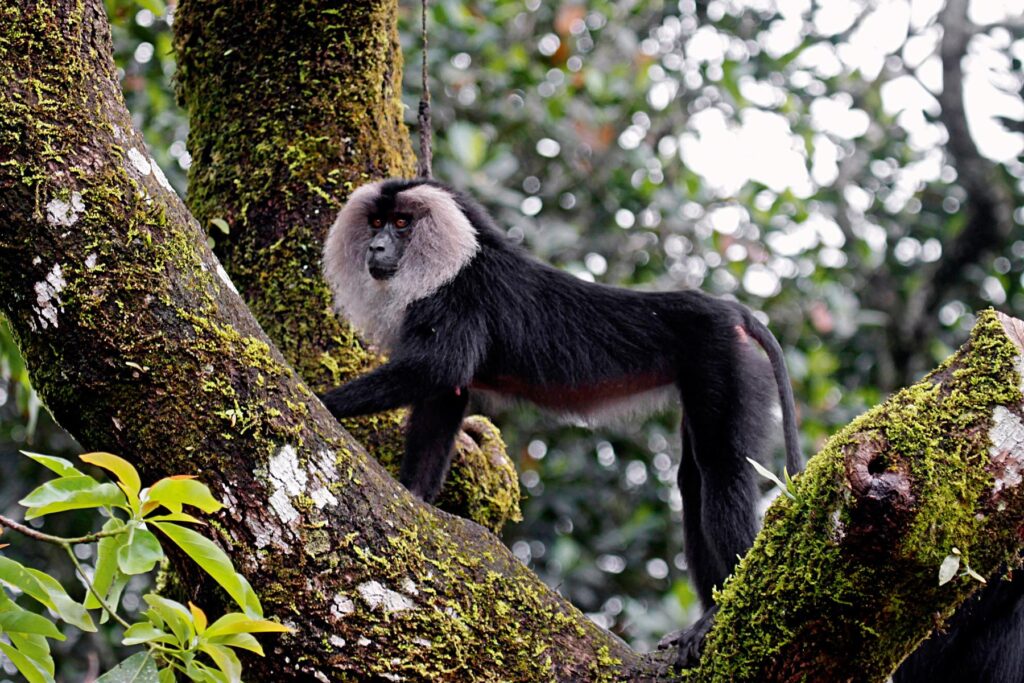
The lion-tailed macaque looks quite different from India’s better-known monkeys. Its dark body, silvery mane and distinctive tufted tail give it a unique appearance.
This rare primate is closely associated with the evergreen forests of the Western Ghats, one of India’s most important biodiversity hotspots.
Unlike animals such as tigers and rhinos, lion-tailed macaques can be difficult to spot because they spend much of their time in dense forest canopies.
Where can you find lion-tailed macaques?
Important areas include parts of:
- Kerala
- Karnataka
- Tamil Nadu
Protected forests and wildlife landscapes in the Western Ghats provide important habitat for this species.
Travellers should avoid trying to attract or feed wild primates. Responsible observation from a distance is the best way to experience them.
Best experience: Guided rainforest wildlife excursion.
7. Great Indian Bustard – A Rare Bird of the Thar
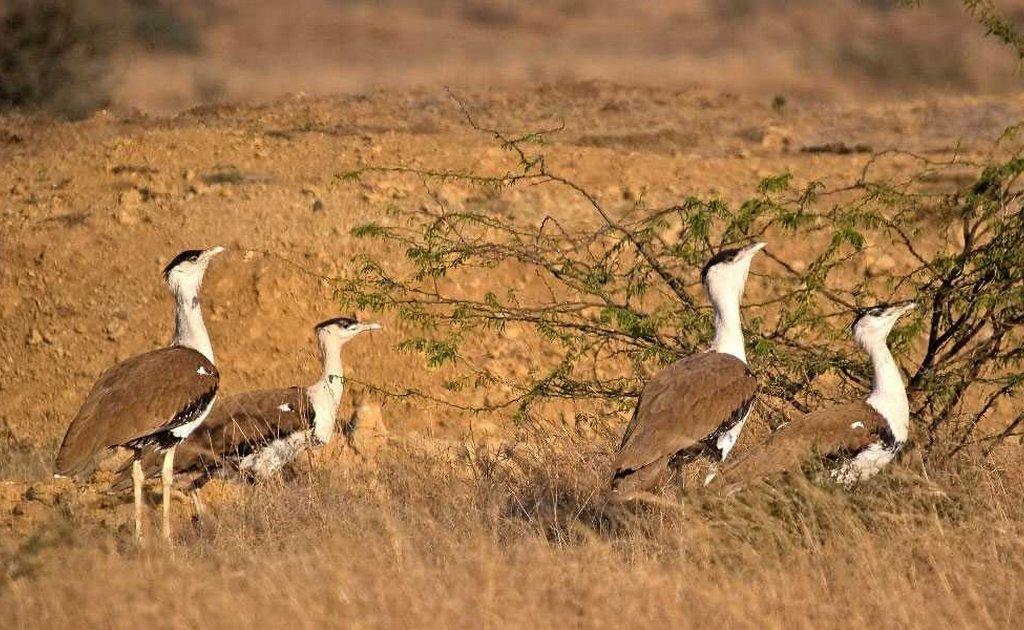
The Great Indian Bustard is one of India’s most threatened birds and one of the country’s most iconic grassland species.
Once found across much larger areas of the Indian subcontinent, its range and population have declined significantly because of habitat loss and other threats, including collisions with power transmission infrastructure.
For Rajasthan, the species has special significance because the state’s desert and grassland landscapes remain among its important habitats.
Where can you see the Great Indian Bustard?
The best-known region is:
- Desert National Park, Rajasthan
Other populations occur in parts of western and central India.
Unlike a tiger safari, observing the Great Indian Bustard is primarily a birdwatching experience. Sightings are never guaranteed, and patience is essential.
Best experience: Birding excursion with an experienced local naturalist.
8. Gharial – The Long-Snouted River Guardian
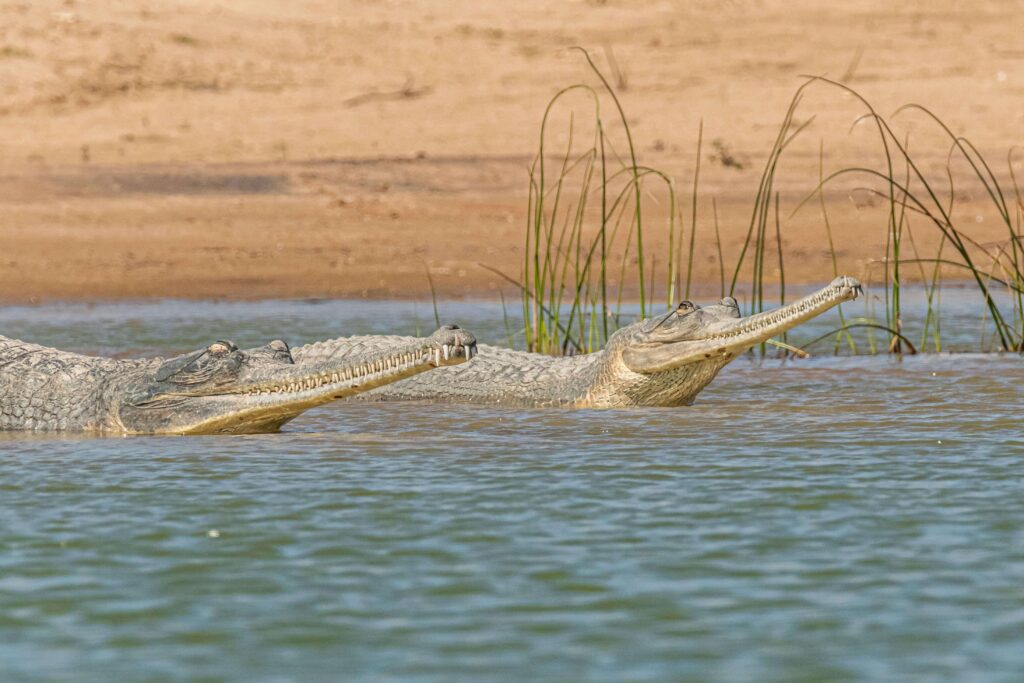
The gharial is one of India’s most unusual reptiles. Its extremely long, narrow snout is specially adapted for catching fish.
Historically, gharials inhabited several major river systems across the Indian subcontinent. Today, they survive in fragmented populations and remain among the most endangered crocodilians.
Their survival is closely connected with healthy river ecosystems. Pollution, changes to river habitats, sand mining, fishing pressure and accidental capture in fishing equipment are among the threats facing the species.
Where can you see gharials?
Some important protected areas and river landscapes include:
- National Chambal Sanctuary
- Katarniaghat Wildlife Sanctuary
- Chambal River
- Girwa River region
- Ramganga and other suitable protected river systems
The National Chambal Sanctuary is one of the best-known destinations for observing gharials in the wild.
A river safari can offer sightings of gharials basking on sandbanks, along with mugger crocodiles, freshwater turtles and river birds.
Best experience: Guided boat or river safari.
9. Red Panda – The Bamboo-Loving Himalayan Mammal
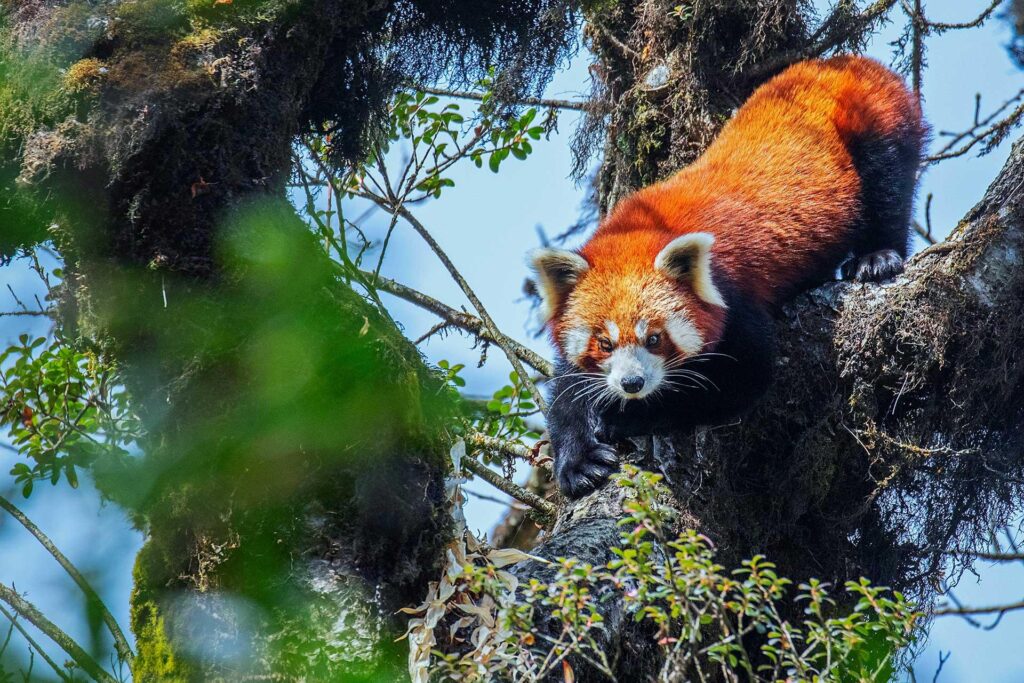
The red panda is one of India’s most charming and elusive mammals.
Despite its name, the red panda is not a close relative of the giant panda. It is a distinct species adapted to cool, forested environments where bamboo forms an important part of its diet.
In India, red pandas occur in the eastern Himalayan region, particularly in Sikkim, northern West Bengal and Arunachal Pradesh.
Dense temperate forests, bamboo habitats and mountainous terrain make spotting one a challenging but rewarding experience.
Where can you look for red pandas?
- Khangchendzonga National Park, Sikkim
- Singalila National Park, West Bengal
- Neora Valley National Park, West Bengal
- Arunachal Pradesh’s Himalayan forests
Red panda tourism is very different from a conventional jeep safari. Sightings are unpredictable, and travellers should rely on experienced guides familiar with the animal’s habitat.
Best experience: Guided Himalayan wildlife and birding expedition.
10. Forest Owlet – India’s Rediscovered Bird
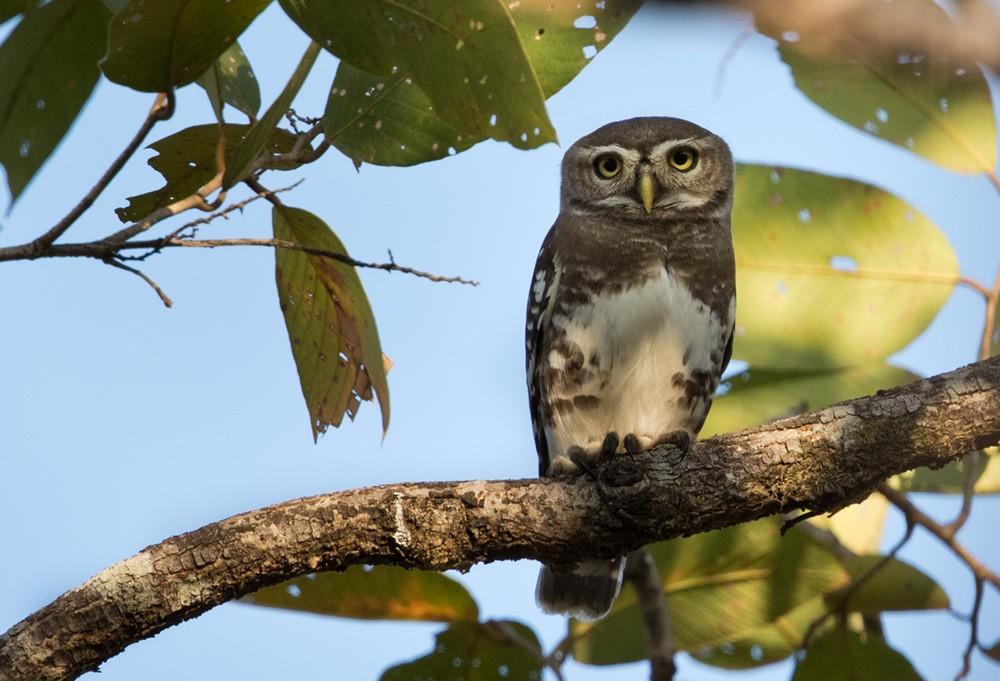
The forest owlet has one of the most remarkable stories in Indian wildlife.
For many years, the species was believed to be extinct. It was rediscovered in Maharashtra in 1997, bringing renewed attention to the small bird and the fragmented dry deciduous forests it inhabits.
The forest owlet has a highly restricted distribution and is therefore particularly vulnerable to habitat degradation.
Where can you find the forest owlet?
Its known range includes parts of:
- Maharashtra
- Madhya Pradesh
Because of its rarity, finding a forest owlet requires specialist birding knowledge and considerable patience.
For serious birdwatchers, however, searching for this species can become one of the most rewarding wildlife experiences in central India.
Best experience: Specialist birdwatching trip with a local ornithologist or experienced bird guide.
Why Schedule I Protection Matters
Wildlife protection is not simply about preventing hunting. Protecting a species also means protecting the landscapes, food chains and ecosystems on which that species depends.
A tiger requires a healthy prey base and large connected forests. A gharial requires suitable river systems and nesting sandbanks. A red panda requires intact Himalayan forests. The Great Indian Bustard depends on suitable grassland and open landscapes.
This is why wildlife conservation increasingly focuses on habitat protection, ecological corridors, anti-poaching measures, scientific monitoring and responsible tourism.
Project Tiger provides a strong example. India’s tiger conservation programme began in 1973 and has grown from an initial network of nine reserves to a much larger national network.
Wildlife tourism can complement these efforts when it is managed responsibly.
Best Wildlife Destinations in India for Animal Lovers
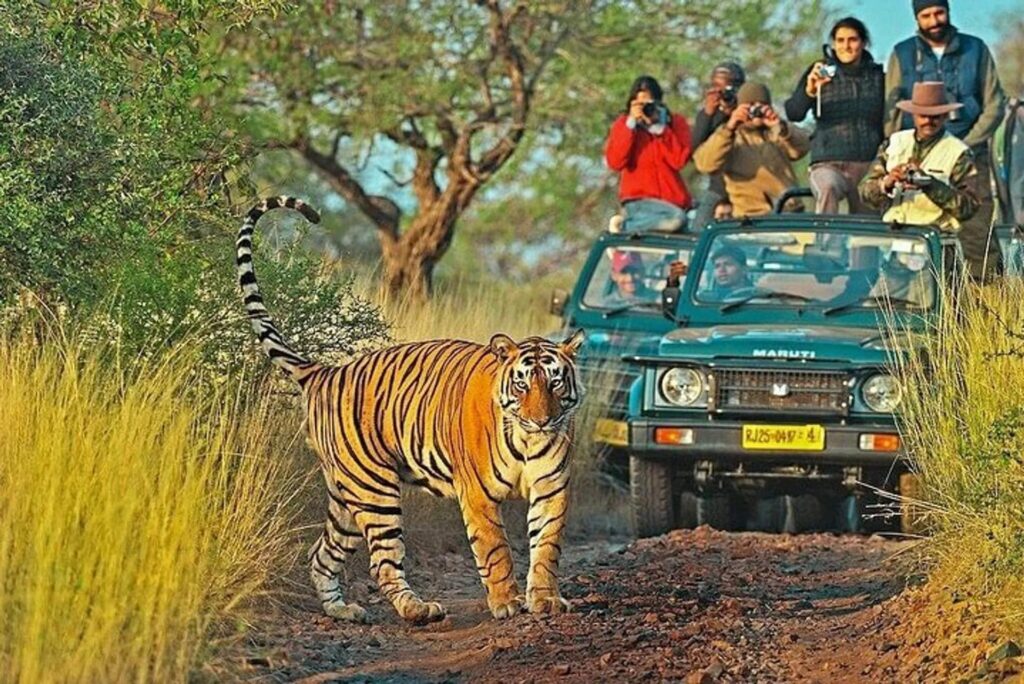
India offers wildlife experiences across very different ecosystems.
| Wildlife Experience | Recommended Destination | State |
|---|---|---|
| Bengal Tiger | Ranthambore | Rajasthan |
| Bengal Tiger | Kanha | Madhya Pradesh |
| Bengal Tiger | Bandhavgarh | Madhya Pradesh |
| Bengal Tiger | Corbett | Uttarakhand |
| Asiatic Lion | Gir | Gujarat |
| Indian Rhinoceros | Kaziranga | Assam |
| Snow Leopard | Hemis | Ladakh |
| Great Indian Bustard | Desert National Park | Rajasthan |
| Gharial | National Chambal Sanctuary | Madhya Pradesh/Rajasthan/Uttar Pradesh |
| Red Panda | Khangchendzonga region | Sikkim |
| Lion-tailed Macaque | Western Ghats | Kerala/Karnataka/Tamil Nadu |
| Forest Owlet | Central Indian forests | Maharashtra/Madhya Pradesh |
These destinations can also be combined with cultural and heritage experiences, making wildlife holidays particularly attractive for international travellers.
For example, a Rajasthan wildlife holiday can combine Ranthambore with Jaipur, Agra and Delhi. Similarly, a Madhya Pradesh wildlife tour can combine tiger safaris with Khajuraho and other heritage destinations.
Best Time for Wildlife Tours in India
The ideal time depends on the species and destination.
October to June – Tiger Safaris
Many central Indian tiger reserves are popular during the cooler months and the warmer months leading into summer. Wildlife sightings can vary considerably with weather, vegetation and animal behaviour.
November to March – Rajasthan Wildlife
The cooler season is comfortable for exploring Rajasthan’s wildlife and desert landscapes. It is also a good period for combining wildlife with heritage sightseeing.
November to March – Gir
The cooler season is generally comfortable for exploring the Gir landscape and combining wildlife with a Gujarat itinerary.
November to April – Kaziranga
Kaziranga is a popular winter and spring wildlife destination, offering opportunities to see rhinoceros, elephants, birds and other wildlife.
Winter – Snow Leopard Expeditions
The cold months are particularly popular for snow leopard expeditions in Ladakh and parts of the Himalayas because animals may move to more accessible elevations.
Responsible Wildlife Tourism: What Travellers Should Remember
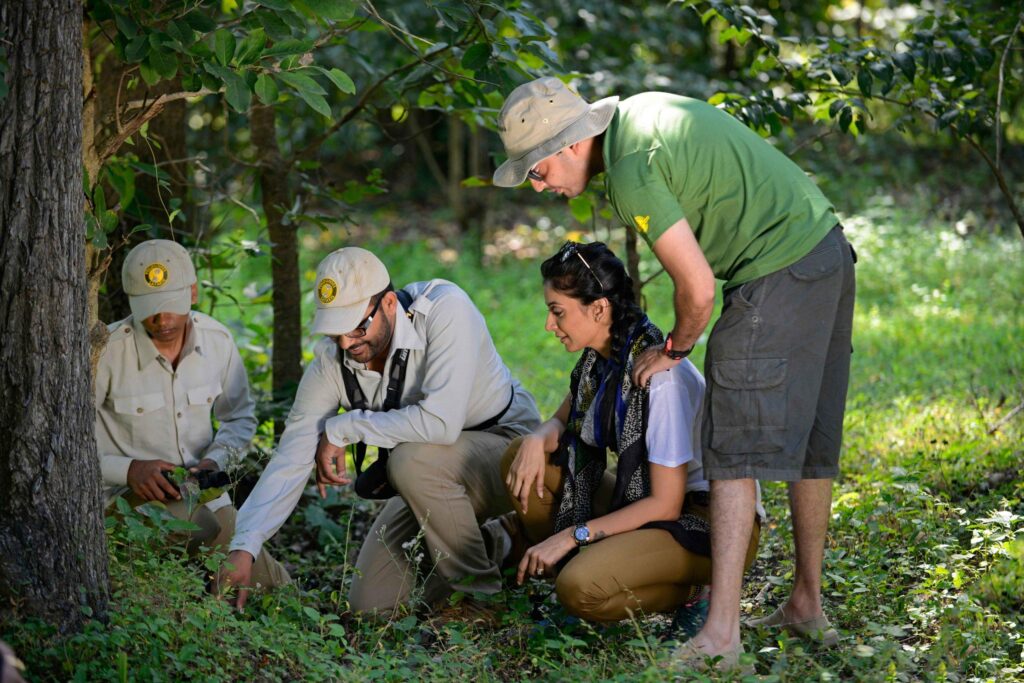
Seeing a rare animal in the wild is a privilege. Travellers should make sure their visit does not disturb the wildlife they have come to appreciate.
Here are some basic guidelines:
- Never feed wild animals.
- Maintain the distance recommended by forest authorities.
- Do not shout, play loud music or make unnecessary noise.
- Never attempt to attract an animal for photographs.
- Do not litter inside protected areas.
- Follow safari-zone and vehicle regulations.
- Listen to your naturalist or forest guide.
- Avoid using flash photography when prohibited.
- Do not attempt to leave the vehicle unless authorised.
- Choose responsible tour operators that respect conservation regulations.
A good wildlife holiday should leave you with photographs and memories—not a negative impact on the animals or their habitat.
Wildlife Tourism and Conservation Go Together
India’s protected wildlife represents much more than a collection of rare animals. These species are part of complex ecosystems that support forests, rivers, grasslands and countless other organisms.
The tiger, for example, is often described as an umbrella species because protecting its habitat can also help conserve numerous other species sharing the same ecosystem. The National Tiger Conservation Authority highlights this wider ecological role of tiger conservation.
Similarly, protecting the river habitats needed by gharials can benefit other aquatic and riparian species. Conserving Himalayan forests for red pandas and snow leopards also protects fragile mountain ecosystems.
This makes wildlife travel an opportunity to learn about India’s natural heritage while supporting destinations where conservation and tourism can work together.
Plan Your Wildlife Holiday in India
From the roar of a Bengal tiger in Rajasthan to the elusive movement of a snow leopard across the Himalayas, India’s wildlife offers experiences for every kind of nature traveller.
Whether you are interested in tiger safaris, birdwatching, Himalayan wildlife, rhinoceros, Asiatic lions or responsible family wildlife holidays, India provides an extraordinary variety of destinations.
At Vardhman Vacations, wildlife journeys can also be combined with India’s cultural, historical and scenic attractions, allowing travellers to experience more than one side of the country in a single holiday.
The most important thing to remember is that wildlife sightings are never guaranteed. The real reward is entering a natural landscape and experiencing animals on their own terms.
These ten protected species remind us why India’s forests, rivers, mountains and grasslands are worth protecting for generations to come.
Frequently Asked Questions
Species listed under Schedule I of the Wildlife (Protection) Act receive the highest level of legal protection under India’s wildlife legislation. The Times of India article highlights ten iconic species including the Bengal tiger, Asiatic lion, Asian elephant, snow leopard, Indian rhinoceros, lion-tailed macaque, Great Indian Bustard, gharial, red panda and forest owlet.
Popular destinations include Ranthambore, Bandhavgarh, Kanha, Corbett, Pench, Tadoba and several other tiger reserves.
The primary wild destination for Asiatic lions is the Gir landscape in Gujarat.
Ladakh is one of India’s best-known snow leopard destinations, particularly around Hemis and other high-altitude areas. Snow leopards also occur in Himachal Pradesh, Uttarakhand, Sikkim, Arunachal Pradesh and Jammu and Kashmir.
Kaziranga National Park in Assam is one of India’s most famous destinations for the greater one-horned rhinoceros.
Rajasthan’s Desert National Park and surrounding Thar landscapes are among the most important places associated with the species.
The National Chambal Sanctuary is one of India’s best-known destinations for gharial sightings.
No. Wildlife is unpredictable, and sightings depend on animal behaviour, weather, habitat conditions and many other factors. A responsible safari focuses on experiencing the ecosystem rather than guaranteeing a particular animal.
Authorised jeep safaris, guided nature walks, specialist birding tours and wildlife expeditions are among the best options. Always follow the rules of the protected area and instructions from trained guides.
Responsible tourism helps minimise disturbance to wildlife and can contribute to the local economy and conservation ecosystem when properly managed.