
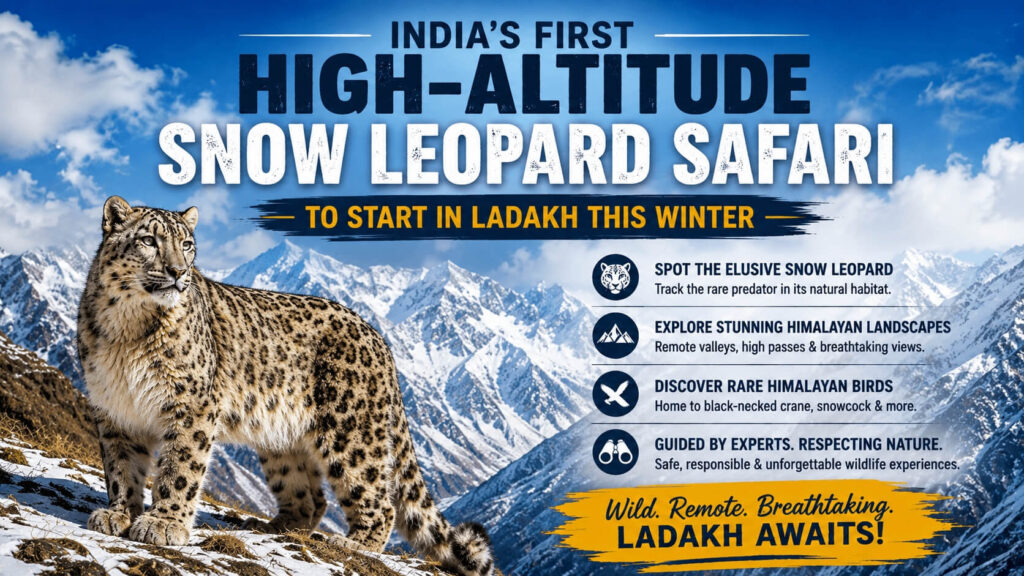
Ladakh is preparing to introduce a remarkable new wildlife experience this winter — India’s first high-altitude wildlife safari focused on snow leopards and rare Himalayan wildlife.
The initiative is expected to open a new chapter for wildlife tourism in the region, allowing travellers to explore the rugged landscapes of Ladakh while looking for one of the world’s most elusive big cats: the snow leopard.
Unlike traditional safaris in destinations such as Ranthambore or Kaziranga, a Ladakh safari will take visitors into a dramatically different environment of high mountains, rocky valleys and snow-covered landscapes. The experience is expected to combine wildlife observation, local expertise and conservation-focused tourism.
Important: The safari initiative has been approved, but final routes, fees, booking procedures and operational details are still being developed. Travellers should check official updates before planning a dedicated safari trip.
What Is India’s First High-Altitude Wildlife Safari?
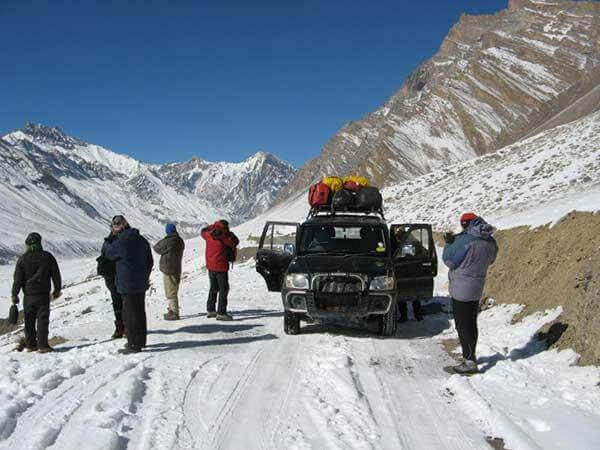
The upcoming programme is designed to create structured, guided wildlife experiences in Ladakh’s high-altitude habitats.
The main attraction will be the snow leopard, particularly during winter when these elusive cats become more active at lower elevations and are comparatively easier for experienced trackers to locate.
The safari will not simply be about driving around looking for animals. The proposed model places emphasis on trained local guides, controlled routes and responsible wildlife tourism.
This is particularly important in Ladakh because its wildlife habitats are extremely fragile and its terrain is very different from India’s conventional safari destinations. Conservationists have also cautioned that increased tourism must not disturb snow leopards or their habitat.
Why Ladakh Is Perfect for a Snow Leopard Safari
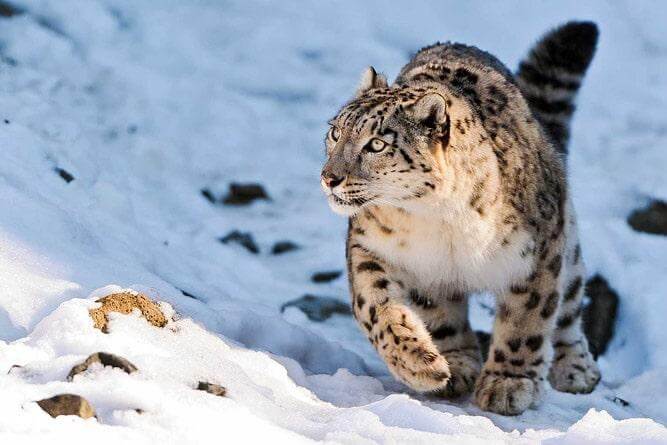
Ladakh is one of India’s most important landscapes for snow leopard conservation.
The region’s high-altitude mountains, deep valleys, rocky slopes and cold desert environment provide ideal habitat for the species. The Ladakh administration also identifies several other rare mammals and birds found across the region.
The landscape is particularly attractive in winter, when snow covers the mountains and wildlife tracks become easier for experienced guides and naturalists to interpret.
For wildlife photographers, this combination of dramatic scenery and rare Himalayan species makes Ladakh a unique alternative to India’s traditional jungle safaris.
Where Will the Snow Leopard Safari Take Place?
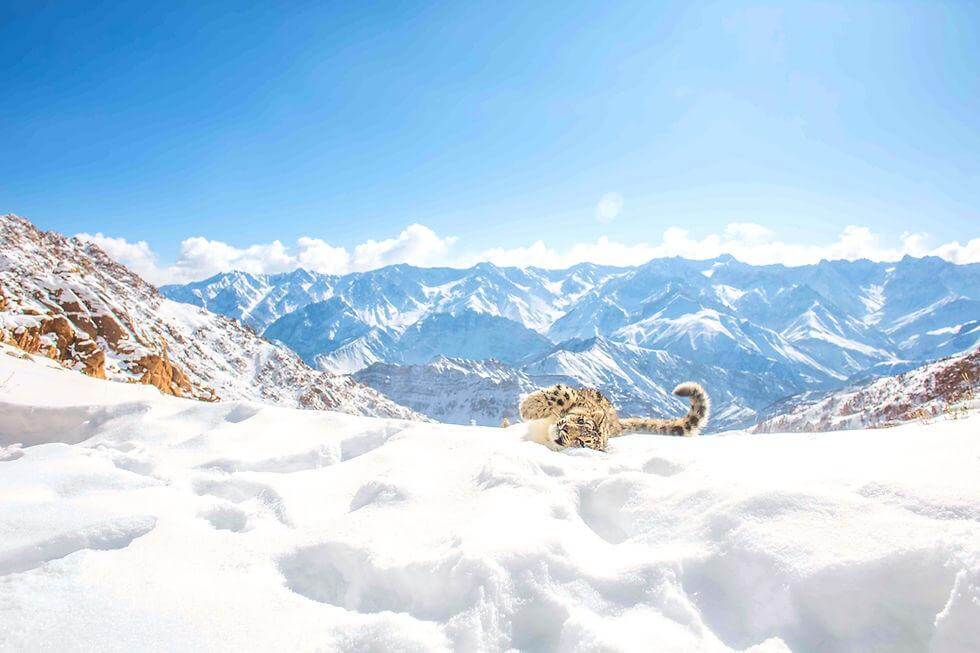
The proposed wildlife safari programme is expected to cover important wildlife landscapes across Ladakh.
Hemis National Park
Hemis is among the best-known snow leopard habitats in Ladakh. Its rugged valleys and high-altitude terrain provide an important refuge for snow leopards and other Himalayan wildlife.
The park is one of Ladakh’s officially protected areas, alongside Changthang Wildlife Sanctuary and Karakoram Wildlife Sanctuary.
Changthang Wildlife Sanctuary
Changthang is a spectacular high-altitude landscape covering around 1,600 sq km. Located at roughly 4,500 metres above sea level, it is home to snow leopards, kiang and the endangered black-necked crane, among other species.
Its vast open landscapes and high-altitude lakes make it particularly appealing to wildlife photographers and birdwatchers.
Karakoram Wildlife Sanctuary
The Karakoram Wildlife Sanctuary in the Nubra-Shyok region is another protected area forming part of Ladakh’s high-altitude wildlife landscape.
Depending on the final safari plan, additional wildlife routes may also connect with areas such as Nubra, Zanskar, Sham, Kargil and Drass.
When Is the Best Time to See Snow Leopards in Ladakh?
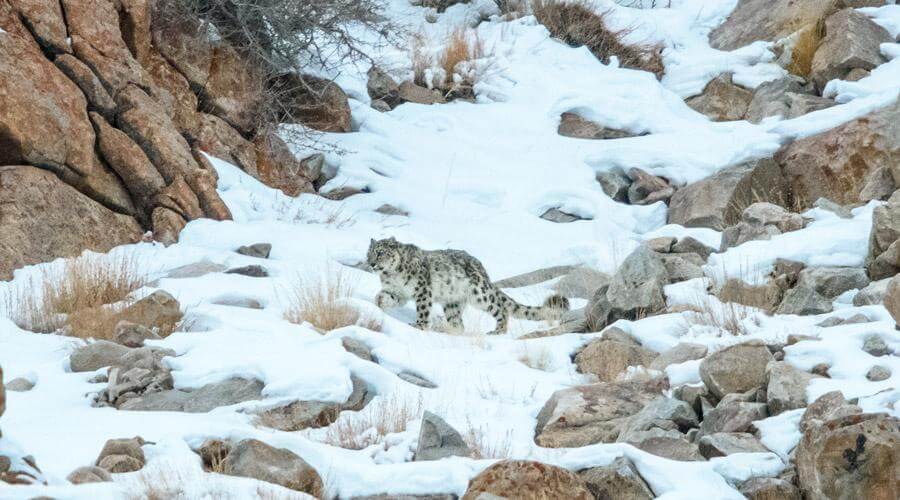
For travellers specifically interested in snow leopards, winter is the key season. Official Ladakh guidelines identify the main snow leopard wildlife-tourism period as approximately November to April.
The colder months are particularly interesting because snow leopards may descend to somewhat lower elevations in search of prey.
Recommended period
- November to April: Best period for dedicated snow leopard tracking.
- January to March: Particularly attractive for travellers seeking snow-covered landscapes and winter wildlife photography.
However, sightings are never guaranteed. Snow leopards are naturally elusive and can blend remarkably well into their surroundings.
What Other Wildlife Can You See?
A snow leopard safari in Ladakh is not only about snow leopards. The region supports an impressive range of high-altitude mammals and birds, including:
- Himalayan blue sheep or bharal
- Himalayan ibex
- Kiang
- Tibetan wolf
- Tibetan argali
- Pallas’s cat
- Eurasian lynx
- Tibetan gazelle
- Tibetan antelope
- Himalayan brown bear
- Black-necked crane
- Tibetan snowcock
- Himalayan snowcock
- Tibetan sandgrouse
- Saker falcon
- Lammergeier
Ladakh’s official wildlife documentation lists these and several other rare Himalayan species.
A Paradise for Birdwatchers
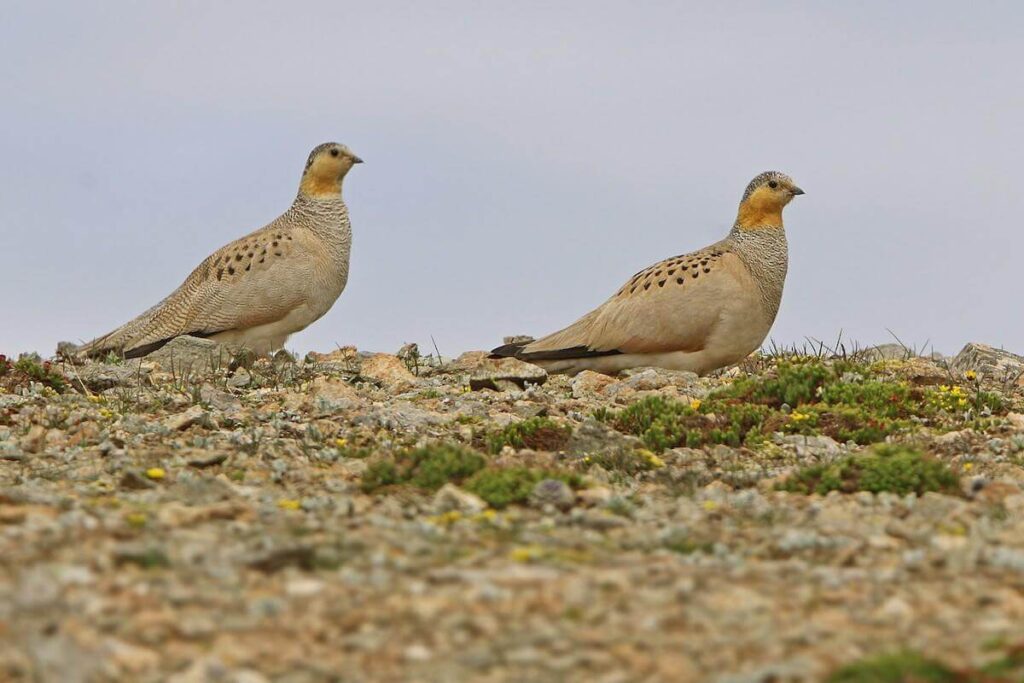
The new safari concept is also expected to promote high-altitude birdwatching.
Changthang is particularly significant for bird lovers, with species such as the black-necked crane found around its wetlands and high-altitude lakes.
Birdwatching can complement a winter wildlife itinerary, although the best season can vary depending on the species travellers want to see.
How Will the Safari Work?
The proposed safari model is expected to be different from a conventional tiger safari. Travellers are likely to explore designated wildlife routes with:
- Trained local wildlife guides
- Experienced drivers
- Specialised wildlife trackers
- Guided vehicle excursions
- Controlled safari routes
- Wildlife observation and photography opportunities
The emphasis will be on responsible tourism rather than simply maximising the number of vehicles or visitors.
This approach is particularly important because snow leopards are much harder to spot than animals commonly seen in India’s open safari landscapes.
Why Local Guides Will Be Important
Snow leopard tracking requires considerable knowledge of the landscape. Local guides understand animal movement, tracks, terrain and seasonal behaviour. They can also help visitors interpret the surrounding ecosystem instead of simply searching for a single animal.
Ladakh’s official wildlife-tourism guidelines specify experience requirements for naturalists, wildlife guides and spotters conducting wildlife tours in the Union Territory. This makes the local community an important part of the new safari experience.
Snow Leopard Safari vs Traditional Tiger Safari
The Ladakh experience will be very different from a conventional Indian jungle safari.
| Feature | Ladakh Snow Leopard Safari | Traditional Tiger Safari |
|---|---|---|
| Landscape | High-altitude cold desert | Forest, grassland and wetlands |
| Main attraction | Snow leopard | Tiger |
| Terrain | Rocky mountains and valleys | Forest tracks |
| Weather | Extremely cold in winter | Generally milder |
| Sightings | Difficult and unpredictable | Often easier |
| Photography | Mountain wildlife photography | Jungle wildlife photography |
| Main season | Winter | Varies by park |
| Experience | Tracking and exploration | Game-drive focused |
The biggest difference is expectation. A snow leopard safari should be treated as a wildlife expedition rather than a guaranteed animal-sighting experience.
Responsible Tourism Will Be Crucial
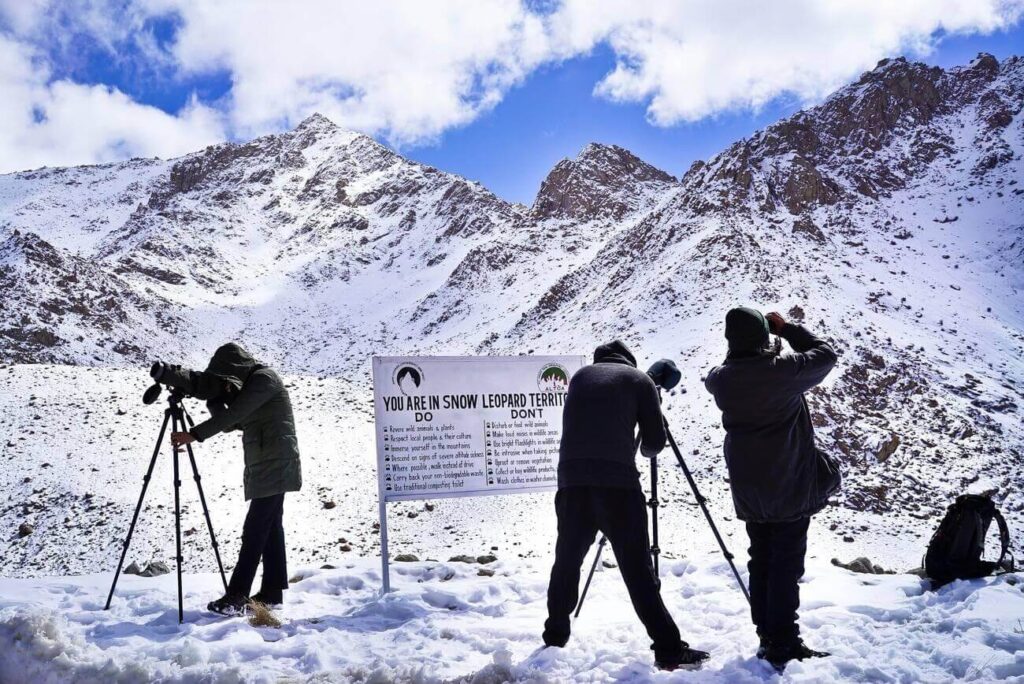
The introduction of organised safaris brings significant opportunities for Ladakh, but it also comes with challenges. Snow leopards are sensitive to disturbance. Excessive vehicles, off-road driving, noise and crowds could potentially affect their behaviour.
Recent conservation commentary has stressed that Ladakh cannot simply replicate the safari model used in places such as Kaziranga or Ranthambore because the ecology and behaviour of snow leopards are fundamentally different.
For this reason, responsible safari practices should include:
- Staying on designated routes
- Maintaining a safe distance from wildlife
- Avoiding loud noises
- Never chasing animals for photographs
- Following guide instructions
- Avoiding unnecessary off-roading
- Respecting local communities
- Carrying back all waste
- Following protected-area regulations
The goal should be to observe wildlife without changing its natural behaviour.
What Travellers Should Know Before Planning
A winter trip to Ladakh requires more preparation than a normal holiday.
Prepare for extreme cold
Winter temperatures can be extremely low, particularly during early morning wildlife drives.
Carry:
- Thermal innerwear
- Heavy winter jacket
- Gloves
- Woollen socks
- Warm cap
- Snow-resistant footwear
- Sunglasses
- Sunscreen
- Lip balm and moisturiser
Allow time for acclimatisation
Ladakh is a high-altitude destination. Travellers should not rush directly into strenuous activities after arrival. A gradual itinerary with sufficient time in Leh for acclimatisation is important.
Be patient
Snow leopard photography requires patience. You may spend hours scanning mountain slopes before seeing anything. Sometimes the reward may be a glimpse of a snow leopard rather than a close photograph.
That uncertainty is part of what makes the experience special.
When Will Bookings Open?
The safari is planned for the winter 2026 season, but travellers should wait for official announcements regarding the final operational framework.
At present, details such as:
- Confirmed safari routes
- Safari fees
- Permit requirements
- Vehicle categories
- Booking procedure
- Maximum number of visitors
- Exact launch date
may be subject to further announcements. Travellers should therefore avoid relying on unofficial booking claims until the administration releases the final details.
Is the Ladakh Snow Leopard Safari Worth Experiencing?
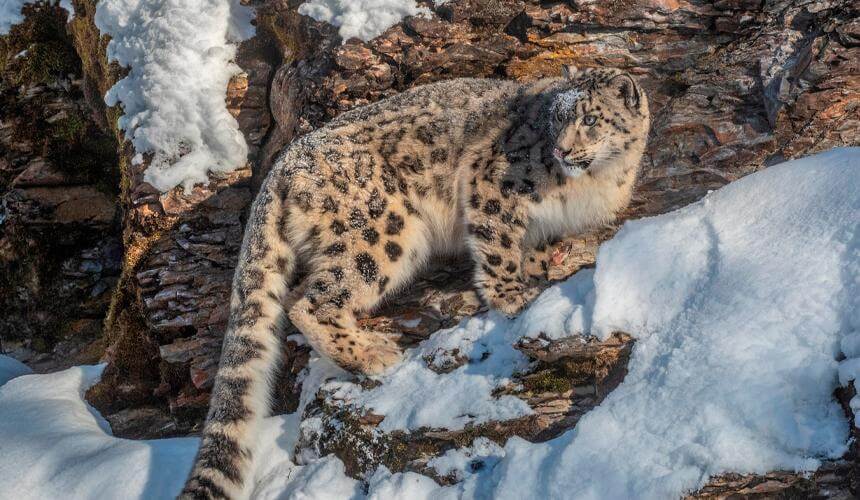
For wildlife enthusiasts, photographers and adventure travellers, it could become one of India’s most distinctive wildlife experiences.
Instead of the forests of central India, travellers will explore a completely different ecosystem — snow-covered mountains, frozen valleys, high-altitude lakes and cold-desert landscapes.
And even if a snow leopard remains hidden, the journey itself offers opportunities to experience some of the rarest wildlife and most spectacular scenery in the Himalayas.
The upcoming safari could also help strengthen conservation awareness and create additional livelihood opportunities for local communities if tourism is managed responsibly. Ladakh’s Forest, Ecology & Environment Department explicitly links conservation with sustainable tourism and local empowerment.
Final Thoughts
India’s first high-altitude wildlife safari marks an exciting development for Ladakh tourism and wildlife conservation.
The opportunity to search for a snow leopard in its natural Himalayan habitat is very different from visiting a conventional wildlife park. It is slower, more challenging and far less predictable — but potentially much more rewarding.
As the winter 2026 season approaches, travellers should keep an eye on official announcements for safari routes and bookings. Most importantly, the success of this new initiative will depend on maintaining the delicate balance between wildlife tourism and conservation.
For anyone dreaming of seeing a snow leopard in the wild, Ladakh may soon become one of India’s most fascinating winter wildlife destinations.
FAQs About Ladakh Snow Leopard Safari
The new high-altitude wildlife safari in Ladakh is planned to begin during the winter 2026 season. Final operational details are still being announced.
Important snow leopard habitats include Hemis National Park, Changthang Wildlife Sanctuary and the Karakoram Wildlife Sanctuary.
The principal snow leopard season is generally November to April, with winter being the most suitable period for dedicated tracking.
No. Snow leopards are extremely elusive and naturally well camouflaged. Sightings depend on weather, terrain, animal movement and tracking conditions.
Depending on the location and season, wildlife may include blue sheep, Himalayan ibex, kiang, Pallas’s cat, Eurasian lynx, Tibetan wolf and several high-altitude bird species.
The proposed safari model is expected to rely on trained local guides, naturalists and wildlife trackers. Travellers should follow the official requirements once the booking system is announced.
Yes, but winter travel requires careful preparation because of extremely cold weather and high altitude. Adequate acclimatisation and suitable winter clothing are essential.
The final booking process, routes and fees have not yet been fully announced. Travellers should check official Ladakh tourism and wildlife authorities for updates.