
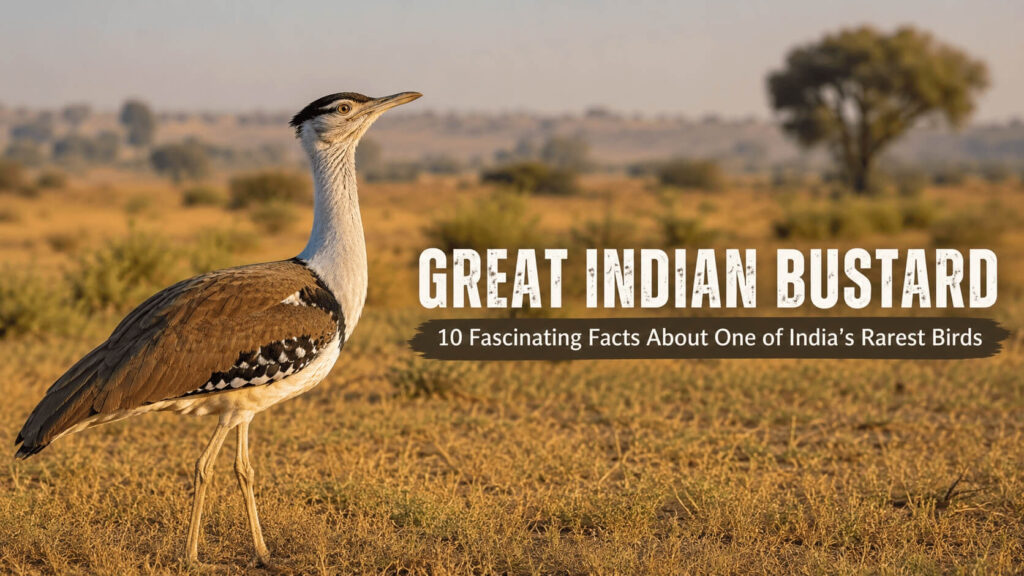
India is famous for its tigers, elephants, leopards and rhinoceroses, but some of its most remarkable wildlife lives far away from dense forests. Across the grasslands and dry landscapes of western India survives one of the country’s most threatened birds — the Great Indian Bustard (Ardeotis nigriceps).
Once found across large parts of the Indian subcontinent, the Great Indian Bustard has suffered a dramatic decline because of habitat loss and human-related threats. Today, most of the remaining population is concentrated in Rajasthan’s Thar landscape, making a sighting an exceptionally special wildlife experience.
Facts About Great Indian Bustard
For wildlife travellers, the bird offers a completely different side of India — one of open grasslands, desert landscapes and rare birdlife rather than traditional forest safaris.
One of India’s Heaviest Flying Birds
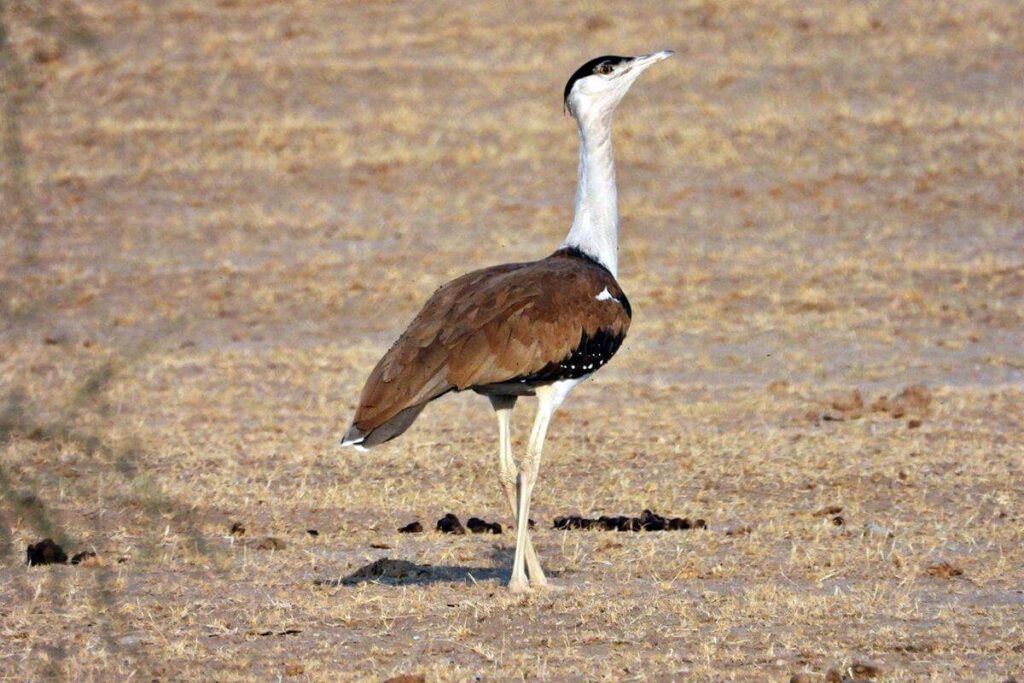
The Great Indian Bustard is an enormous bird. Adult males are substantially larger than females, yet despite its impressive size and weight, it remains capable of sustained flight.
Its tall body, long legs and striking black-and-white markings make it instantly recognisable when seen in the open landscape.
Unlike many birds that spend most of their time in trees, the Great Indian Bustard is largely terrestrial. Much of its daily activity takes place on the ground.
It Depends on Grasslands and Open Landscapes
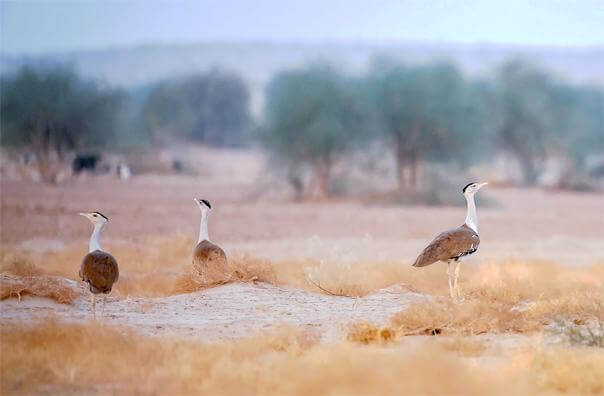
The Great Indian Bustard is closely associated with grasslands, open scrub and other open habitats.
This makes its survival closely connected with the health of India’s remaining natural grasslands. Wildlife conservation is therefore not only about protecting forests — open ecosystems are equally important.
The Thar Desert landscape of Rajasthan is particularly significant because it supports the largest remaining concentration of the species.
Rajasthan Is the Best-Known Region for the Species
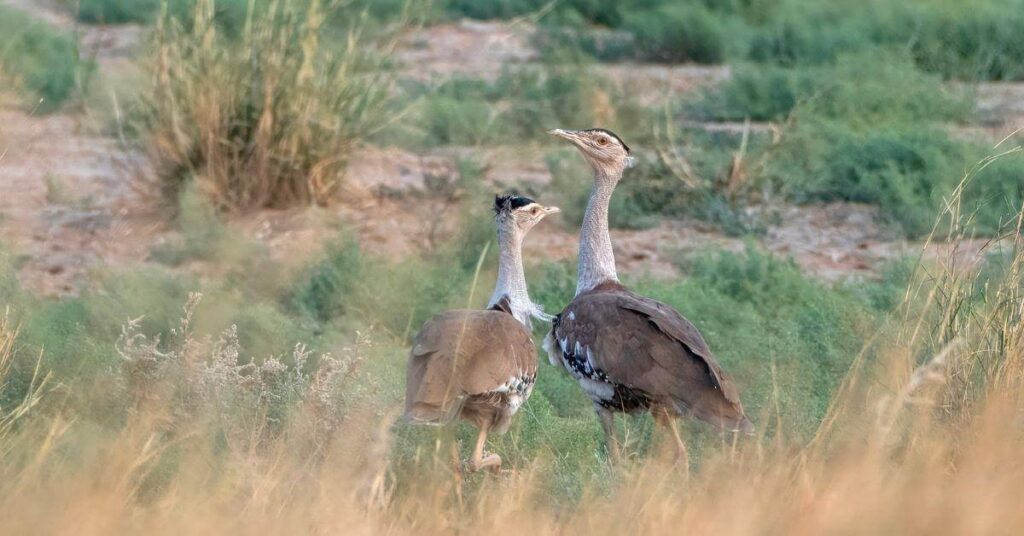
For travellers hoping to learn about the Great Indian Bustard, Jaisalmer and the Thar Desert in Rajasthan are especially important.
The Desert National Park landscape is one of the key areas associated with the species. Wildlife Institute of India research identifies Rajasthan’s Thar landscape as critical to the bird’s survival.
A trip to this region can therefore combine birdwatching with the unique experience of exploring Rajasthan’s desert scenery.
It Is Critically Endangered
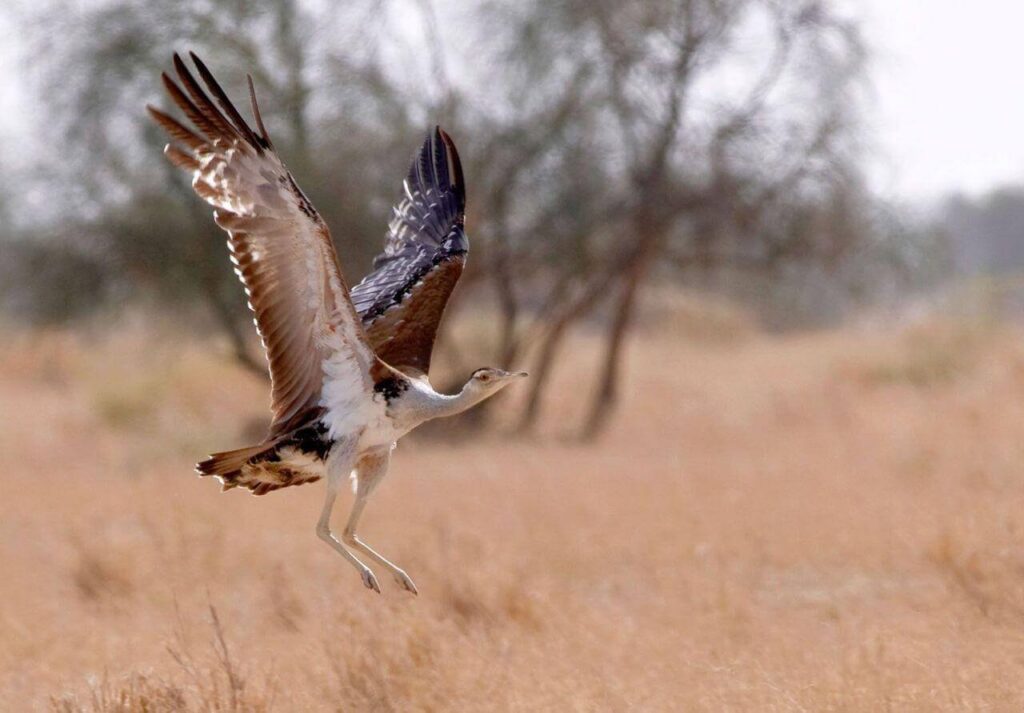
The Great Indian Bustard is classified as Critically Endangered, reflecting the extremely serious threats facing its remaining populations.
Habitat loss, fragmentation and mortality caused by infrastructure — particularly collisions with power lines — have contributed to its decline.
The species is also protected under India’s highest level of legal wildlife protection, being listed under Schedule I of the Wildlife (Protection) Act.
The Male Has a Spectacular Courtship Display
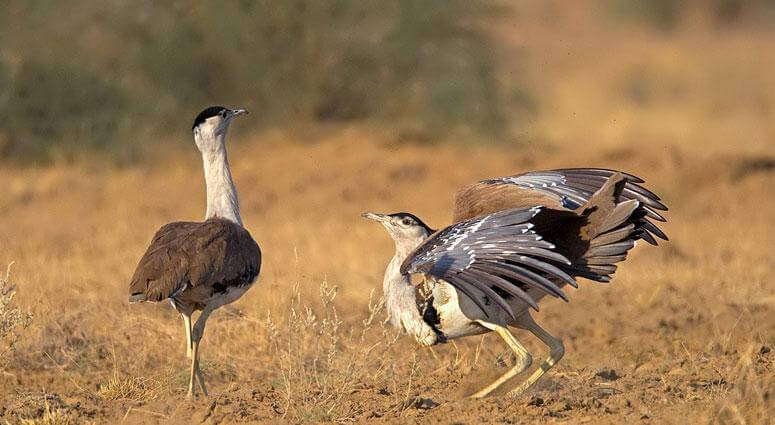
One of the most fascinating things about the Great Indian Bustard is its breeding behaviour.
During courtship, the male can inflate a large pouch beneath its neck, creating a dramatic visual display. It also produces a deep, resonating call while attempting to attract a female.
For birdwatchers, witnessing this behaviour would be an extraordinary wildlife moment — although visitors should always observe breeding birds from a safe and respectful distance.
Its Nest Is Surprisingly Simple
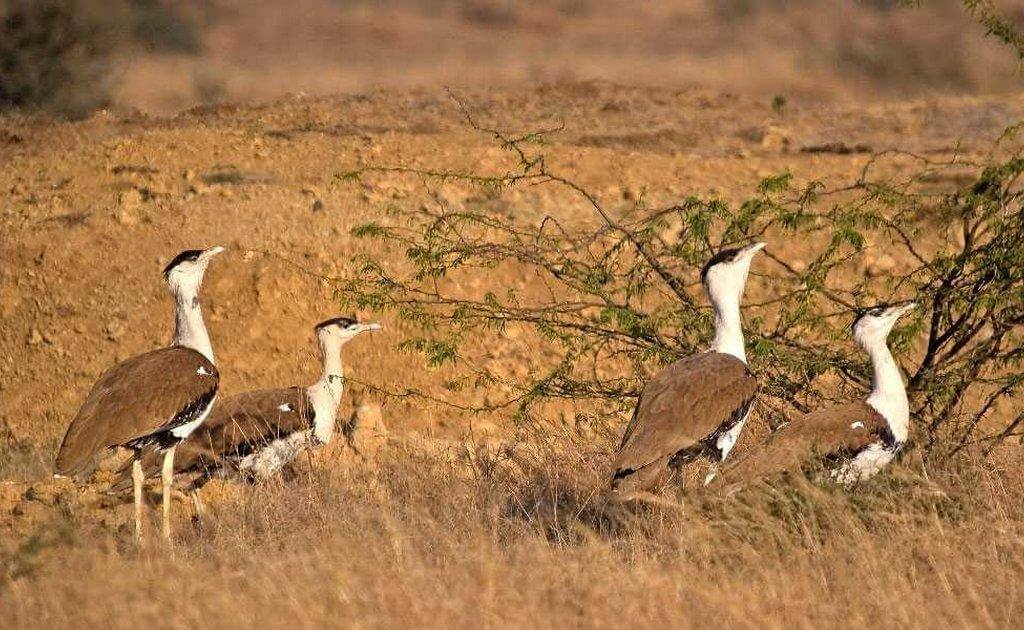
The Great Indian Bustard does not build an elaborate nest like many other birds.
Research by the Wildlife Institute of India notes that the female generally lays a single egg, rarely two, directly on bare ground. This makes nesting birds particularly vulnerable to predators and disturbance.
This simple nesting strategy also demonstrates why undisturbed grassland habitat is so important for the species.
Power Lines Are a Major Conservation Challenge
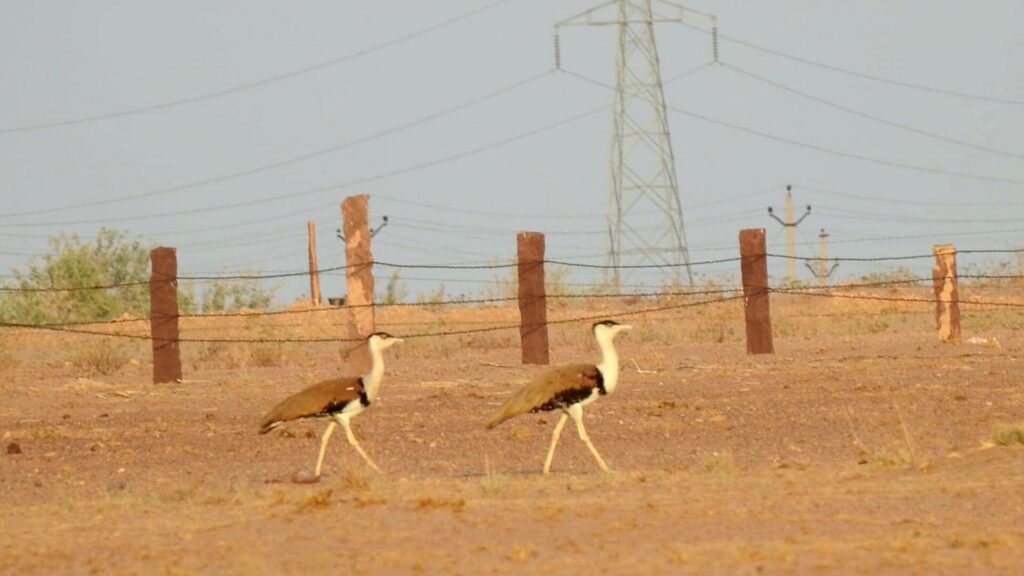
One of the most serious modern threats to the Great Indian Bustard comes from overhead power infrastructure.
Because the bird flies across open landscapes, collisions with power lines can be fatal. Conservation programmes have therefore identified critical power-line stretches where mitigation, including undergrounding and bird diverters, can help reduce mortality.
For conservationists, protecting the bird means not only safeguarding habitat but also making the wider landscape safer.
India Is Working on Conservation Breeding
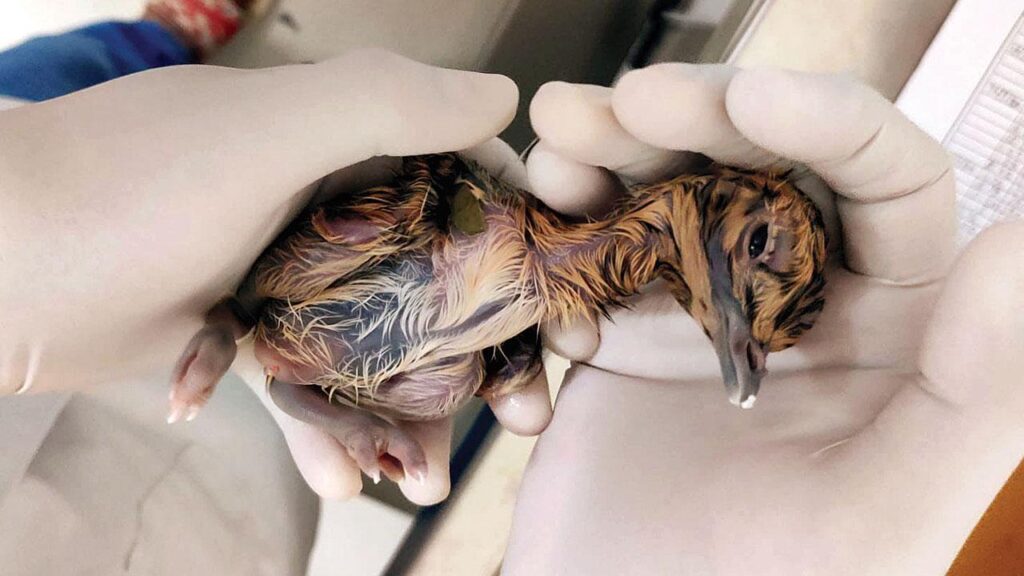
There is an ongoing national effort to prevent the Great Indian Bustard from disappearing.
The Wildlife Institute of India, Rajasthan Forest Department and other partners have worked on habitat improvement, research and conservation breeding. A long-term conservation breeding facility at Ramdevra, Rajasthan, became functional in 2022.
A major milestone came in 2023, when the world’s first captive-bred Great Indian Bustard chick hatched at the Sam Conservation Breeding Centre in Jaisalmer.
More recently, conservation efforts have moved toward preparing captive-bred birds for eventual release. In July 2026, three young Great Indian Bustards were shifted to a newly constructed rewilding tunnel at the conservation and breeding centre in Ramdevra.
Seeing One in the Wild Is a Rare Experience
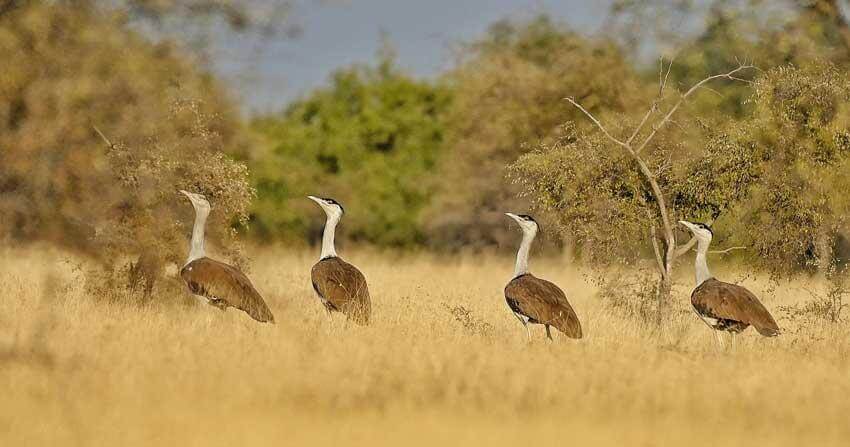
Unlike a conventional safari where visitors may reasonably expect to see several familiar species, a Great Indian Bustard sighting requires patience and luck.
Its rarity makes every encounter particularly meaningful.
Travellers visiting the Thar region should therefore approach the experience as responsible wildlife watching rather than a guaranteed sighting. The landscape itself — vast desert, scrub and grassland stretching beneath the Rajasthan sky — is part of the experience.
The Great Indian Bustard Represents India’s Forgotten Grasslands
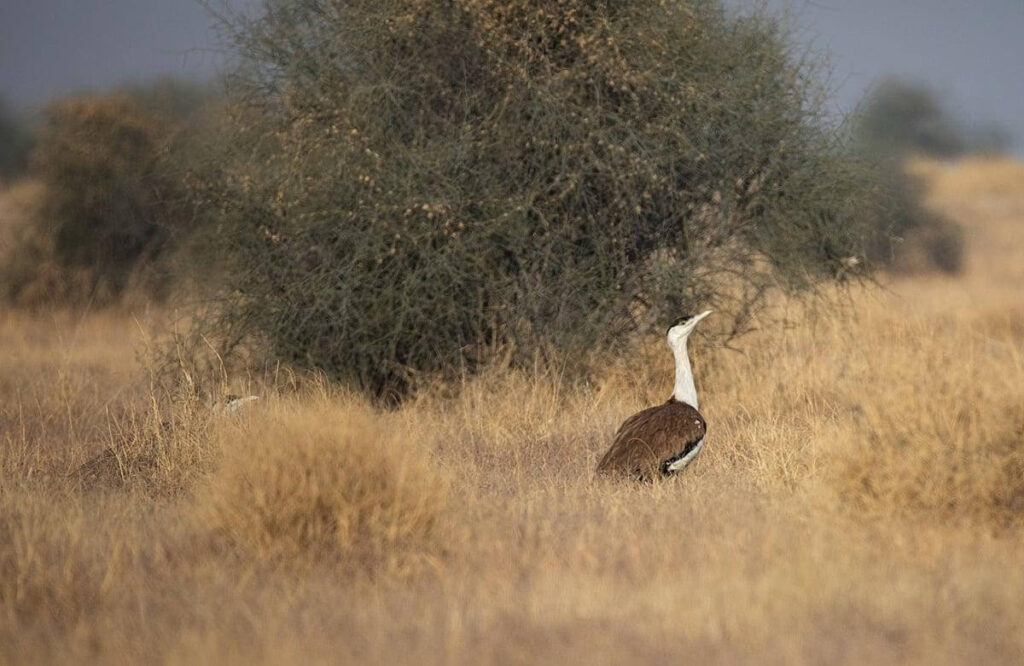
Perhaps the most important lesson from this remarkable bird is that India’s biodiversity is much more diverse than its famous forests and tiger reserves.
The Great Indian Bustard is a symbol of India’s open ecosystems. Protecting it also means protecting grasslands, desert habitats and the wildlife that depends on them.
For travellers, this opens up another fascinating dimension of Indian wildlife tourism: desert safaris, birdwatching and conservation-focused travel.
Best Time to Explore Great Indian Bustard Habitat
The ideal timing depends on the area, weather and wildlife activity you want to experience. Rajasthan’s desert landscape is generally more comfortable to explore during the cooler months, particularly from October to March.
However, travellers should remember that sightings of such a critically endangered bird are never guaranteed.
If your main purpose is birdwatching, it is best to travel with experienced naturalists or local wildlife guides who understand the habitat and follow current access and conservation guidelines.
Responsible Wildlife Tourism: What Travellers Should Remember
If you are visiting Great Indian Bustard habitat, responsible tourism is essential.
- Maintain a safe distance from birds and other wildlife.
- Never chase a bird to obtain a photograph.
- Avoid loud noises and sudden movements.
- Follow instructions from forest officials and authorised guides.
- Do not enter restricted or breeding areas.
- Avoid disturbing nests or nesting birds.
- Use binoculars or a long camera lens instead of approaching wildlife.
- Do not litter in grasslands or desert habitats.
- Support local guides and conservation-friendly tourism initiatives.
The goal should not simply be to photograph the Great Indian Bustard. It should be to experience its habitat without adding pressure to an already threatened species.
Why the Great Indian Bustard Deserves Your Attention

The Great Indian Bustard is more than a rare bird. It is a reminder of how quickly wildlife can disappear when natural habitats are fragmented and human pressures increase.
From its impressive size and fascinating courtship display to its dependence on India’s disappearing grasslands, almost everything about this bird is extraordinary.
For wildlife enthusiasts planning a Rajasthan trip, exploring the Thar Desert and the Great Indian Bustard landscape around Jaisalmer can offer an experience very different from the usual palace-and-fort itinerary.
And if you are fortunate enough to see this magnificent bird in the wild, remember that the real privilege is not simply getting the photograph — it is witnessing a species that conservationists are working hard to save for future generations.
Final Thoughts
The Great Indian Bustard is one of India’s most remarkable yet least-known wildlife treasures. Its survival depends on protecting the open landscapes that have supported it for generations.
A journey through Rajasthan’s Thar region can therefore be much more than a desert holiday. It can be an opportunity to understand India’s fragile grassland ecosystems and the conservation efforts trying to protect one of the country’s rarest birds.
FAQs About Great Indian Bustard
Rajasthan’s Thar Desert, particularly the Jaisalmer region and the Desert National Park landscape, is the most important area for the species. Small populations also occur in parts of Gujarat, Maharashtra, Karnataka and Andhra Pradesh.
Yes. It is classified as Critically Endangered and is among the world’s rarest birds.
It is an opportunistic omnivore. Its diet can include insects, reptiles, and plant matter such as seeds and fruits.
Yes, travellers can explore areas of the Thar Desert and designated wildlife landscapes, but access to particular areas may be regulated. Visitors should follow forest department and local guide instructions.
No. It is an extremely rare species, and sightings depend on location, season, conditions and luck.
The birds fly through open landscapes where overhead power lines can be difficult to detect, resulting in fatal collisions. Conservation programmes are working to identify and mitigate high-risk power-line sections.