
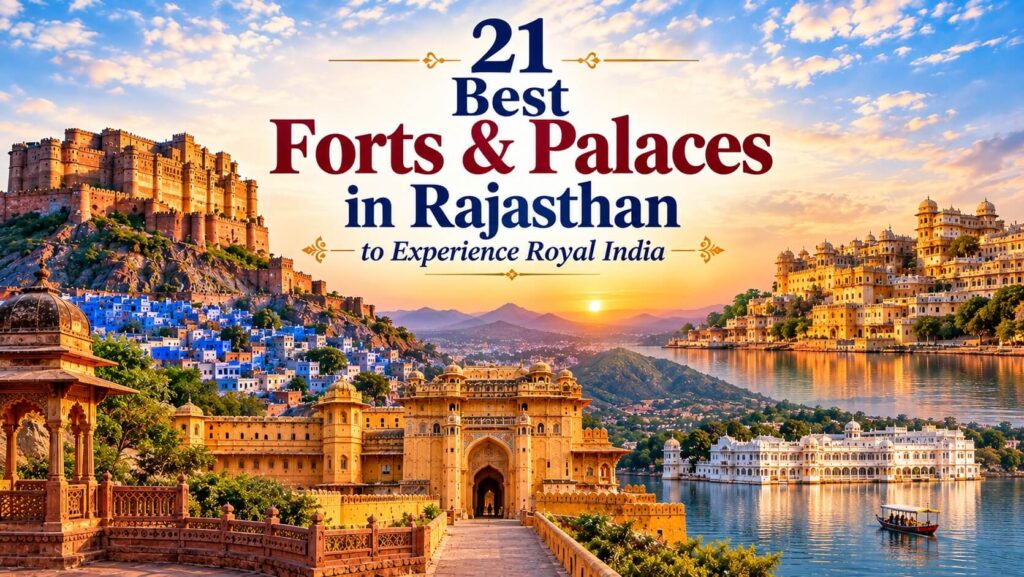
Rajasthan is one of the best places in India to experience the grandeur of royal heritage. Across its deserts, lakes, hills and historic cities stand enormous forts, elegant palaces, ancient temples and royal residences that preserve centuries of history.
The forts of Rajasthan were not only royal residences but also important military strongholds. Their massive walls, gateways, watchtowers and strategic hilltop locations tell stories of battles, kingdoms and changing dynasties. The palaces, meanwhile, showcase the luxurious lifestyle of Rajasthan’s former rulers through beautiful courtyards, mirror work, paintings, marble decoration and ornate architecture.
From the pink sandstone monuments of Jaipur to the golden walls of Jaisalmer, Rajasthan offers an incredible variety of heritage experiences.
Must-Visit Forts and Palaces in Rajasthan
Here are 21 of the best forts and palaces in Rajasthan that deserve a place on your travel itinerary.
Amber Fort and Palace, Jaipur
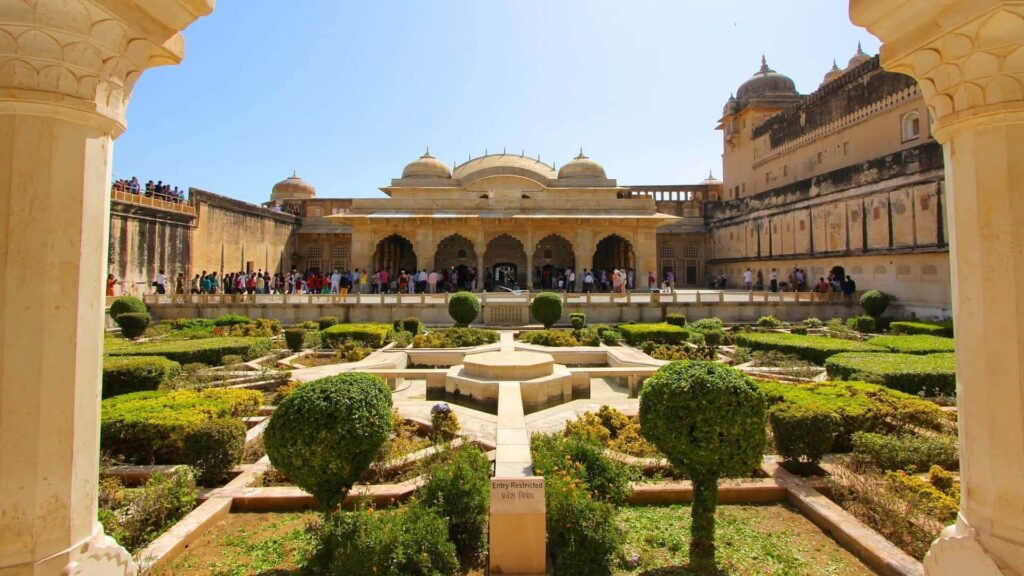
Located about 11 kilometres from central Jaipur, Amber Fort, also known as Amer Fort, is one of Rajasthan’s most magnificent historical monuments. Built dramatically on the Aravalli Hills overlooking Maota Lake, the fort combines impressive defensive architecture with beautifully decorated royal palaces.
The foundations of the fort are associated with the Kachhwaha Rajput rulers, while Raja Man Singh I began construction of the present palace complex in the late 16th century. Later rulers expanded and embellished it.
One of the most fascinating aspects of Amber Fort is its combination of Rajput and Mughal architectural styles. Red sandstone and marble are used throughout the complex, while intricate carvings, painted decorations and mirror work add to its grandeur.
Major Attractions
Diwan-i-Aam: The Hall of Public Audience where the ruler met officials and subjects.
Diwan-i-Khas: The Hall of Private Audience, decorated with elaborate architectural details.
Sheesh Mahal: Perhaps the most famous section of the palace, featuring intricate mirror decoration that creates a spectacular visual effect.
Ganesh Pol: An elaborately decorated gateway leading into the private royal areas.
Sukh Niwas: A section of the palace designed to provide relief from the heat, traditionally associated with cooling systems using water.
The fort also offers excellent views of Maota Lake and the surrounding Aravalli landscape.
Travel tip: Visit early in the morning to explore the fort comfortably and avoid the busiest period.
Jaigarh Fort, Jaipur
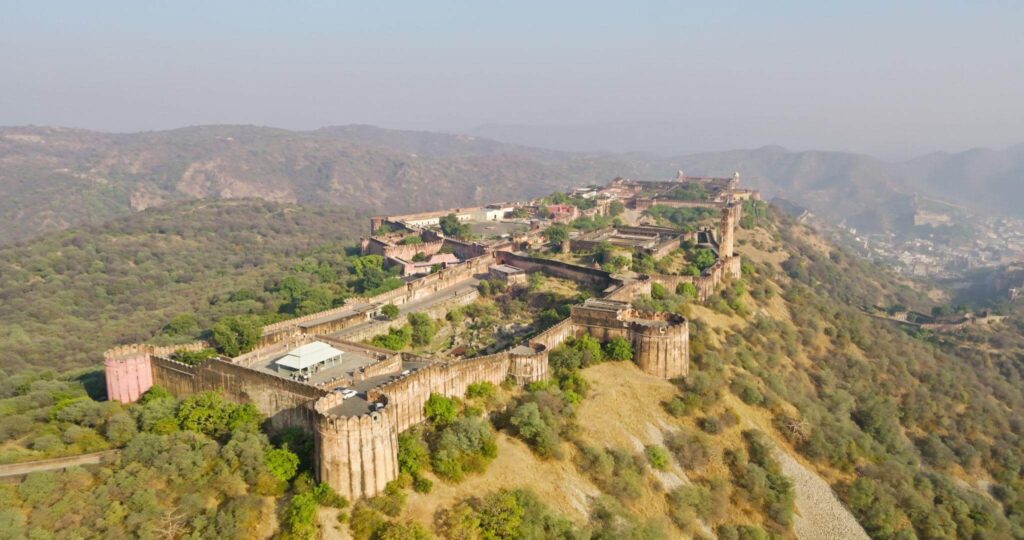
Situated on the Aravalli Hills above Amber Fort, Jaigarh Fort was built primarily as a military and defensive stronghold.
The fort is closely connected with Amber Fort and was strategically positioned to protect the kingdom and its royal treasures. Its massive walls, watchtowers and fortified gateways demonstrate the military importance of the location.
Jaigarh is particularly famous for the Jaivana Cannon, traditionally regarded as one of the largest wheeled cannons of its type. The fort also contained a cannon foundry where weapons were manufactured.
What to See
- Jaivana Cannon
- Cannon foundry
- Watchtowers
- Palace complexes
- Armoury
- Historic reservoirs
- Fortification walls
- Panoramic Aravalli views
The fort’s elevated location gives visitors spectacular views towards Amber and the surrounding hills.
Unlike the richly decorated Amber Fort, Jaigarh provides a better understanding of the military engineering and defensive planning of the Jaipur kingdom.
Travel tip: Visit Jaigarh together with Amber Fort because the two attractions are historically connected.
Nahargarh Fort, Jaipur
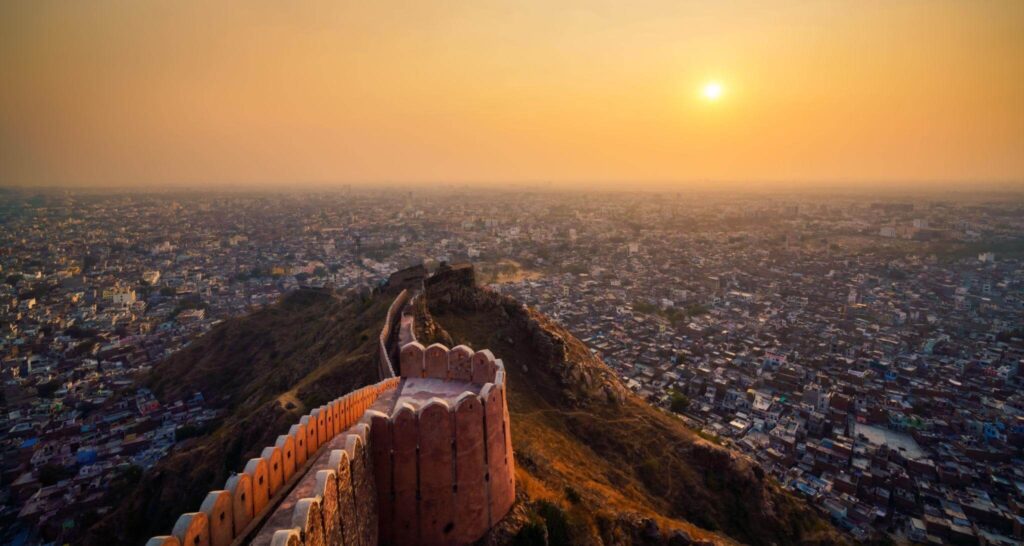
Standing high above Jaipur, Nahargarh Fort is one of the city’s best viewpoints and an important part of its historic defensive network.
The fort was founded in 1734 during the reign of Maharaja Sawai Jai Singh II and was later expanded. Together with Amber and Jaigarh, Nahargarh formed part of the defensive system protecting Jaipur.
One of the most interesting sections is Madhavendra Bhawan, a palace complex containing beautifully designed apartments associated with the royal family.
The palace interiors feature delicate decorations and colourful designs that contrast with the fort’s massive defensive walls.
Why Visit Nahargarh?
The biggest attraction is arguably the view.
From the fort, visitors can look across the sprawling city of Jaipur and the surrounding Aravalli Hills. At sunset, the landscape becomes especially beautiful.
Nahargarh also has a different atmosphere from Amber Fort. While Amber focuses heavily on royal architecture and ceremonial spaces, Nahargarh combines military history, royal retreat architecture and panoramic scenery.
Best time: Late afternoon and sunset.
Hawa Mahal, Jaipur
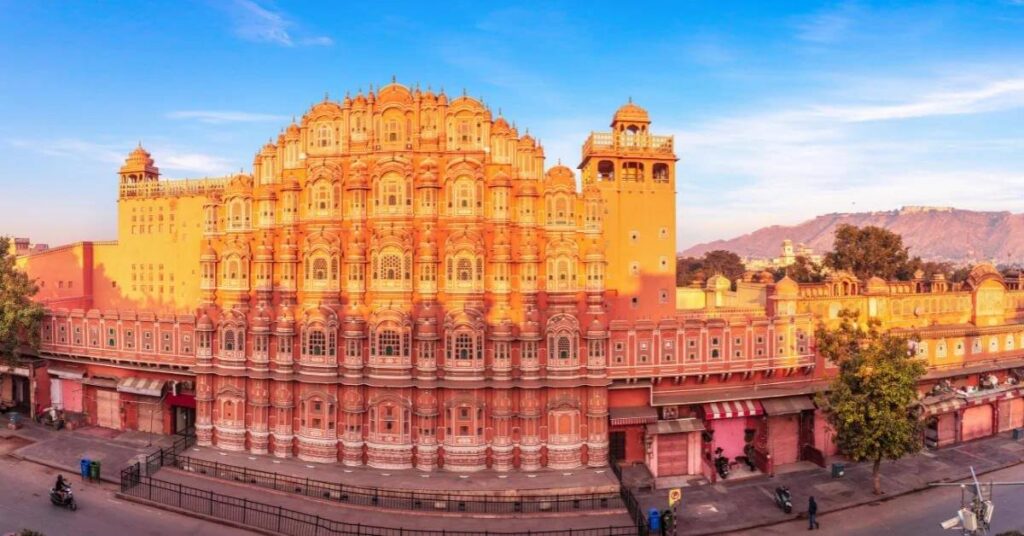
Hawa Mahal is perhaps the most recognizable monument in Jaipur. Its distinctive five-storey pink sandstone façade has become an iconic symbol of Rajasthan tourism.
Built in 1799 by Maharaja Sawai Pratap Singh, the palace was designed with hundreds of small windows and jharokhas.
These windows served a practical purpose. They allowed members of the royal household, particularly women observing the traditional practice of purdah, to see activities and celebrations taking place on the streets without being easily noticed.
The numerous openings also helped air circulate through the building, giving rise to the palace’s popular name, the Palace of Winds.
Architectural Highlights
- Intricately carved jharokhas
- Pink and red sandstone façade
- Decorative arches
- Small chambers
- Courtyards
- Traditional Rajput architectural elements
Although the exterior appears enormous, the palace is relatively shallow compared with many traditional royal complexes.
Travel tip: For the classic Hawa Mahal photograph, stand across the road from the main façade. Visit early in the morning for softer light.
City Palace, Jaipur
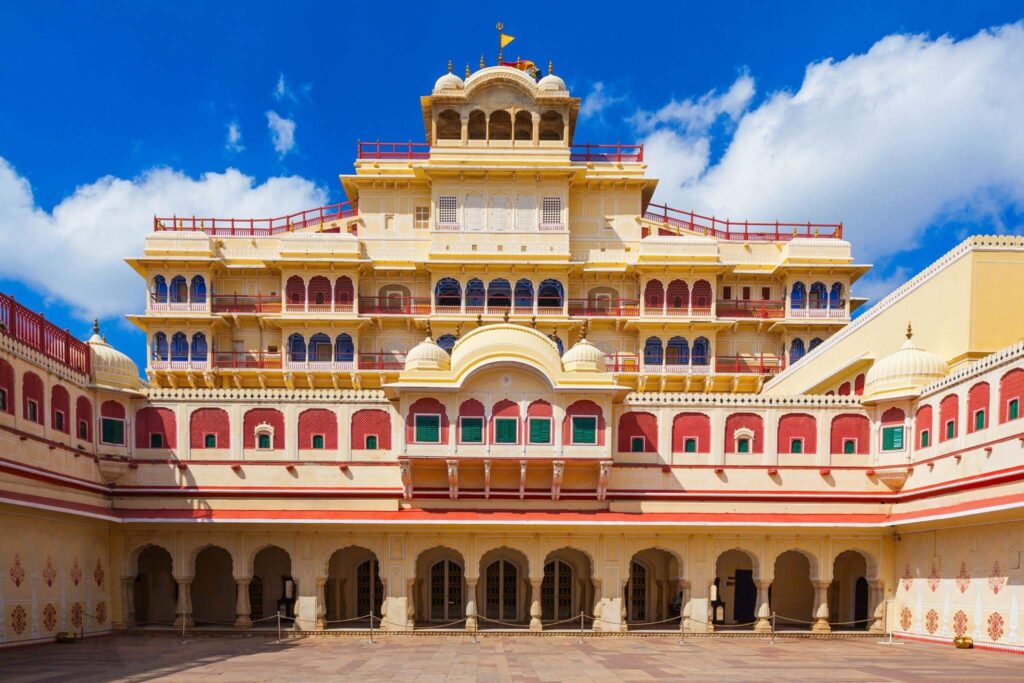
Located in the heart of Jaipur’s historic walled city, City Palace is a vast complex of palaces, courtyards, gardens and museums.
The palace complex developed after Maharaja Sawai Jai Singh II established Jaipur in the 18th century. Later rulers added new buildings and architectural elements.
The complex beautifully combines Rajput, Mughal and European influences.
Major Attractions
Chandra Mahal: One of the most important structures within the complex and traditionally associated with the royal family.
Mubarak Mahal: Known for its elegant architecture and museum collections.
Pitam Niwas Chowk: Famous for its four beautifully decorated seasonal gates.
Diwan-i-Khas: A ceremonial space containing historic royal objects.
The palace museum displays costumes, manuscripts, weapons, paintings and other objects associated with Jaipur’s royal history.
Why Visit?
City Palace is ideal for travellers who want to experience both the architecture and cultural history of Jaipur in one location.
Allow at least two to three hours for a detailed visit.
Jal Mahal, Jaipur
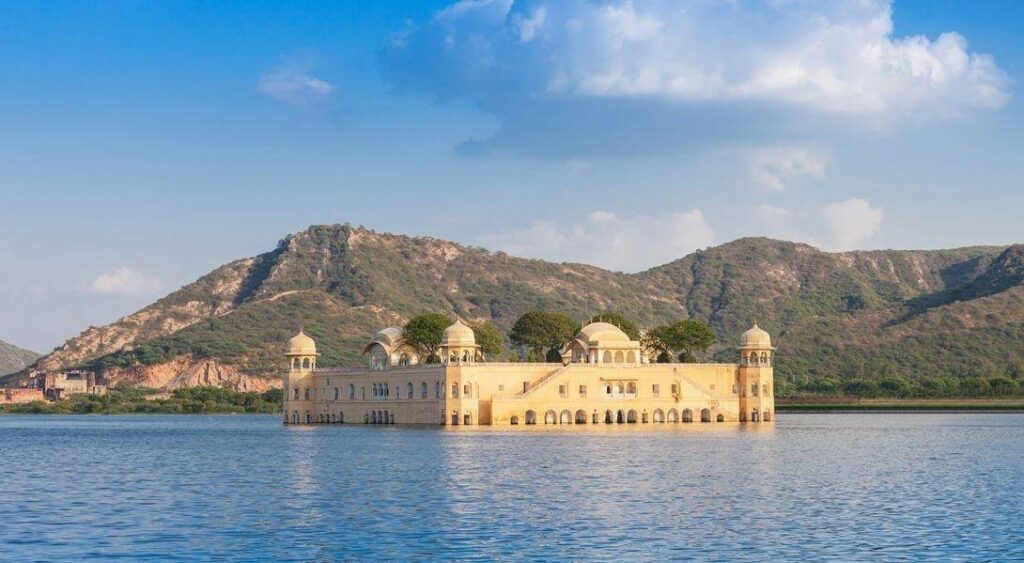
Situated in the middle of Man Sagar Lake, Jal Mahal is one of Jaipur’s most photogenic monuments.
The palace appears to float on the water, although the structure actually extends several levels below the lake surface depending on water conditions.
Constructed primarily from red sandstone, the palace showcases elements of Rajput architectural design.
The surrounding lake and Aravalli Hills create an especially attractive setting.
What Makes Jal Mahal Special?
Unlike the grand forts where visitors walk through courtyards and royal halls, Jal Mahal is primarily admired from the lakeside.
The reflection of the palace in the water creates beautiful photography opportunities, especially during sunrise and sunset.
Travel tip: Combine your visit with Amber Fort and Jaigarh Fort because all three attractions are located along the same general sightseeing route.
Monsoon Palace, Udaipur
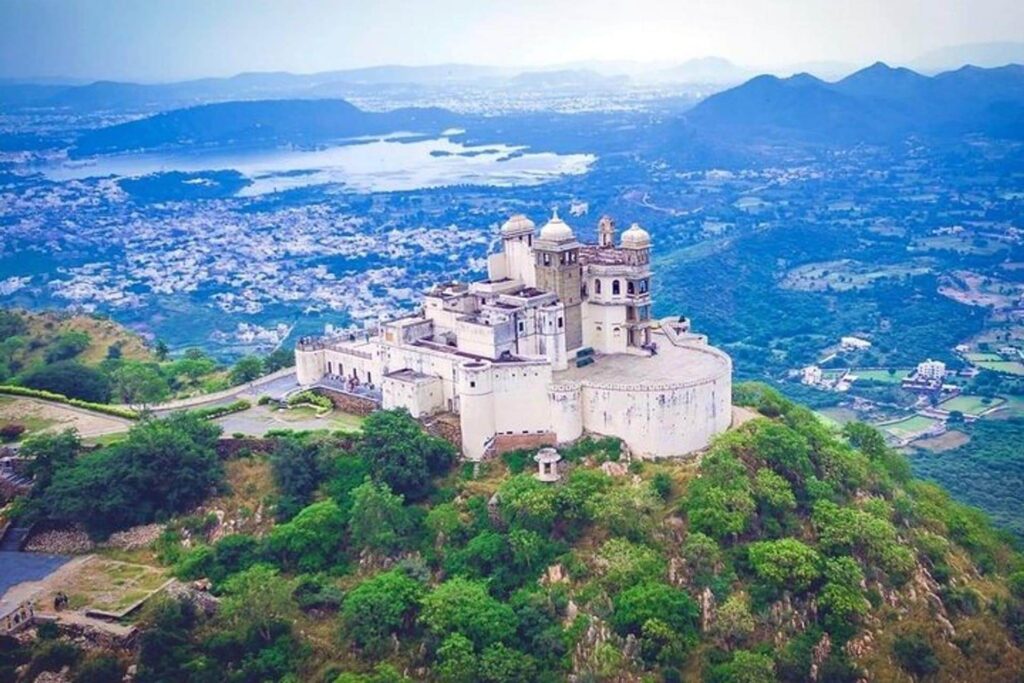
Located high in the Aravalli Hills overlooking Udaipur, Monsoon Palace, also known as Sajjangarh Palace, offers some of the finest panoramic views of the City of Lakes.
The palace was built in the 19th century during the reign of Maharana Sajjan Singh.
It was intended as a monsoon retreat and was also connected with the ruler’s plans for astronomical observations.
The hilltop location allowed the royal family to enjoy cooler surroundings and magnificent views of the countryside.
Highlights
- Panoramic views of Udaipur
- Aravalli Hills
- Views towards Fateh Sagar Lake
- Historic palace architecture
- Beautiful sunset location
The palace itself is less elaborate than Udaipur’s City Palace, but its location makes it particularly special.
Best experience: Reach the palace in the late afternoon and stay until sunset.
Lohagarh Fort, Bharatpur
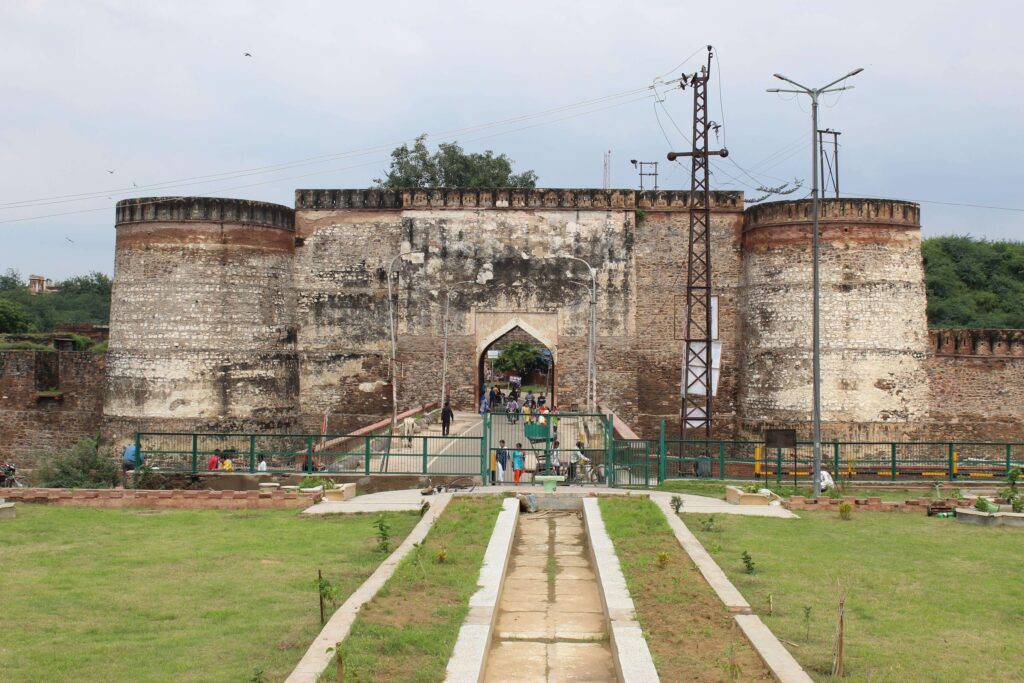
Lohagarh Fort, meaning the “Iron Fort”, represents the military strength of the Jat rulers of Bharatpur.
Unlike many Rajasthan forts that were constructed on dramatic hilltops, Lohagarh was designed with strong defensive walls, moats and strategic fortifications.
The fort was associated with Maharaja Suraj Mal, one of the most important rulers of Bharatpur.
Its defensive design helped the fort withstand attacks, making it an important example of military architecture in northern India.
Important Structures
- Lohagarh Fort gates
- Jawahar Burj
- Fateh Burj
- Mahal Khas
- Moat and defensive walls
The fort is particularly interesting for visitors who want to learn about Rajasthan’s military history beyond the famous Rajput hill forts.
Travel tip: Combine Lohagarh Fort with Bharatpur’s famous bird sanctuary for a full-day heritage and nature experience.
Deeg Palace, Bharatpur
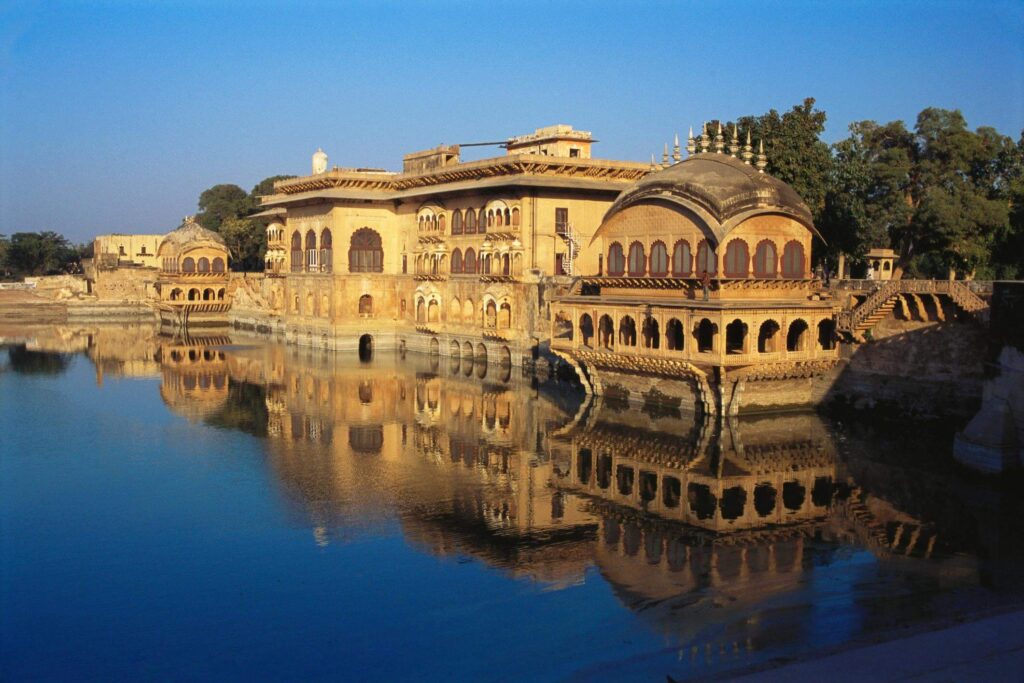
Located near Bharatpur, Deeg Palace is a magnificent palace complex associated with the Jat rulers of Bharatpur.
Deeg served as an important royal retreat and is famous for its combination of grand buildings, gardens, water channels and fountains.
The palace complex includes several impressive structures arranged around landscaped gardens.
Architectural Features
- Large courtyards
- Marble and sandstone architecture
- Decorative pavilions
- Gardens
- Historic fountains
- Water channels
- Palace halls
The water systems were an important part of the palace’s design and helped create a cooler environment during Rajasthan’s hot summers.
Deeg Palace is less crowded than many of Rajasthan’s famous monuments, making it an excellent choice for travellers interested in offbeat heritage destinations.
Ranthambore Fort, Sawai Madhopur
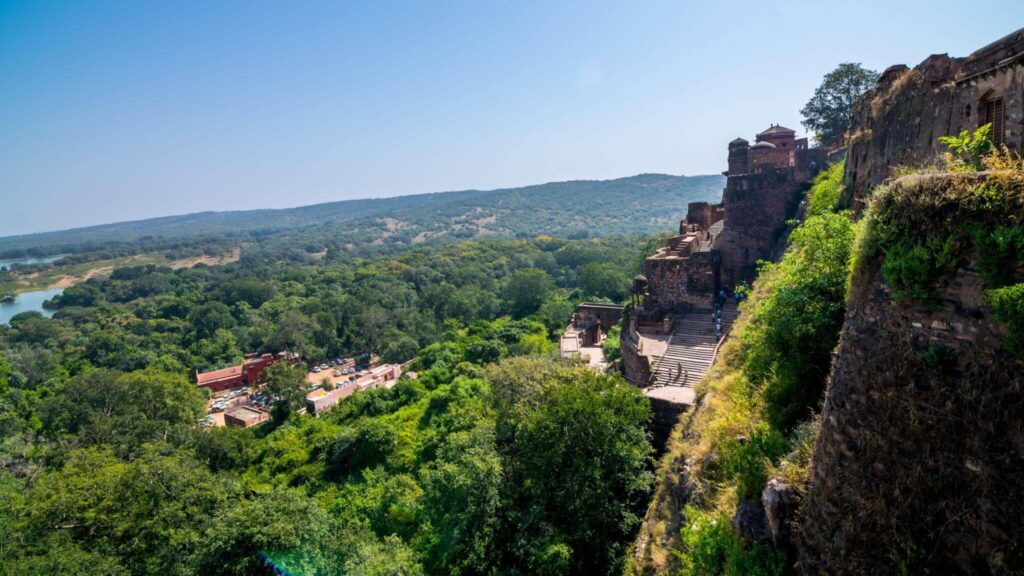
Few Rajasthan monuments offer a setting as dramatic as Ranthambore Fort.
The ancient fort stands on a hill surrounded by the forests of Ranthambore National Park, creating an unusual combination of wildlife and history.
The fort has witnessed centuries of political changes, battles and changing dynasties.
Inside the complex are historic temples, gates, walls and other structures.
Highlights
- Ancient fort walls
- Ganesh Temple
- Historic gateways
- Hilltop viewpoints
- Jungle surroundings
- Medieval architecture
The fort is part of the UNESCO-listed Hill Forts of Rajasthan.
One of the best ways to experience the destination is to combine a fort visit with a tiger safari in Ranthambore National Park.
Best for: Wildlife lovers, photographers, history enthusiasts and families.
Taragarh Fort, Bundi
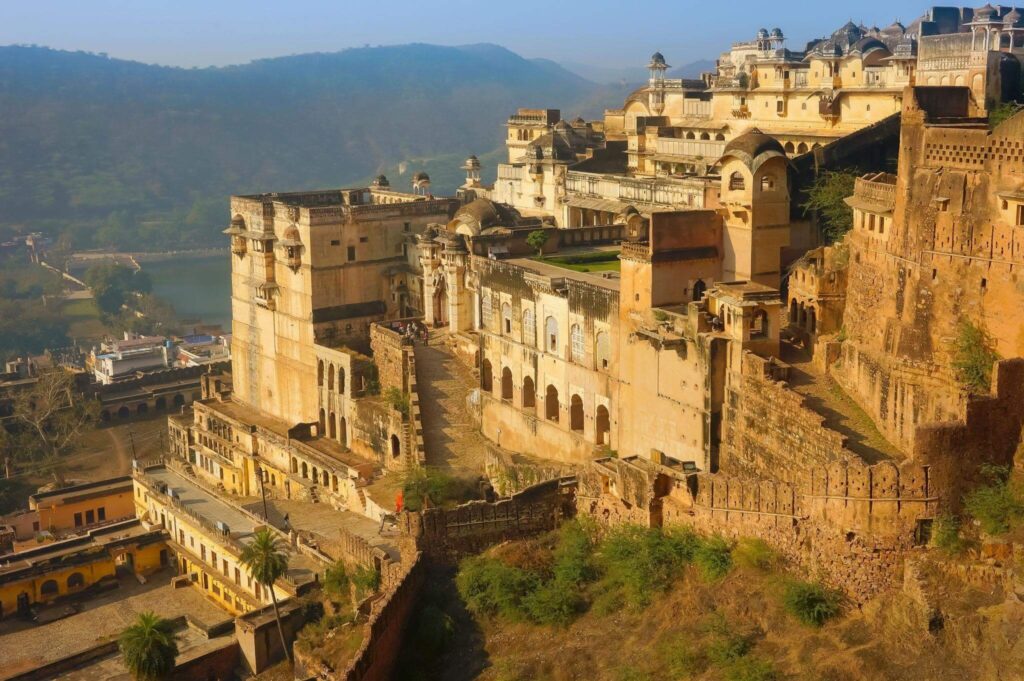
Rising above the historic town of Bundi, Taragarh Fort is one of Rajasthan’s atmospheric and relatively less-visited hill forts.
The fort overlooks Bundi and the surrounding Aravalli landscape. Its old walls, gateways, reservoirs and ruined structures reflect the defensive importance of the site.
Bundi itself is famous for its traditional miniature paintings and palace murals, making a visit to Taragarh Fort even more rewarding.
What to Explore
- Fort gateways
- Old reservoirs
- Defensive walls
- Hilltop viewpoints
- Bundi Palace
- Historic murals
The fort is best suited to travellers looking for a quieter heritage experience away from Rajasthan’s busiest tourist attractions.
Vinay Vilas Mahal, Alwar
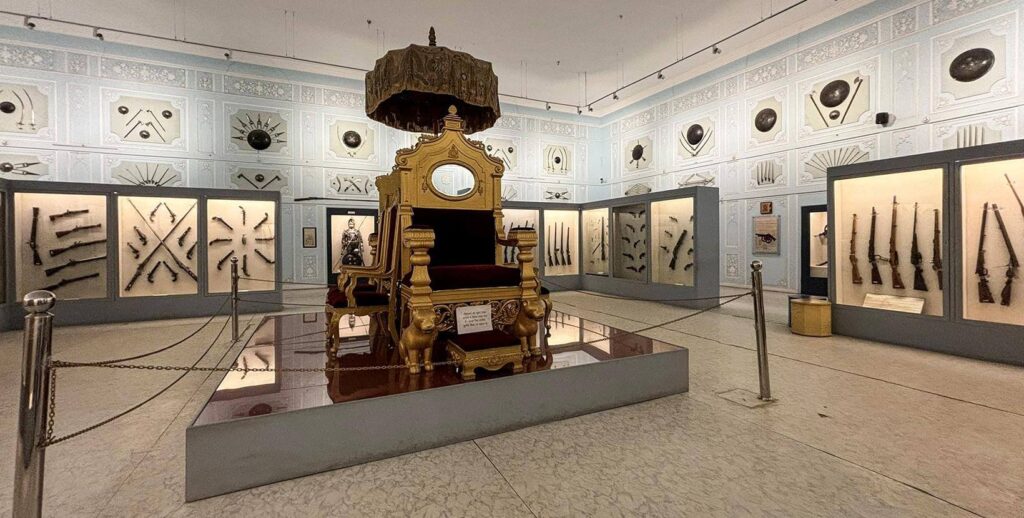
Vinay Vilas Mahal, associated with Alwar’s historic City Palace complex, is an important part of the city’s royal heritage.
The palace reflects the architectural traditions developed by the rulers of Alwar and contains decorative elements characteristic of Rajasthan’s royal buildings.
The complex is also associated with museum collections showcasing the region’s history and royal possessions.
Nearby Attractions
A visit to Vinay Vilas Mahal can be combined with:
- Alwar City Palace
- Bala Quila
- Moosi Maharani Ki Chhatri
- Siliserh Lake
- Sariska National Park
This makes Alwar a good addition to a Rajasthan itinerary for travellers interested in combining heritage, architecture and wildlife.
Junagarh Fort, Bikaner
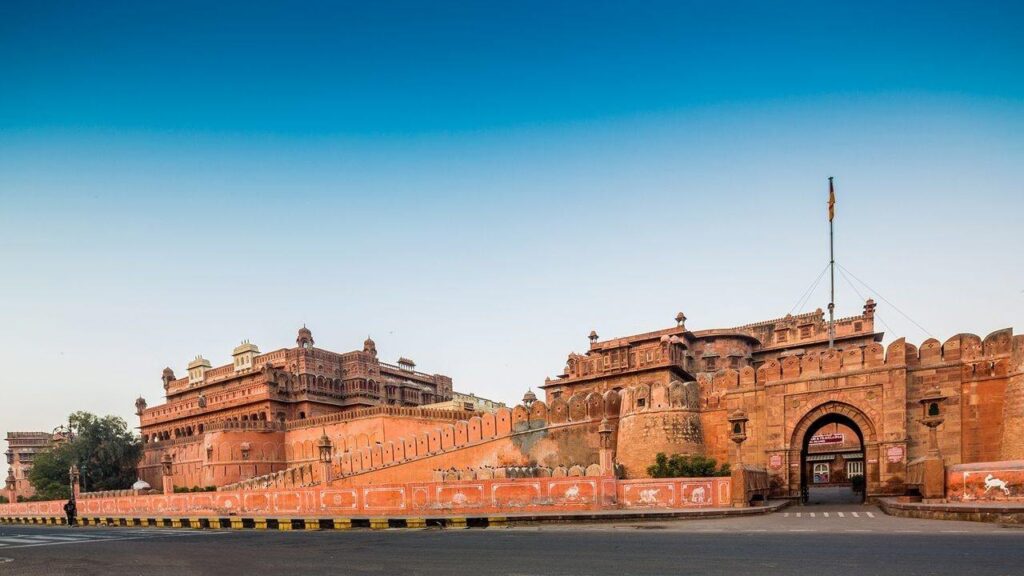
Junagarh Fort is one of Bikaner’s most impressive monuments and is notable because it was constructed on relatively flat ground rather than on a hilltop.
The fort’s history is closely associated with the rulers of Bikaner. Over time, successive rulers added palaces, courtyards and decorative structures.
The fort’s interiors are particularly impressive, featuring painted walls, carved stone, decorative ceilings, mirror work and ornate details.
Major Attractions
Anup Mahal: Known for its richly decorated interiors.
Karan Mahal: A ceremonial palace associated with royal history.
Phool Mahal: One of the older palace sections.
Chandra Mahal: Known for its decorative interiors.
The fort museum displays royal weapons, costumes, manuscripts, furniture and other historic objects.
Travel tip: Spend enough time inside the fort rather than simply photographing the exterior. Its interiors are among its greatest attractions.
Jaisalmer Fort, Jaisalmer
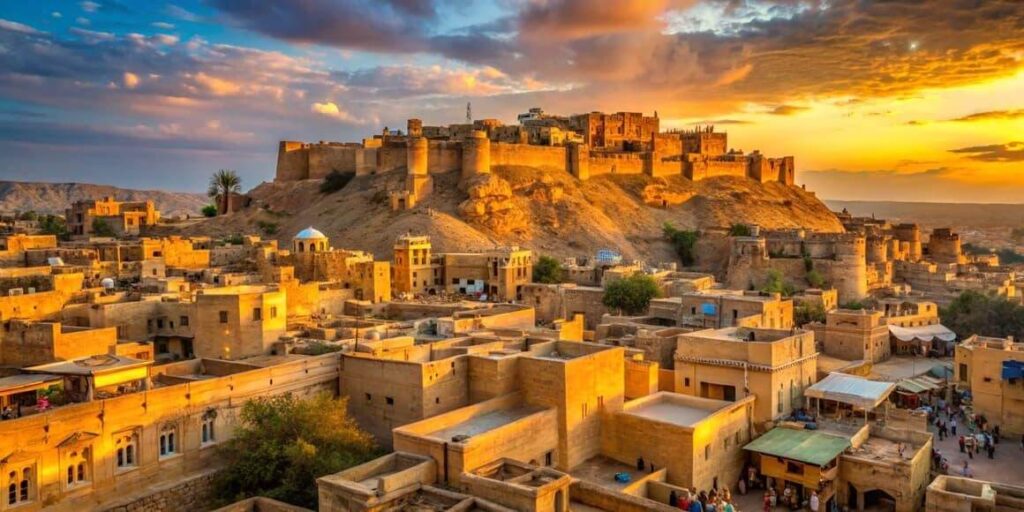
Rising from the golden landscape of the Thar Desert, Jaisalmer Fort is one of Rajasthan’s most extraordinary living heritage sites.
Built in 1156 by Rawal Jaisal, the fort developed as an important settlement and trading centre along historic caravan routes.
Its yellow sandstone walls change colour throughout the day, appearing golden in the sunlight. This is why Jaisalmer is popularly known as the Golden City.
Unlike many forts that are primarily monuments, Jaisalmer Fort continues to function as a living settlement, with homes, shops, restaurants and religious buildings inside.
Highlights
- Royal palace
- Jain temples
- Laxminath Temple
- Ancient lanes
- Fort gates
- Viewpoints
- Traditional havelis
The fort is also part of the UNESCO-listed Hill Forts of Rajasthan.
Best experience: Explore the fort early in the morning, visit the Jain temples and stay around sunset for views across the Golden City.
Mehrangarh Fort, Jodhpur
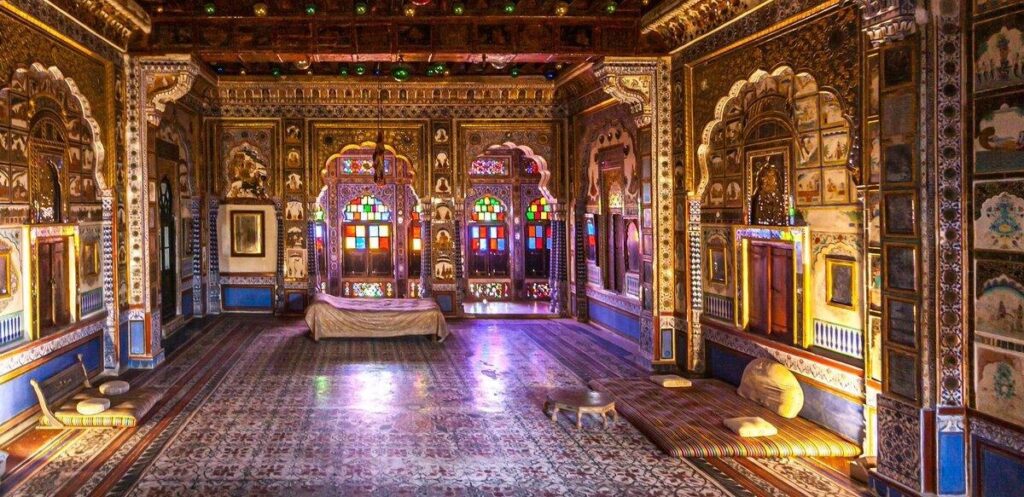
Standing dramatically above Jodhpur, Mehrangarh Fort is one of India’s most spectacular fort complexes.
The fort was founded by Rao Jodha in 1459, when he established Jodhpur as the capital of the Rathore kingdom.
Massive walls surround a complex of palaces, courtyards, gateways and museums.
The fort’s elevated position provides extraordinary views over Jodhpur’s famous blue-painted houses.
Must-See Areas
Moti Mahal: A beautifully decorated royal hall.
Phool Mahal: Known for its elaborate decorative details.
Sheesha Mahal: Features traditional mirror decoration.
Daulat Khana: Houses important museum collections.
The fort museum contains royal palanquins, weapons, textiles, paintings, furniture and other historic objects.
Travel tip: Allow at least three hours to explore the fort properly.
Lalgarh Palace, Bikaner
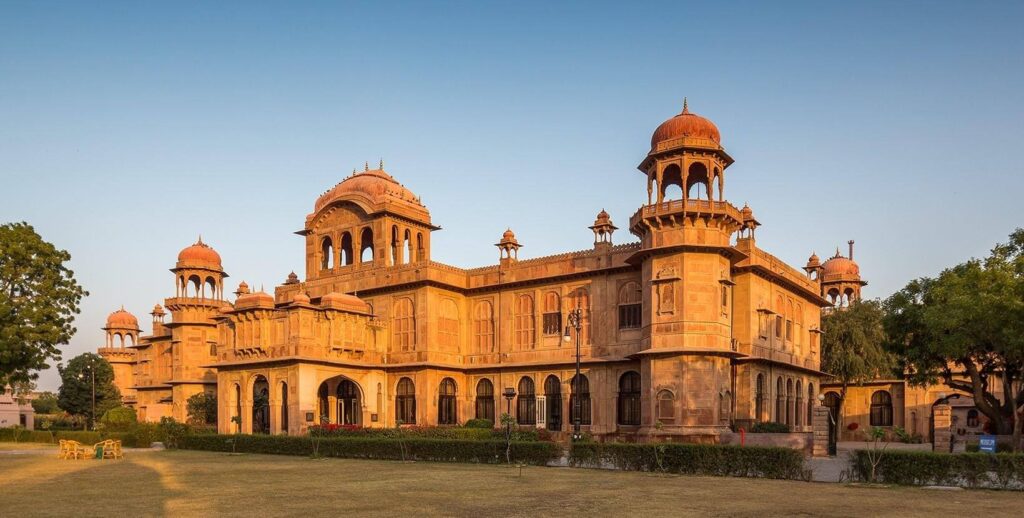
Lalgarh Palace is one of Bikaner’s most elegant royal residences.
The palace was commissioned for Maharaja Ganga Singh and reflects a fascinating combination of Indian and European architectural influences.
Its design incorporates elements of Indo-Saracenic, Rajput and European architecture, creating a distinctive appearance.
The palace features elaborate interiors, carved stonework, decorative ceilings, courtyards and gardens.
Why Visit?
Lalgarh Palace provides a different perspective on Rajasthan’s royal architecture compared with its medieval forts.
It represents the changing architectural tastes of Rajasthan’s royal families during the late 19th and early 20th centuries.
A portion of the property has also been operated as a heritage hotel, allowing visitors to experience a royal atmosphere.
Umaid Bhawan Palace, Jodhpur
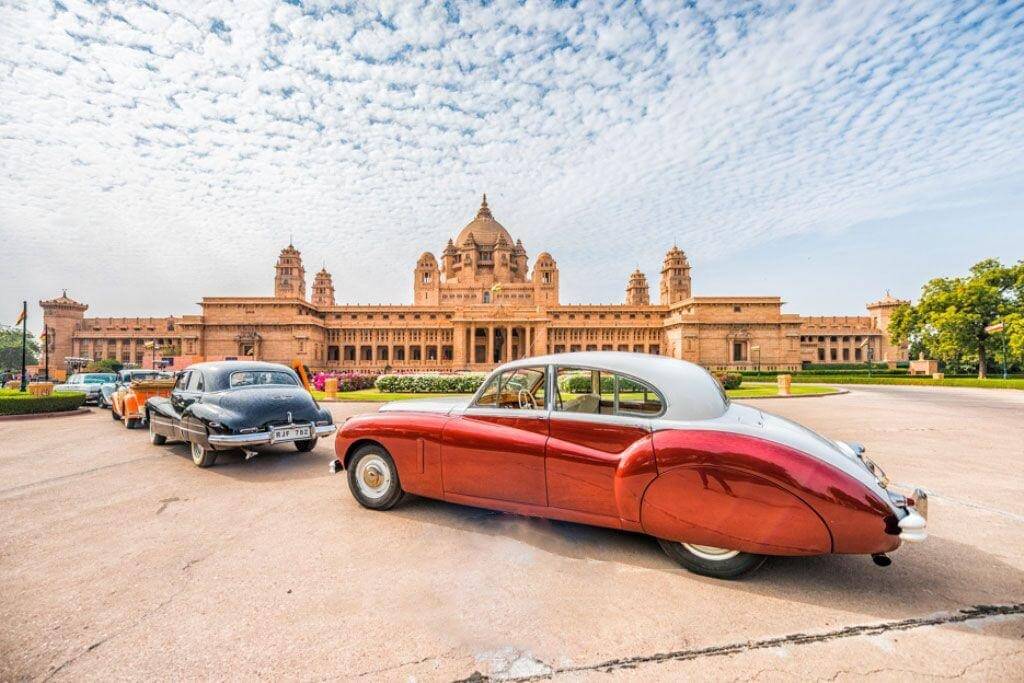
Umaid Bhawan Palace is one of India’s most famous 20th-century royal residences.
Construction began during the reign of Maharaja Umaid Singh and the enormous palace was designed as both a royal residence and a major employment project during a period of severe drought in the region.
The building is constructed largely from golden-coloured sandstone and features a distinctive architectural style combining Indian and European influences.
Palace Attractions
- Royal museum
- Historic photographs
- Royal furniture
- Vintage cars
- Art and decorative objects
- Palace gardens
- Grand architecture
The property is divided into different sections, including areas associated with the royal family, a museum and a luxury heritage hotel.
Travel tip: Even if you are not staying at the hotel, the museum provides an opportunity to experience part of the palace’s history.
Chittorgarh Fort, Chittorgarh
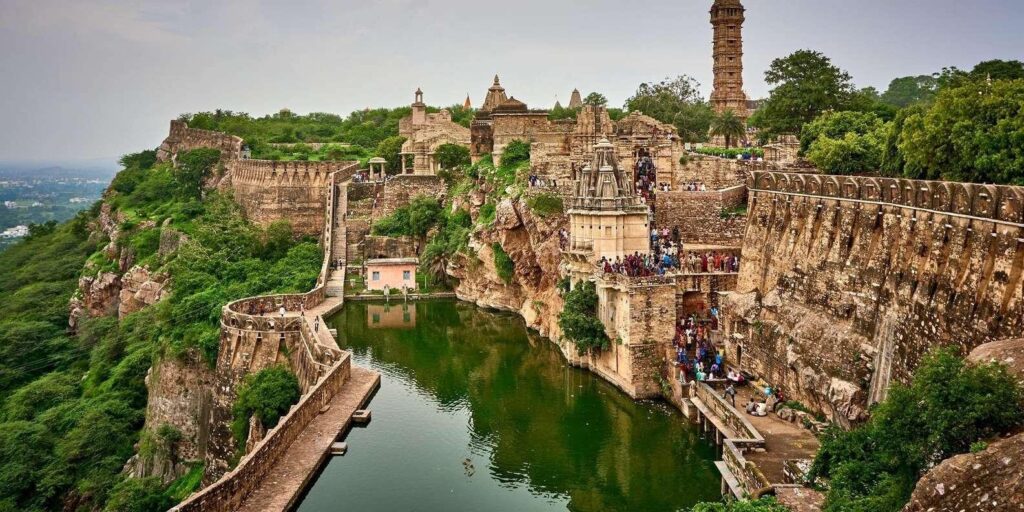
Chittorgarh Fort is one of India’s most important symbols of Rajput history and the former stronghold of the Mewar kingdom.
Spread across a vast hilltop area, the fort contains temples, palaces, towers, reservoirs and gateways.
The history of Chittorgarh is associated with several major sieges and battles, as well as stories of Rajput resistance and sacrifice.
Major Attractions
Vijay Stambha: The magnificent Tower of Victory built by Maharana Kumbha.
Kirti Stambha: An older tower associated with Jain heritage.
Rana Kumbha Palace: One of the major palace complexes within the fort.
Padmini Palace: Traditionally associated with the story of Rani Padmini.
Meera Temple: Associated with the famous poet-saint Mirabai.
The fort is part of the UNESCO-listed Hill Forts of Rajasthan.
Travel tip: Because of its enormous size, sightseeing by vehicle between major attractions is useful.
Kumbhalgarh Fort, Kumbhalgarh
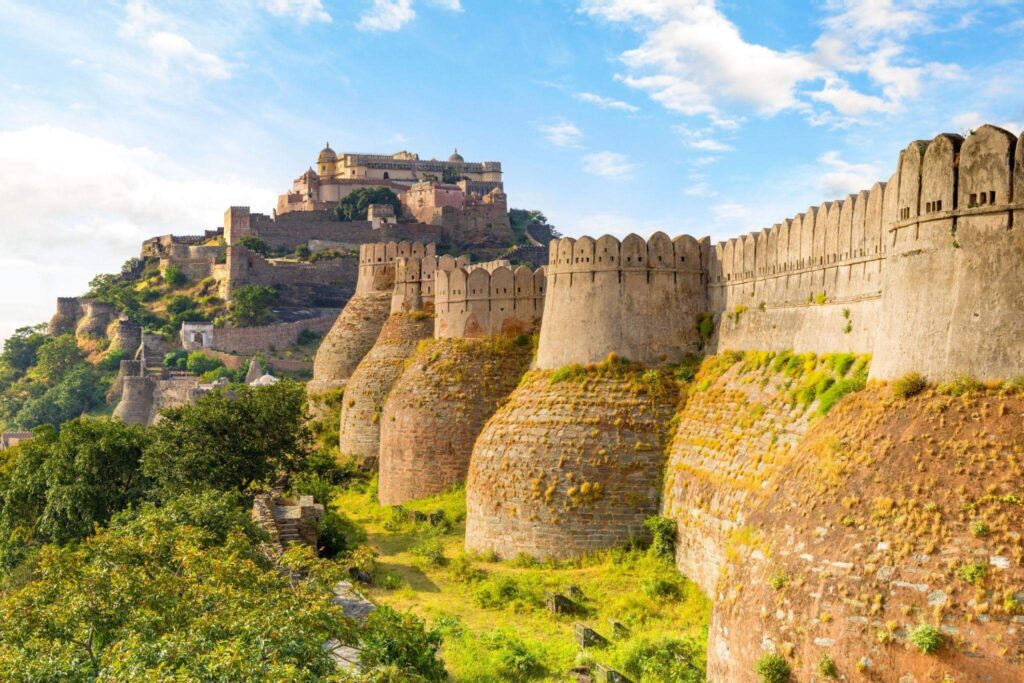
Hidden among the Aravalli Hills, Kumbhalgarh Fort is famous for its enormous defensive wall and rugged mountain setting.
The fort was developed under Maharana Kumbha in the 15th century and became an important stronghold of Mewar.
Its walls extend for approximately 36 kilometres, making them one of the most impressive defensive structures associated with Rajasthan.
Within the fort are numerous temples, palaces, towers and gateways.
Major Highlights
- Massive fort walls
- Badal Mahal
- Kumbha Palace
- Neelkanth Mahadev Temple
- Numerous Jain and Hindu temples
- Hilltop viewpoints
The fort is also traditionally associated with Maharana Pratap, one of Mewar’s most celebrated rulers.
Kumbhalgarh is part of the UNESCO-listed Hill Forts of Rajasthan.
Best experience: Visit in the late afternoon and stay for the evening illumination when available.
City Palace, Udaipur
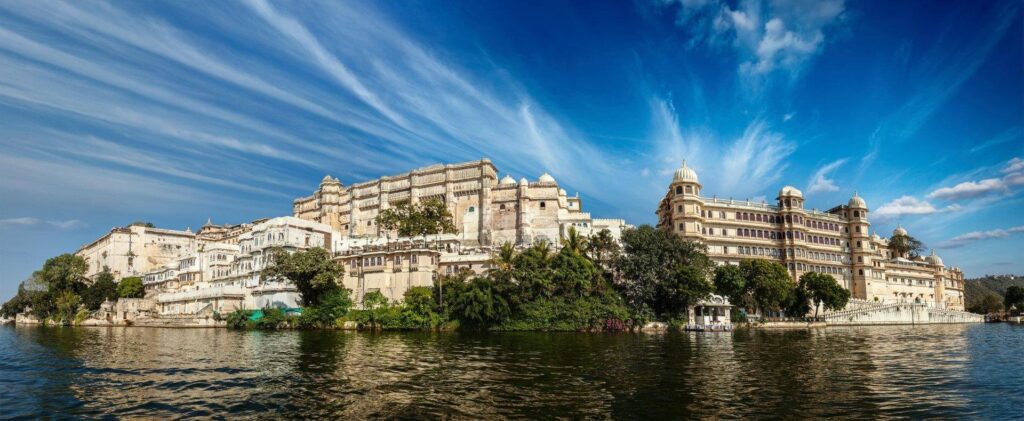
Construction of the City Palace complex began after Maharana Udai Singh II established Udaipur in the 16th century.
Unlike a palace built by a single ruler, the complex developed over several generations, creating a fascinating mixture of architectural styles.
Inside are courtyards, balconies, gardens, halls and beautifully decorated rooms.
Highlights
- Mor Chowk
- Manak Chowk
- Sheesh Mahal
- Moti Mahal
- Zenana Mahal
- Amar Vilas
- Royal museum
The complex provides excellent views over Lake Pichola and the surrounding city.
Lake Palace, Udaipur
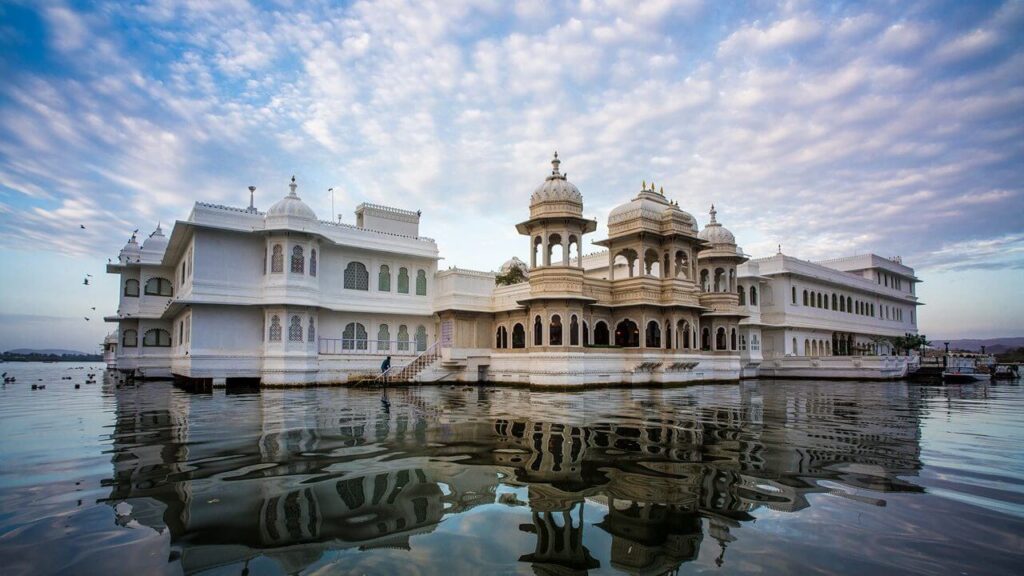
Located on an island in Lake Pichola, Lake Palace, historically known as Jag Niwas, was built in the 18th century as a royal retreat.
Its white marble walls, water surroundings and views towards Udaipur create one of Rajasthan’s most romantic settings.
Today, the property operates as a luxury heritage hotel.
Best experience: Take an evening boat ride on Lake Pichola to see the palace illuminated against the Aravalli landscape.
Best Time to Explore Rajasthan’s Forts and Palaces
The best season for a Rajasthan heritage tour is generally October to March.
October to November: Pleasant weather makes this a good time for long sightseeing days.
December to February: These are among the most popular months. Days are generally comfortable, although evenings and mornings can be quite cool.
March: Temperatures start rising, but March can still be suitable for sightseeing, particularly during mornings and evenings.
April to June: Summer can be extremely hot, especially in Jaisalmer, Bikaner and Jodhpur. Outdoor sightseeing should ideally be planned for early morning or late afternoon.
July to September: The monsoon brings some greenery to parts of Rajasthan and can create beautiful scenery around Udaipur, Bundi and the Aravalli region.
How Many Days Do You Need for a Rajasthan Fort and Palace Tour?
For a quick introduction to Rajasthan’s royal heritage, 7–8 days can cover Jaipur, Jodhpur and Udaipur.
For a more comprehensive experience including Jaisalmer and Bikaner, consider 10–14 days.
A longer itinerary can include:
Delhi → Jaipur → Pushkar → Jodhpur → Jaisalmer → Bikaner → Udaipur → Chittorgarh → Kumbhalgarh → Delhi
This route allows travellers to experience Rajasthan’s forts, palaces, desert landscapes, lakes, temples and historic cities.
Rajasthan Forts and Palaces: A Journey Through Royal History
Rajasthan’s forts and palaces are much more than architectural attractions. They tell stories of kingdoms, battles, royal families, artistic traditions and changing cultures.
The Amber Fort and City Palace showcase Jaipur’s royal heritage. Mehrangarh and Umaid Bhawan reveal two very different periods of Jodhpur’s history. Jaisalmer Fort demonstrates the importance of desert trade routes, while Chittorgarh and Kumbhalgarh represent the military strength of Mewar.
In Udaipur, palaces surrounded by lakes create an entirely different atmosphere, while Ranthambore combines heritage with wildlife.
For travellers visiting Rajasthan for the first time, exploring these monuments is one of the best ways to understand why the state remains one of India’s most fascinating cultural destinations.
Plan your Rajasthan holiday with Vardhman Vacations and experience India’s royal heritage with comfortable transportation, carefully selected hotels, sightseeing and customized itineraries.
FAQs About Forts and Palaces in Rajasthan
Some of the best forts and palaces in Rajasthan include Amber Fort, Jaigarh Fort, Nahargarh Fort, City Palace Jaipur, Mehrangarh Fort, Jaisalmer Fort, Junagarh Fort, Chittorgarh Fort, Kumbhalgarh Fort, Umaid Bhawan Palace, City Palace Udaipur and Lake Palace. Each offers a different experience of Rajasthan’s royal history, architecture and culture.
Amber Fort, Mehrangarh Fort, Jaisalmer Fort and Chittorgarh Fort are among the most famous forts in Rajasthan. Amber Fort is particularly popular with first-time visitors because of its magnificent palace interiors, courtyards and location in the Aravalli Hills.
Jaisalmer Fort, also known as Sonar Qila or Golden Fort, is famous for its golden-yellow sandstone walls. The fort looks especially striking when the sunlight falls on its sandstone architecture.
Chittorgarh Fort is one of the largest fort complexes in Rajasthan and covers a vast hilltop area. It contains numerous palaces, temples, towers, gates and other historic structures.
Kumbhalgarh Fort is famous for its massive defensive wall, which extends for approximately 36 kilometres around the fort and surrounding area. It is often referred to as the Great Wall of India.
Chittorgarh Fort, Kumbhalgarh Fort, Mehrangarh Fort and Ranthambore Fort are excellent choices for history lovers. They offer insights into Rajasthan’s military history, royal dynasties, architecture and important historical events.
There is no single answer because beauty depends on personal preference. City Palace Udaipur, Umaid Bhawan Palace, City Palace Jaipur, Lake Palace and Amber Palace are among the most visually impressive royal residences in Rajasthan.
The best time to visit most forts and palaces in Rajasthan is October to March. The weather is generally more comfortable for sightseeing during these months. December and January can have cold mornings and evenings, particularly in desert areas.
A 7–8 day Rajasthan itinerary can cover major attractions in Jaipur, Jodhpur and Udaipur. For a more comprehensive heritage tour including Jaisalmer, Bikaner, Chittorgarh and Kumbhalgarh, around 10–14 days is recommended.
The major heritage attractions in Jaipur include Amber Fort, Jaigarh Fort, Nahargarh Fort, City Palace, Hawa Mahal and Jal Mahal. These can be included in a 2–3 day Jaipur sightseeing itinerary.
Mehrangarh Fort is the main fort to visit in Jodhpur. It is known for its massive walls, impressive palace rooms, museum collections and panoramic views of the Blue City. Umaid Bhawan Palace is another major heritage attraction in Jodhpur.
The major royal attractions in Udaipur include City Palace, Lake Palace and Monsoon Palace (Sajjangarh). A boat ride on Lake Pichola is also a popular way to enjoy views of Udaipur’s lakefront heritage.
Yes. Jaisalmer Fort is a living fort, with residents, shops, restaurants, temples and traditional buildings located within its walls. This makes it different from many other Rajasthan forts that primarily function as heritage monuments.
The Hill Forts of Rajasthan UNESCO World Heritage property includes six major forts: Chittorgarh, Kumbhalgarh, Ranthambore, Gagron, Amber and Jaisalmer. These forts represent important examples of Rajput military architecture and their strategic hilltop settings.
Jaisalmer Fort, Mehrangarh Fort, Amber Fort, Nahargarh Fort and Chittorgarh Fort are excellent for photography. Jaisalmer is particularly attractive during golden hour, while Nahargarh and Mehrangarh offer impressive panoramic views.
Yes. Rajasthan’s forts and palaces are suitable for family holidays. Jaipur, Udaipur, Jodhpur and Jaisalmer offer a combination of historical attractions, cultural experiences, local markets and sightseeing activities that can be enjoyed by different age groups.
Ranthambore Fort can be combined with a tiger safari in Ranthambore National Park. Alwar’s heritage attractions can also be combined with a visit to Sariska Tiger Reserve, making these destinations ideal for travellers who enjoy both history and wildlife.
Most major monuments can be visited throughout the year, but opening hours, entry rules and access to individual areas can vary. It is advisable to check the latest information before visiting, particularly during festivals, special events or public holidays.
Wear comfortable, breathable clothing and walking shoes, as many forts involve considerable walking, stairs and uneven surfaces. During winter, carry a light jacket or warm layer for mornings and evenings. Sun protection is useful throughout much of the year.
A private Rajasthan tour with a dedicated vehicle and driver is a convenient option for visiting multiple cities. It allows travellers to combine Jaipur, Jodhpur, Jaisalmer, Bikaner, Udaipur, Chittorgarh and Kumbhalgarh according to their available time.
Yes. A Rajasthan heritage itinerary can be customized according to your travel duration, preferred cities, sightseeing interests, hotel category and budget. You can also combine forts and palaces with wildlife safaris, desert experiences, cultural activities and pilgrimage destinations.
For first-time visitors, a popular route is Jaipur → Jodhpur → Jaisalmer → Udaipur. If you have additional time, you can add Bikaner, Pushkar, Chittorgarh and Kumbhalgarh to experience more of Rajasthan’s heritage.
Many major forts can be visited by senior travellers, but some have steep slopes, stairs and uneven pathways. Planning shorter sightseeing sessions, using available transport where permitted and choosing comfortable timings can make the experience easier.
Rajasthan’s forts and palaces preserve the state’s royal history, architecture, art, military traditions and cultural heritage. They provide visitors with an opportunity to understand the history of Rajput kingdoms and the diverse architectural influences that developed across the region.
You can plan a customized Rajasthan heritage tour with Vardhman Vacations, including accommodation, transportation, sightseeing and a city-to-city itinerary. The itinerary can be designed around the forts and palaces you most want to experience.