

Located in the wilderness of Madhya Pradesh, Bandhavgarh National Park spans over 1,500 sq. km (including buffer zones) and is one of India’s premier tiger reserves. Once the hunting grounds of the Maharajas of Rewa, today it stands as a protected haven for wildlife under Project Tiger.
The park is divided into core safari zones like Tala, Magadhi, and Khitauli, each offering unique landscapes and wildlife experiences. Whether you’re a wildlife photographer, nature lover, or first-time safari traveler, Bandhavgarh delivers unmatched diversity and thrill.
Highest Density of Bengal Tigers
Bandhavgarh is globally renowned for its high tiger population density, making it one of the most reliable places to spot the majestic Bengal Tiger.
Historically, the region is also linked to the rare white tiger, first discovered in nearby Rewa. Today, while white tigers are not found in the wild here, the legacy adds to the park’s fame.
Pro Tip: Early morning safaris and zones like Tala offer the best chances for tiger sightings, especially during summer when animals gather near water sources.
Mesmerizing Landscapes & Unique Ecosystem
Bandhavgarh’s terrain is a blend of sal forests, bamboo groves, wetlands, and open grasslands, interspersed with steep ridges and rocky cliffs.
This ecological variation creates micro-habitats that support different species. For instance:
- Grasslands attract herbivores like deer
- Dense forests shelter predators
- Water bodies draw animals during dry months
The park’s changing colors—from lush green in winter to golden hues in summer—make every visit visually distinct.
Incredible Wildlife & Birdlife Diversity
Beyond tigers, Bandhavgarh National Park supports a rich ecosystem of fauna:
Mammals:
- Leopards
- Sloth bears
- Indian bison (gaur)
- Jackals and foxes
Herbivores:
- Chital (spotted deer)
- Sambar deer
- Nilgai
Birdlife:
Over 250 bird species, including crested serpent eagles, hornbills, vultures, and peacocks.
This makes Bandhavgarh a hotspot not just for safari lovers but also for birdwatchers and wildlife researchers.
Ancient Fort, Caves & Mythological Legacy
The iconic Bandhavgarh Fort sits atop a hill at the park’s center and is believed to be over 2,000 years old.
According to mythology, Lord Rama gifted this fort to his brother Lakshmana—hence the name Bandhavgarh (“Brother’s Fort”).
Key highlights include:
- Ancient rock-cut caves with inscriptions
- Sculptures of Hindu deities
- The famous Shesh Shaiya (reclining Vishnu statue)
This fusion of history, archaeology, and mythology makes Bandhavgarh unique among Indian national parks.
Authentic & Less Crowded Safari Experience
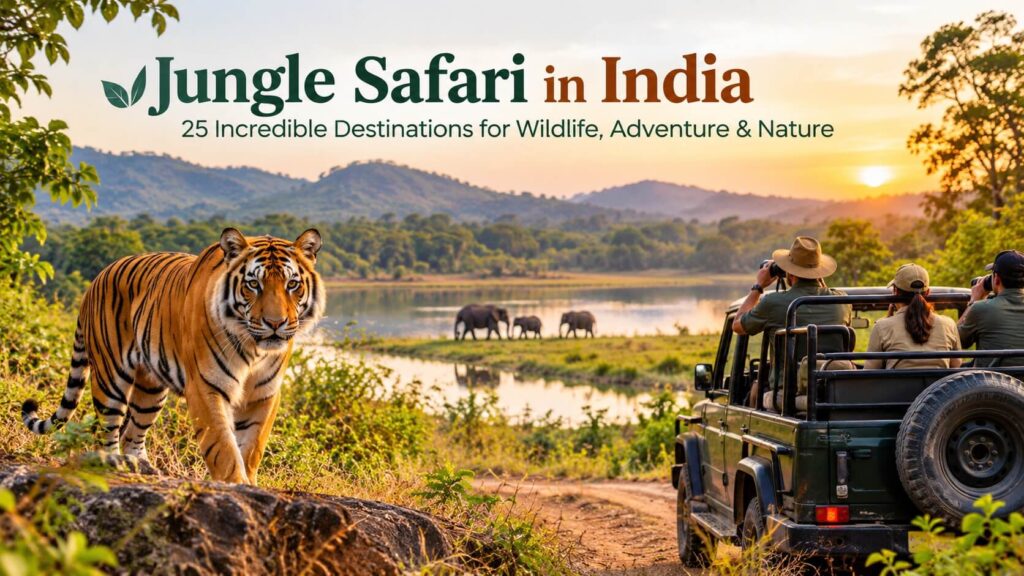
Unlike heavily commercialized parks, Bandhavgarh offers a controlled and intimate safari environment.
- Limited number of vehicles per zone
- Well-trained guides and forest staff
- Structured safari timings (morning & evening)
This ensures minimal disturbance to wildlife and enhances the quality of sightings.
The experience feels raw, immersive, and closer to nature—ideal for serious wildlife enthusiasts.
Best Time to Visit Bandhavgarh
| Season | Experience |
|---|---|
| Oct – Feb | Pleasant weather, lush greenery, great for photography |
| Mar – Jun | Best tiger sightings due to dry conditions |
| Jul – Sep | Park remains closed (monsoon season) |
How to Reach Bandhavgarh
- Nearest Airport: Jabalpur (approx. 160 km)
- Other Airport: Khajuraho
- Nearest Railway Station: Umaria (35 km)
From these points, taxis and private transfers are easily available.
Conclusion
Bandhavgarh National Park is more than just a tiger reserve—it’s a complete nature experience blending wildlife, landscapes, and ancient heritage.
From thrilling tiger encounters to peaceful jungle safaris and historic exploration, Bandhavgarh offers something for every traveler. If you’re seeking a destination that combines adventure, serenity, and biodiversity, this park is truly irresistible.