


Nestled in the serene landscapes of Gujarat, Ayodhyapuram Jain Temple (also known as Shri Ayodhyapuram Teerth or Ayodhyapuram Adinath Jain Tirth) stands as a prominent and relatively modern Jain pilgrimage center. Dedicated to Bhagwan Adinath (also called Rishabh Dev or Aadinath), the first Tirthankara of Jainism, this site symbolizes devotion, architectural grandeur, and spiritual tranquility.
Location and Accessibility
The temple is located in Navagam Dhal (or Navagam Gaikwadi), near Vallabhipur in Bhavnagar district, Gujarat. It lies along the Ahmedabad-Palitana Highway, approximately 8 km from Vallabhipur town. The site is well-connected by road, with buses and taxis readily available. The nearest railway station is in Sihor or Bhavnagar (around 45 km away), and Bhavnagar Airport serves as the closest air connectivity point.
History and Inspiration
While some ancient references link the area to historical Jain significance near Vallabhipur, the current magnificent temple complex is a contemporary development. It was constructed in the late 20th century (around the 1990s–2000s, with establishment noted around 2000 in some records) under the divine inspiration and blessings of revered Jain Acharyas, including Acharyashree Abhaysagarji Maharaj Saheb (and references to Pujya Acharyadev Shri Jinchandrasagar Surishwarji Maharaj in related contexts). The massive idol was carved from a single enormous stone transported from Jaipur, Rajasthan, weighing hundreds of tonnes after shaping—a logistical marvel involving special trailers and overcoming infrastructure challenges.
The name “Ayodhyapuram” honors Ayodhya, the birthplace of Lord Adinath according to Jain scriptures.
Architectural Highlights and Significance
The temple is renowned for its impressive scale and design. Key features include:
- A towering shikhar (spire) reaching 108 feet high, symbolizing auspiciousness in Jainism.
- The main mulnayak murti (principal idol) of Bhagwan Adinath in a padmasana (lotus) sitting posture, standing an awe-inspiring 23 feet tall. Crafted from a single stone, it is often cited as one of the largest (if not the world’s largest) sitting Jain murti of its kind.
- The temple structure spans approximately 169 feet long, 114 feet wide, and 108 feet tall, with a grand circular entrance (rang mandap around 80 feet) and intricate carvings.
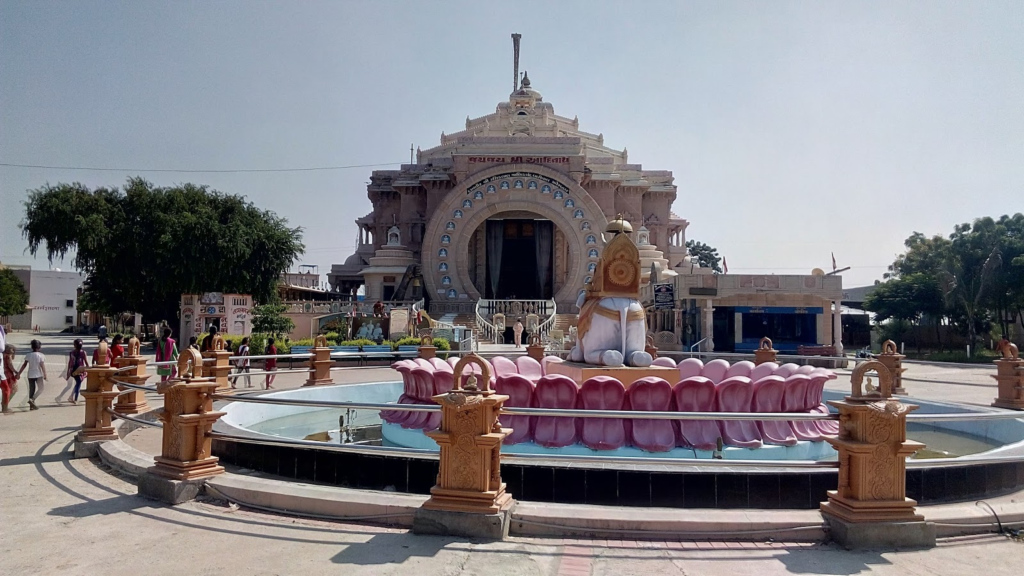
- A beautiful forecourt with a large lotus-shaped fountain and elephant statue adds to the welcoming ambiance.
The temple’s modern yet traditional architecture, combined with its peaceful rural setting amid greenery, makes it a serene spot for meditation and devotion.

Facilities and Visitor Experience
Ayodhyapuram serves pilgrims generously, offering:
- Dharamshalas (rest houses) with modern amenities for overnight stays.
- Bhojanshala (free or low-cost Jain vegetarian meals).
- Additional amenities like a gaushala (cow shelter), gurukul (educational center), dispensary, and upashray (monk residences).
- The site hosts annual events, functions, and religious gatherings.
Visitors praise the calm environment, spiritual vibe, and well-maintained facilities. Photography is typically allowed outside but restricted inside the sanctum.
Why Visit Ayodhyapuram?
This tirth combines ancient Jain reverence for Adinath with contemporary engineering and devotion. It’s especially appealing for those exploring Gujarat’s Jain heritage sites like Palitana (about 50–60 km away) or seeking a less crowded, peaceful alternative to major pilgrimage spots. Whether for darshan of the colossal idol, quiet reflection, or family pilgrimage, Ayodhyapuram offers a profound spiritual experience.
If you’re planning a visit, the cooler months (October to February) are ideal. Jai Jinendra! 🕉️